1938 in Nazi Germany
Between 1933 and 1941, the Nazis aimed to make Germany judenrein (cleansed of Jews) by making life so difficult for them that they would be forced to leave the country. By 1938, about 150,000 German Jews, one in four, had already fled the country.
The "Anschluss" - annexation of Austria by Germany
On 9th March 1938, the Austrian Chancellor Kurt Schuschnigg announced a plebiscite on the independence of Austria.
Adolf Hitler took this as an opportunity to take action against the Austrian State. Schuschnigg was pressed to resign. The National Socialist Arthur Seyss-Inquart took over the chancellorship and formed a new government. The Austrian National Socialists took power in Austria.
Hitler sent his army into Austria on March 11, 1938. On the morning of March 12, German troops crossed into Austria. On 13th March 1938. The Anschluss-the incorporation of Austria into the "Third German Reich"-was proclaimed on the 13th March.
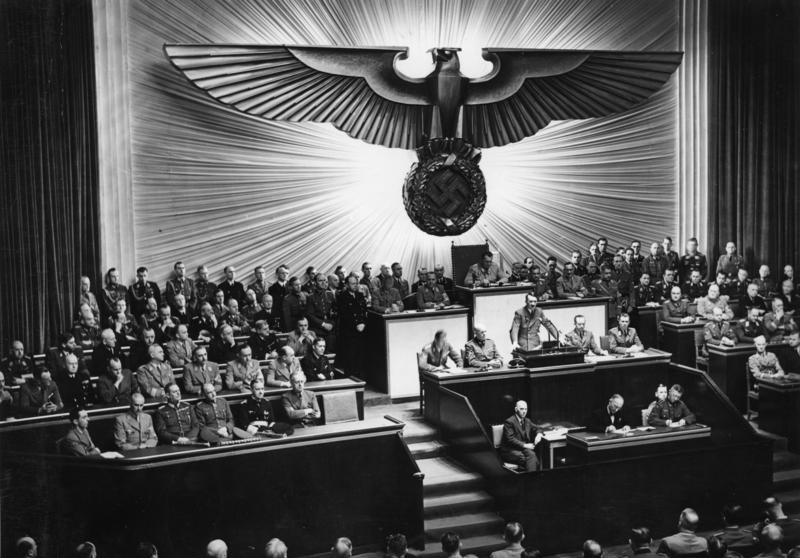
Two days later, delirious crowds greeted Hitler as he paraded triumphantly through Vienna. On April 10, Hitler held his own election, and 9973 percent of Austrians voted in favor of the annexation (Anschluss).
During the great celebrations in all of Austria, many potential opponents of the regime were arrested. National Socialist rule was established now in Austria through propaganda, terror and enticements. The annexation was accompanied by protracted antisemitic eruptions and humiliations of Jews by Austrian citizens under German patronage. At the time of the Anschluss, more than 185,000 Jews lived in Austria, of whom 170, 000 resided in Vienna.
Immediately after the annexation, the Gestapo embarked on a week of organized looting of Jewish apartments, in which confiscated objets d'art and valuables were hauled away to Berlin. Before the week was out, Jews were dismissed from their positions in theatres, popular cultural institutions, and public libraries; soon afterwards, they...
More German History
essays:
Gravity
... force of German troops marched across the Rhine bridges into the demilitarized areas of Germany. Then in October 1936 the Italian dictator, Mussolini, who had previously pledged to maintain Austrian independence, formed an alliance with Hitler. This ...
Describe the development of the Nazi Party in Germany (1922-1939), and analyse Hitler's role in this.
... German nation was to gain living space for generations to come". Quoted in Martel, p134-7. Norman Lowe. Mastering Modern World History. p84. In conclusion, the Nazi Party and its leader Adolf Hitler were able to come to power in Germany ...
What were Hitler's core ideas or assumptions? What were the methods used to implement them once he and the Nazi's had established the Nazi state in Germany?
... no Jew may be a member of the nation, Point 8- All non-German immigration must be prevented. We demand that all non-Germans who entered Germany after 2 August 1914 shall be required to leave the Reich forthwith ...
"Fascist rule could only exist by exploiting the fears of the masses." To what extent would you agree with reference to either Germany or Italy up to 1939?
... rule of Adolf Hitler was reliant on a combination of fear caused by force, and popular support for its maintenance. It is difficult to decide exactly whether fear or support was more effective, as because of the Fascist regime, the German ...
Assess how propaganda/censorship was used in Britain and Germany during WWI.
... lack of trust in the propaganda not only in the United States, but also within Germany. An example of successful German propaganda ...
To what extent can we understand Hitler's conducting of the war in the light of his apparent Parkinson's disease?
... The German Replacement Army, the July Plot, and Adolf Hitler. Connecticut, U.S.A.: Praeger Publishers, 2003. 7. Gottfried, Ted. Deniers Of the ...
The History of Sudenteland and Hitler.
... the National Socialist leader in the Sudetenland, a man who would stop at nothing to produce an insurrection or an act of deliberate provocation against the Czechoslovak Government. The German newspapers ...
What Were the Terms of the Treaty of Versailles? Analyze the Reason for These Terms, and the Possible Damaging Consequences for Germany
... Germany came about as a result of the treaty. It provided an anxiety to the people; it made them desperate to return to a powerful, respectful, proud and honourable nation as they once were. An anxiety that people like Adolf Hitler ...