1984: A narrative and analytical overview
Winston Smith is a low-ranking member of the ruling Party in London, in the nation of Oceania. Everywhere Winston goes, even his own home, the Party watches him through telescreens; everywhere he looks he sees the face of the Party's seemingly omniscient leader, a figure known only as Big Brother. The Party controls everything in Oceania, even the people's history and language. Currently, the Party is forcing the implementation of an invented language called Newspeak, which attempts to prevent political rebellion by eliminating all words related to it. Even thinking rebellious thoughts is illegal. Such thoughtcrime is, in fact, the worst of all crimes.
As the novel opens, Winston feels frustrated by the oppression and rigid control of the Party, which prohibits free thought, sex, and any expression of individuality. Winston dislikes the party and has illegally purchased a diary in which to write his criminal thoughts. He has also become fixated on a powerful Party member named O'Brien, whom Winston believes is a secret member of the Brotherhood--the mysterious, legendary group that works to overthrow the Party.
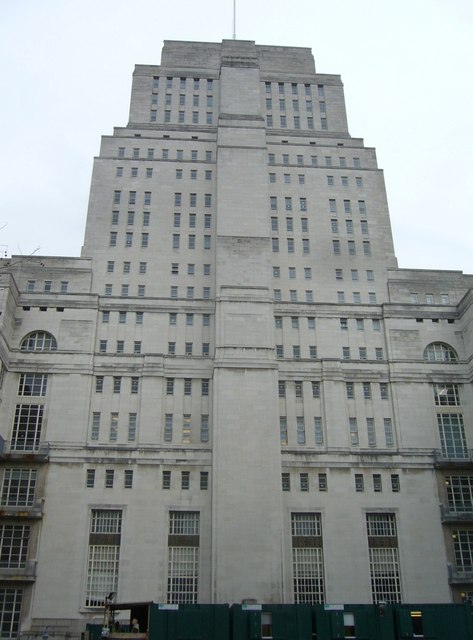
Winston works in the Ministry of Truth, where he alters historical records to fit the needs of the Party. He notices a coworker, a beautiful dark-haired girl, staring at him, and worries that she is an informant who will turn him in for his thoughtcrime. He is troubled by the Party's control of history: the Party claims that Oceania has always been allied with Eastasia in a war against Eurasia, but Winston seems to recall a time when this was not true. The Party also claims that Emmanuel Goldstein, the alleged leader of the Brotherhood, is the most dangerous man alive, but this does not seem plausible to Winston. Winston spends his evenings wandering through the poorest neighborhoods in London, where the...
Reviews of: "1984: A narrative and analytical overview"
:
Essay acurately portrays the spooky and erie points in the book. reality doesn't exist in the book though the book can be disturbing in comparison to our reality
More European Literature
essays:
How Phreaks, Anarchist, the KKK, and SWP compare to Big Brother from 1984
... different "illegal" group to the big brother movement ... the individual. Our government seems to be moving towards a 1984 society, where you are not free at ... world. A couple times they played with NASA's temperature control, air port's times, and power plant's settings. No ...
Violence and Alex's Reclamation in "A Clockwork Orange" General Overview of A Clockwork Orange, covering most important factors.
... new language to restrict their populace and keep them under control and it is called Newspeak. But in A Clockwork Orange the language made up is ... to break away from conformity he wants to be an individual. Towards the latter stages of the book, when all about ...
Compare the descriptions of the society of '1984' and 'Brave New World' in the first three chapters of each book. Huxley and Orwell comparison.
... is Winston beginning to write a diary, "he had committed- the essential crime...Thought Crime." We see this as an attempt to record history, providing a source of information for the future ensuring a method of comparison between Big Brother's ...
George Orwell's 1984: Methods of Suppression in 1984. A study of ways people were oppressed in the book.
... Oceania, which consists of the Americas as well as Great Brittan. Nineteen-eighty Four chronicles Winston Smith's struggle to fight against the forever-reining, oppressive social system called the Party. Throughout 1984 several central themes through which the Party controls ...
"1984" by George Orwell and the World Today
... character Winston Smith is a party member in a totalitarian society led by Big Brother, which censors everyones behavior and thoughts. The world being split into 3 countries: Oceania, Eurasia ...
Orwell's use of symbolism in 1984
... of control. Big Brother has such restrain over his citizens, that a mere expression of free thought, or attempts to recall past events, are considered to be serious thought crimes. In writing in his journal, Winston essentially ...
1984 , a tale of future society, by Orwell
... criminal' thoughts to begin with since they had no knowledge of any crime from personal experience or history. The main character of this book is Winston Smith. Even ... was Big Brother. The idealism of blind loyalty was embodied in this symbol. It was the centre of control. The ...
"1984" by George Orwell.
... and political structure, doublethink (Newspeak word for reality control), the Thought Police and critizises the Party and the Big Brother. Suddenly ...
Fantastic
George Orwell is a genuis and this is a lovely essay on 1984. Well presented, clearly thought-out and concise. Brilliant!
2 out of 5 people found this comment useful.