Achebe's Portrayal of Women in Igbo Society
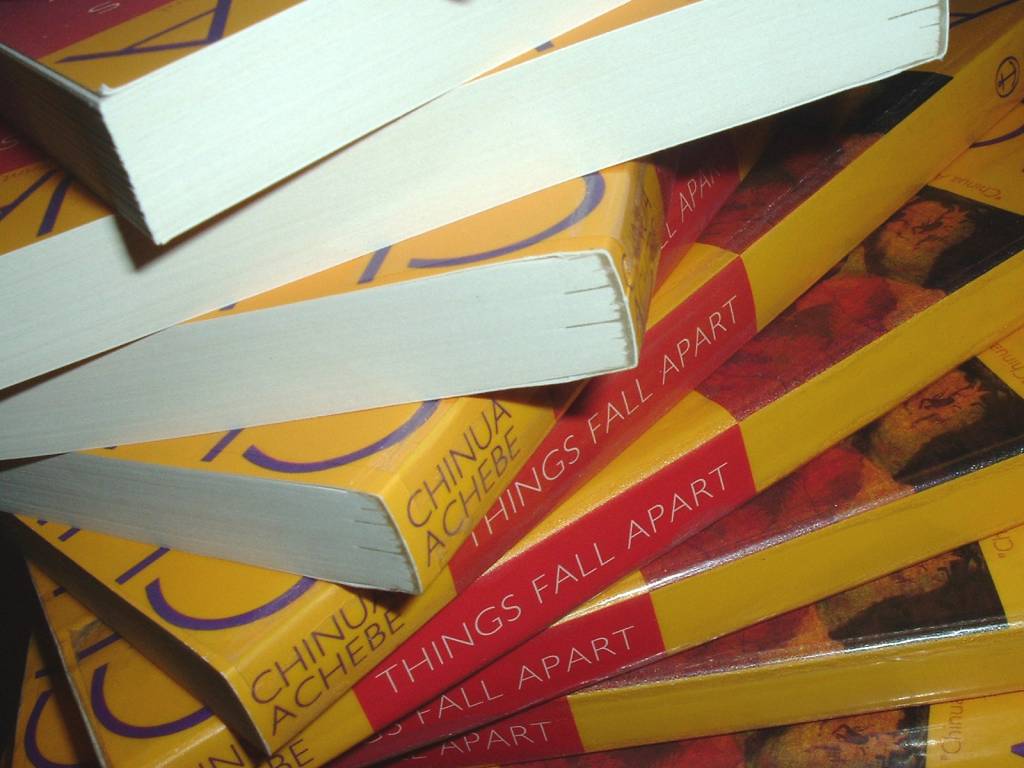
Chinua Achebe's first novel "Things Fall Apart" is a story about an Igbo village in the late 1800's. In the story, Achebe depicts women in Igbo society as a sadly oppressed group with no power. Women of the Igbo tribe were terribly mistreated, and had no respect outside their role as being a mother or a wife. In the novel, the author "analyzes the destruction of African culture by the appearance of the white man in terms of the destruction of the bonds between individuals and their society"(Chun, par1). I noticed that in the story the author explains the role of women in pre-colonial Africa, by telling stories of how women handle their business in Igbo society. Most women in Igbo society "were primary educators of their children, and they cook and took care of the household"(Mbele par 2). Achebe highlights the roles of women in pre-colonial Africa, especially in Nigeria, through his female characters. The female characters in the story are very obedient to males, and their lives are greatly affected by the desires of their husbands or fathers. I noticed in the novel that fathers sold their daughters off to marriage, and husbands beat their wives. Most men in Igbo society used tradition as a background to dictate women roles and lives. The Igbo society was a society that put a lot of emphasis on gender roles, and the importance of masculinity and violence, which resulted in the abuse of the female's character and the role of women as child barer.
The story Things Fall Apart depicts Igbo society during the late 1800's. One ting I know about women is that throughout time, especially during the nineteenth century, women were oppressed, and they were confined to the role of nurturing. In the Igbo society, patriarchy ruled in every...
Reviews of: "Achebe's Portrayal of Women in Igbo Society"
:
More World Literature
essays:
The Role of Women in "Things Fall Apart", by Chinua Achebe.
... by Chinua Achebe, the arrival of the white man, changes the society of the Ibo people. The Ibo culture is very simple, and may seem silly, but is justified by them. They have a social class order and women are ...
The Importance of Five Heads: "Civil Peace" by Chinua Achebe
... by Chinua Achebe, the author illustrates the life of Jonathan Iwegbu immediately after a long and bloody civil war. Jonathan, the protagonist of the story, ... with new currency. The night that Jonathan exchanged his money, a group of thieves gathered outside his family's door, and began pounding on ...
Chinua Achebe's "Things Fall Apart" A discussion of Achebe's portrayal of women in Igbo society.
... the destruction of African culture when the white man appeared. Achebe writes in a style that is interpretive instead of objective, and reflects the sociocultural organization existing in Africa during that era. Achebe highlights the roles of women in pre-colonial ...
The Role of Women in Chinua Achebe's Novel "Things Fall Apart"
... the tribe and its religion. Basically, the role of women in African society is to give birth to numerous children, to take care of them, to cook, to clean, to serve and obey their husbands and fathers. However, Chinua Achebe in ...
Two Sides of the Coin: Contrasting the two Missionaries in Achebe's 'Things Fall Apart'
... on African culture and society. Things Fall Apart is set in the late eighteenth century, and portrays the clash between Nigeria's white colonial government and the traditional culture of the indigenous Igbo people. Achebe's novel shatters ...
The Tragic Consequences of the European Encounter with the African Civilization in Achebe's "Things Fall Apart"
... and women who can read. Deep in his heart, Mr. Brown knows that the colonial government will rob the villagers of self-government if they do not learn the colonialists' language. Achebe uses ...
"Things Fall Apart" - A.C. Achebe: Discuss the following topics in the book.
... between Nigeria's white colonial government and the traditional culture of the indigenous Ibo people. The Role of Women Women are expected to obey their husbands. Achebe shows ...
Conrad v. Achebe: Is Conrad a racist in The Heart of Darkness?
... Heart of Darkness without stumbling upon Chinua Achebe's An Image of Africa. In his article, Achebe asserts ... society we live in now, it is well known that African culture and speech can be comprehensible to Americans and Europeans, but ...
Women of Igbo Culture
I agree with everything in this essay. Women were poorly portrayed in this novel. They were made out to not be as good as the men, and often known just to be child bearing people.
0 out of 0 people found this comment useful.