English 10cp World Literature12 December 2008Affirmative ActionAffirmative action is important in today's times, however some people do not believe it is. When Affirmative action first began it generally meant "giving preferential treatment to minorities in admission to universities or employment in government and business" (Messerli). However, now a day's Affirmative action can also be giving preference to women for employment, awards or deciding who to admit for universities (So). Affirmative action originated because of President John F. Kennedy issued Executive order 10925, which created equal opportunity for employment to be racism free (Brunner).Affirmative Action exist to make sure that no man or women is passed up on a job opportunity just because of their skin color, or sex. Affirmative action helps minorities have good opportunities, helps break stereo types, and also helps women succeed in life. Affirmative action should exist so that we do not revert back into the day's where minorities had no say so and women stayed at home and cooked and cleaned.
 Lord Dahrendorf Deutsch: Ralf Dahrendorf 2003 Sven...
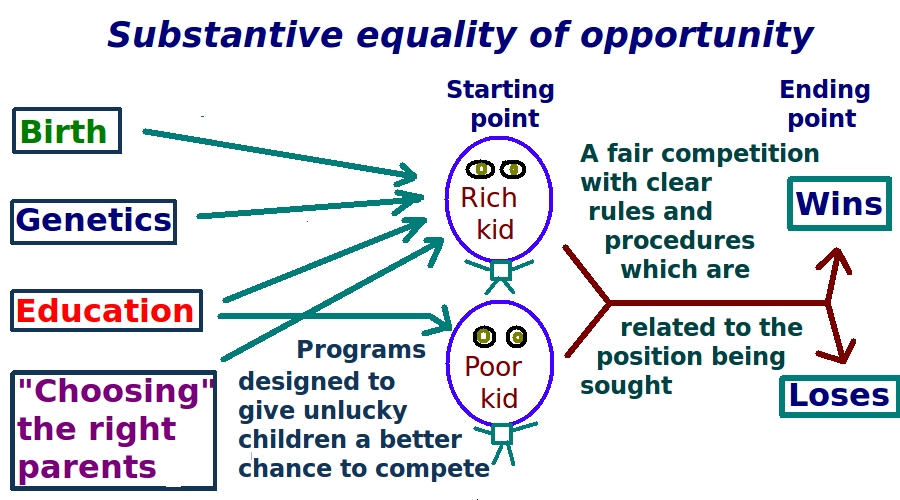 English: The "substantive" conception of equality ...
 affirmative
Minorities usually start at a disadvantage in life. Two areas that minorities start off lower than everybody else is in the area of College and the work field. Minorities usually start off at a lower disadvantage because they usually come from lower income families and have a lower chance of an opportunity in life. Inner city children most likely have to deal with single parent incomes, high crimes and drug infested areas of their neighborhoods. However, white student do not have to deal with that problem. White students can afford to go to private schools and have a better opportunity to get into great colleges and have a great job opportunity. Even though hard working Minorities are just as capable as white students they do not get a chance to prove it because of the...