Alexander the Great and His Successes
Jelani Johnson
From what I learned about Alexander the Great, he was an amazing ruler, and one that made Greece prosper while he was in power. He conquered many of the empires and civilizations around his land, and neutralized any future threats. Because of his sheer power alone, he ruled Greece with an iron fist through fear of him. He proved himself most worthy by stripping Darius III of all of his power, and rule. With this victory, all of the Persian Empire fell to Greece's power. Alexander's power.
In his childhood, his father king Phillip trained him, and taught him how to lead. He also taught him how to fight, and command troops. Aristotle also taught him. He taught young Alexander ethics, politics, philosophy, and all of his beliefs on the world. Alexander always slept with a copy of the Iliad, and a short sword.
 Alexander Keith's Brewery, Halifax
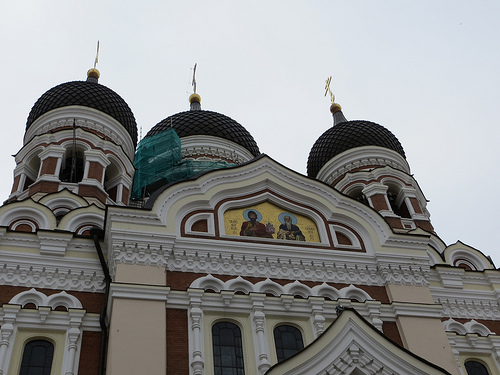 Alexander Nevsky Cathedral
![Alexander Muir Public School, Toronto, 1902 [OHQ-PICTURES-S-R-599]](/uploads/9/95250/alexander-muir-public-school-toronto-1902-ohq-pictures-s-r-5.jpg) Alexander Muir Public School, Toronto, 1902 [OHQ-P...
Alexander Muir Public School, Toronto, 1902 [OHQ-P...This training from such prominent leaders of the time, both philosophically, and militarily turned Alexander into one of the strongest, most well educated children of the time. He was worthy of the throne.
Alexander was extremely strong, determined, and solute. He conquered without remorse. His ruthless conquests thrusted Greece further into perfection. Alexander's drive to succeed is what made Greece so strong at the time. He was very passionate about his success. His successes in the end made him Alexander the Great: A title that he deserved. "Alexander the Great's ambitions were cultural as well as military and political" (132) said in "World History-Patterns of Interaction "
The main reason that Alexander is now called "the great" is because of his conquest achievements he conquered what once was the biggest threat and problem of Greece: the Persian Empire. His successes made him the most...