We are currently living in the age of technology. Our advancements in the past few
decades overshadow everything learned in the last 2000 years. With the elimination of many
diseases through effective cures and treatments, Canadians can expect to live a much longer life
then that of their grandparents. In 1900 about 4% of the Canadian population was over the age of
65. In 1989 that figure tripled to 12% and the government expects that figure to rise to 23% by
the year 2030 (Medical,1991,p.13). This increase has brought with it a large increase in diseases
associated with old age. Alzheimer's dementia (AD) is one of the most common and feared
diseases afflicting the elderly community. AD, once thought to be a natural part of aging, is a
severely debilitating form of mental dementia. Although some other types of dementia are curable
or effectively treatable, there is currently no cure for the Alzheimer variety.
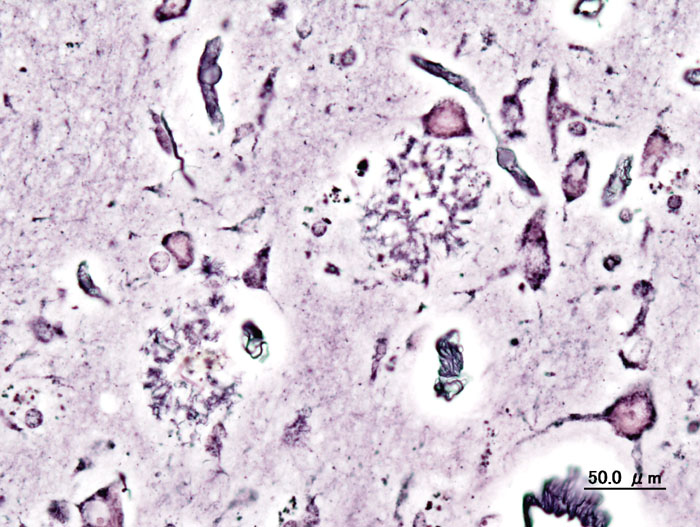 English: Histopathogic image of senile plaques see...
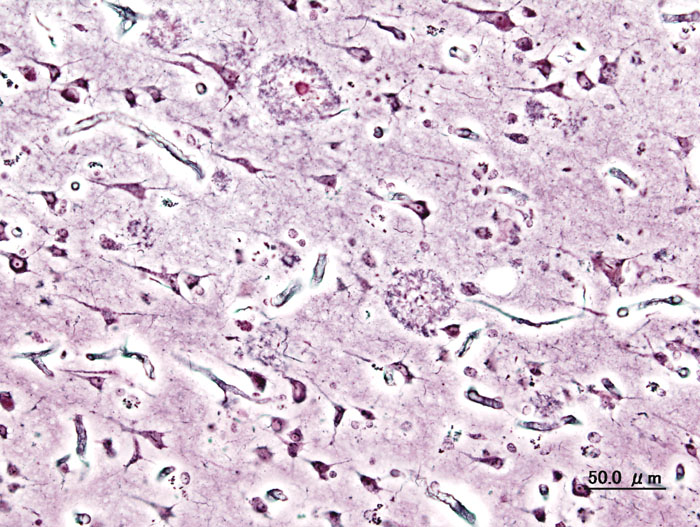 English: Histopathogic image of senile plaques see...
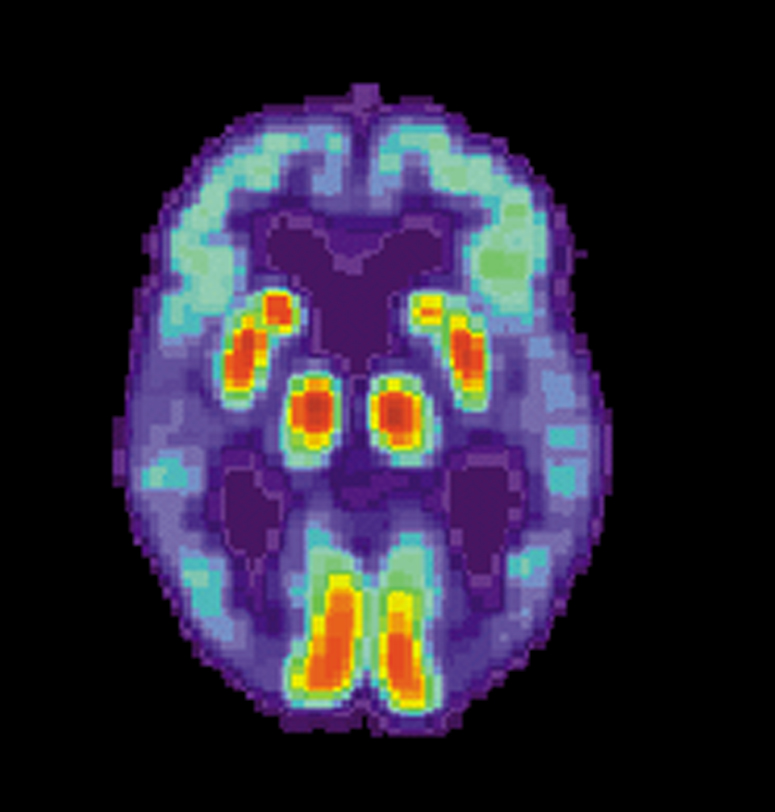 English: PET scan of a human brain with Alzheimer'...
A general overview of Alzheimer's disease including the clinical description, diagnosis,
and progression of symptoms, helps one to further understand the treatment and care of patients,
the scope of the problem, and current research.
The clinical definition of dementia is 'a deterioration in intellectual performance that
involves, but is not limited to, a loss in at least 2 of the following areas: language, judgement,
memory, visual or depth perception, or judgement interfering with daily activities' (Institute,1996,
p.4).
The initial cause of AD symptoms is a result of the progressive deterioration of brain cells
(neurons) in the cerebral cortex of the brain. This area of the brain, which is the largest and
uppermost portion, controls all our thought processes, movement, speech, and senses. This
deterioration initially starts in the area of the cortex that is associated with memory and then
progresses into other areas...
Paper found on another site
http://www.papercamp.com/hlth12.shtml
1 out of 1 people found this comment useful.