The American Dream in The Great Gatsby The Great Gatsby by F. Scott Fitzgerald
Jay Gatsby, the central character of F. Scott Fitzgerald's The Great Gatsby symbolizes the American dream. The American dream offers faith in the possibility of a better life. Its intention is the belief that material wealth alone can bring that dream to reality. Through Gatsby, Fitzgerald brings together both these ideas. Jay Gatsby thinks money is the answer to anything he encounters. He has the best of everything. The fanciest car, the largest house, and the finest clothes. Jay has everything except the object he most desires, Daisy. Gatsby believes he can win Daisy over with wealth, that he could achieve her love through his material possessions.
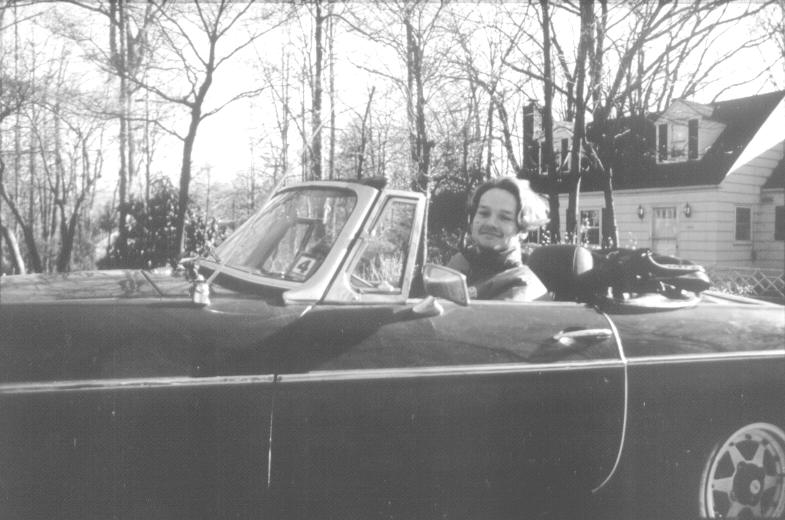
In America, the car is one of the greatest status symbols. Gatsby's gorgeous machine is one of the most expensive cars created. Nick's comments on the vehicle describe its luster, "...and there in its monstrous length with triumphant hatboxes and supper-boxes and tool-boxes...Sitting down behind many layers of glass in a sort of leather conservatory we started towards town"(68). The use of the symbolic automobile can be seen as a demonstration of how an ideal based on materialism alone can be destructive. This is the fatal car which kills Myrtle Wilson and indirectly leads to Gatsby's death.
Appearance is another important factor toward Gatsby's dream. In his quest to win Daisy's heart Gatsby chooses to wear his best outfit. "...the front door opened nervously and Gatsby in a white flannel suit, silver shirt and gold colored tie hurried in"(89). Silver and gold are the colors of wealth as many of the other items he owns. Gatsby's shirts are more then just garments towards Gatsby. They are some of the many fantastic objects he possesses that were created by money. These shirts contribute towards Gatsby's vision of the American dream, that...
More Drama
essays:
The Role of the Clever Servant in William Wycherly's 'The Country Wife"
... of this down-to-earth, observer's view which Lucy possesses that opinions which other characters hold are challenged. The continual theme of Love versus sex ... should be approached. The reasons for marriage as seen by most of the characters in The Country Wife are contradicted by Lucy, a simple ...
'The American plays set for study use expressionist and symbolist techniques in order to change people's perceptions of the world'
... the passing paper boy Joe Crowell. "Goin' to be a great engineer, Joe was. But the war broke out and he died in France-". The character also allows for the introduction of Brectian style techniques within ...
Character change in the play "Raisin in the Sun", written by Lorraine Hansberry
... His dreams change Walter Lee into a greedy, corrupt person. Walter, for a majority of the play, is insatiable in his desire for money and finer things, and his materialism is ...
Kabuki, the Japanese Art vs. Puccini´s Madame Butterfly.
... values originality, and improvisation, the East has limited their artistic material so that admiration can be derived from the skill with ... American consul asks her what she would do if Pinkerton were never to return. She quickly replies that she would choose death. Here it is most ...
A view from the Bridge.
... open-ended attitude and with the prospect of fulfilling his dreams. This annoys Eddie because he is not realistic. Marco is the most conservative at the beginning. He is very concerned for his ...
The Glass Menagerie: portrayal of fragile, vulnerable, and defeated character who wrestles with the fact of his or her defeat.
... only character to exhibit or experience these elements. For example, the desertion of the Father is central to the creation of a fragile environment forced upon the family and resulting in great financial ...
"The Dumb Waiter" as an Example of the Combination of the Absurdist and Naturalistic Traditions of Theatre.
... Aronson, Arnold. America Theatre in Context: 1945 - Present. Taken from American Theatre: Volume III. Edited by Don B. Wilmeth and Christopher ... the novel, which he later extended to the theatre. Placing characters would create the new 'scientific novel' with known inherited characteristics ...
The Loman Sons in Death of a Salesman
... of Willy’s dream—that a “well-liked” and “personally attractive” man in business will acquire the material comforts of a modern American life. ... come to terms with the customs of a capitalist society. With the characters, Biff and Happy Loman, Arthur Miller captivates his readers and portrays ...