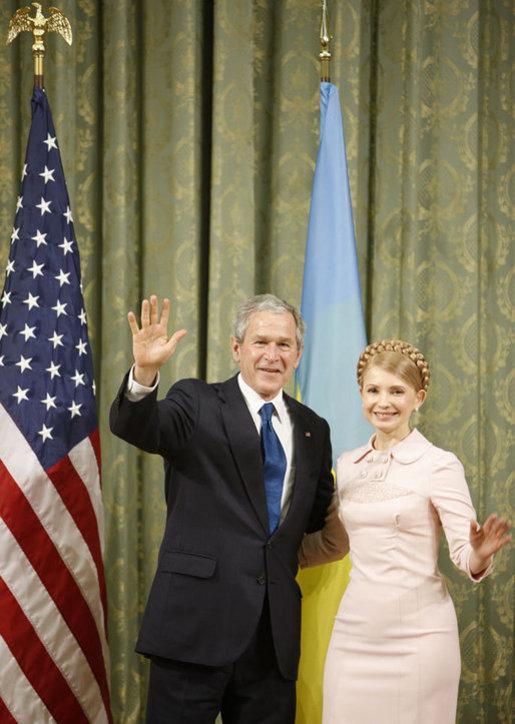
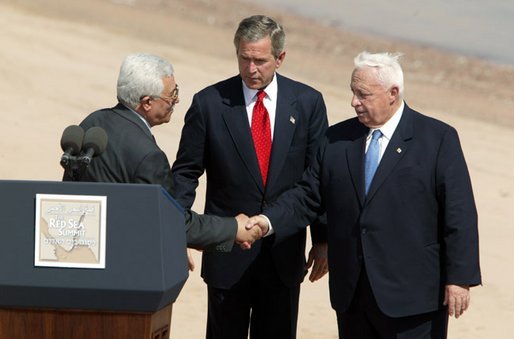
'The American President is the executive, whereas the British Prime Minister is merely the head of government.' How significant is this distinction?
Article II of the US constitution states: "executive power shall be invested in a President". It then goes on to define the role with formal powers and limitations. Conventionally, the British Prime Minister has been the "first among equals", and the uncodified British constitution does little in the way of definition of the office. These roles seem very different in potential power and influence, with the President embodying the executive, and the Prime Minister merely leading the governing party. This essay will explore the significance in the difference in the respective roles, and what part the political system, and climate, have to play in determining the power of the offices.
Central to the American political system is the principle of the Separation of Powers, maintained by a number of checks and balances. This ensures a separate executive and legislature, meaning that the President cannot directly intervene in policy. In contrast to the US, the UK has a fusion of powers, in which the executive is taken from the legislature. This allows the majority party to form a Government, and dominate Parliament. As the Head of the governing party, the Prime Minister is elected in a constituency like any other MP. He/She has formal powers in the shape of the Royal Prerogative, and powers of patronage.
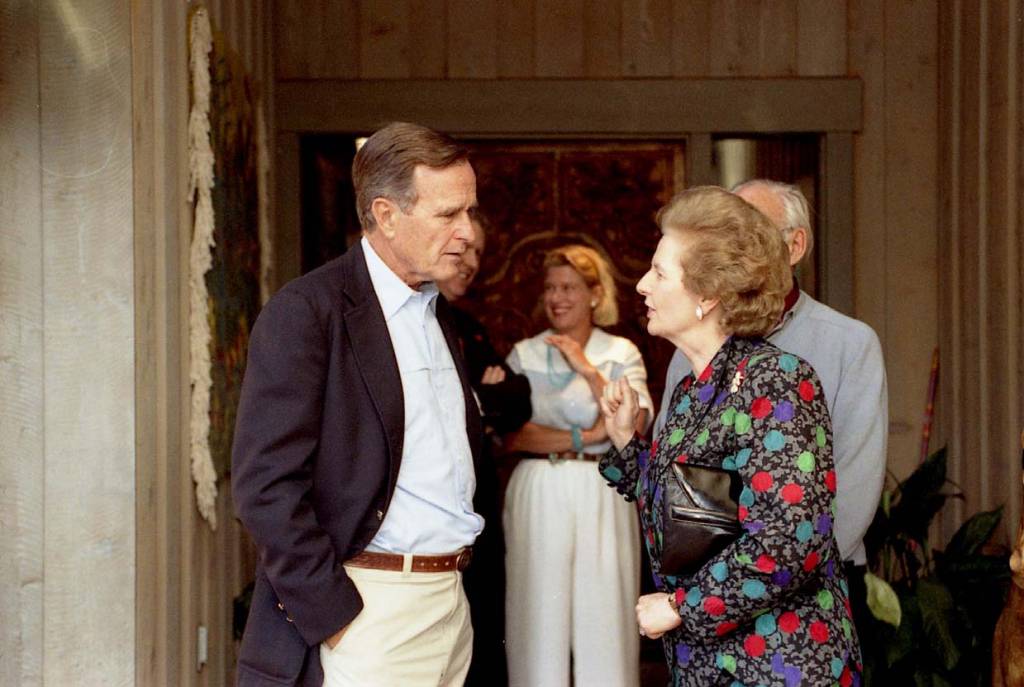
The President has certain defined, formal powers. He can block legislation from Congress with his veto, a powerful tool in the hands of one man. Congress can overturn the veto, though historically only 4% of Presidential vetoes have been overturned. The President also has control over treaties and appointments, although these must be ratified by the Senate. The process of ratification can be seen merely as a rubber stamp for the President, but as Bush found in 1991 with his nomination to the Supreme Court...
Reviews of: "'The American President is the executive, whereas the British Prime Minister is merely the head of government.' How significant is this distinction?"
:
More Government
essays:
Title: The Canadian parliamentary system of responsible government is better than the American presidential system of liberal government.
... the president. The power of the president is limited by Congress through the extensive system of checks and balances that the American system possesses. The president is the head of government and the chief executive officer ...
Checks and Balances in the 21st Century
... the constitutional status of the bill the court could overturn the votes of the legislative branch. The system of checks and balances divides the powers amongst the executive branch, legislative branch, and judicial ...
The essay is about THE FEDERALIST # 10 written by Madison in the effort of ratifying the constitution. It explains about faction and there influences in gov't.
... new Constitution because although it protected the rights of minorities, it still favored majority rule and vote-restriction for property owners. James Madison's paper, the Federalist#10, is very important in outlining the balance of power between ...
The Power of Presidency: The Separation of Powers that the President has to follow
... anymore powers or privileges than that of which are stated under Article II in the Constitution. This creates a fair and balanced Federal Government, and allows for an efficient system of checks and balances. The President should ...
Explain the impact of the Articles of the Confederation on the Constitutional Convention of 1787. How were the imperfections of the Articles ‘corrected’ with the new constitution?
... A Politics of Tensions: The Articles of Confederation and American Political Ideas, University of Colorado Press 1992, 40 Merrill Jensen, The Articles of Confederation: An Interpretation of the Social-Constitutional History of American Revolution ...
Study notes for civics class about the president's job and the executive branch.
... a political party's candidate is elected President, that person becomes the leader of the party. This role carries special powers and privileges. President can appoint party members to government jobs through patronage, the system of rewarding ...
Compare and contrast the role of the Federal Bureaucracy in the United States with that of the Civil Service in Britain
... positions of power and responsibility that really lie with the President. These ... ambitious (and highly unlikely that a bureaucracy containing all those characteristics could exist in either the US or UK political systems) if ... thought of as a Civil Service modernise, especially by the Prime Minister, was ...
Critically assess the European Union's role as the world's largest donor of development assistance, are there any ethical obligations attached to this role?
... for political influence in the developing world and to gain from exploitative and unequal trade relations being the more powerful partner; this, offset against the extent to which the EU provides development assistance to developing countries out of genuine ...
Good job
i like the detailed discription of every single part of the "problem".............everything was well discussed.............good job......
0 out of 0 people found this comment useful.