In early 1959, jazz trumpeter Miles Davis laid down the foundation for a whole new style of jazz music. Through his "Kind of Blue"� modal jazz was born. This record became a classic, at times showing its complexity through the soloing, but also allowing the educated listener to revel in the simplicity of the modes. Davis planted the seeds for this new style in his album "Milestones"� but "Kind of Blue"� showed that the style had matured and was more developed. From the introductory piano/bass duet to the final notes, it is clear that Davis captured something original.
The album was recorded in only two sessions and went on without any prior rehearsal or music written out. Davis only provided general "sketches"� of each song for the musicians, which they read and improvised over. For the task of recording, Davis put together an all-star lineup with some of the greatest jazz musicians in music history.
![[Portrait of Dizzy Gillespie, John Lewis, Cecil Payne, Miles Davis, and Ray Brown, Downbeat, New York, N.Y., between 1946 and 1948] (LOC)](/uploads/7/70016/portrait-dizzy-gillespie-john-lewis-cecil-payne-miles-davis.jpg) [Portrait of Dizzy Gillespie, John Lewis, Cecil Pa...
[Portrait of Dizzy Gillespie, John Lewis, Cecil Pa... Compression chamber
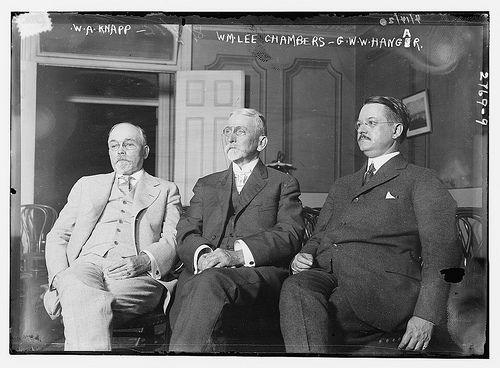 W.A. Knapp, Wm. Lee Chambers, G.W.W.Hangar (LOC)
The rhythm section was composed of Paul Chambers on bass, Jimmy Cobb on drums, and Bill Evans on piano, except for "Freddie Freeloader"�, which featured Wynton Kelly on piano. To round out the band was the horn section, led by Davis himself, and completed by alto saxophonist Cannonball Adderley, and tenor John Coltrane. The individual band members were great musicians in their own respect, but when shepherded by Davis for the "Kind of Blue"� sessions, the music they produced was incredible.
If "Kind of Blue"� is a musical journey, then surely the rhythm section is the flight crew, insuring that the passengers have a smooth ride. Throughout the entire album, the beat is kept steady, the comping never clutters or inhibits the soloist, and the chord changes are right on the money. With a tight rhythm section...