ANCIENT EGYPT: OLD, MIDDLE, AND NEW KINGDOM
Outline
I. Thesis: Ancient Egyptians were the basis for many western traditions. Their
influences are noticable in art, architecture, and religion.
II. The Old Kingdom
A. Zoser, the first pharaoh.
1. built the famed Step Pyramid
2. brought unity to Egypt
B. Religion
1. creation
2. gods
C. Art
D. Downfall of the Old Kingdom
III. The Middle Kingdom
A. Pyramids
B. Middle Kingdom religion
1. Myth of Osiris
2. Similarties between the myth of Osiris and Christian beliefs
C. Middle Kingdom art
D. Downfall of the Middle Kingdom
IV. The New Kingdom
A. Valley of the Kings
B. Shift in religion
1. Aton
2. Akhenaton
C. New art form, naturalistic
D. Downfall of the New Kingdom
V. Conclusion
==========================================================================================
The ancient Egyptians are considered among many to be the civilization upon
which much of the western world's views and attitudes are based.
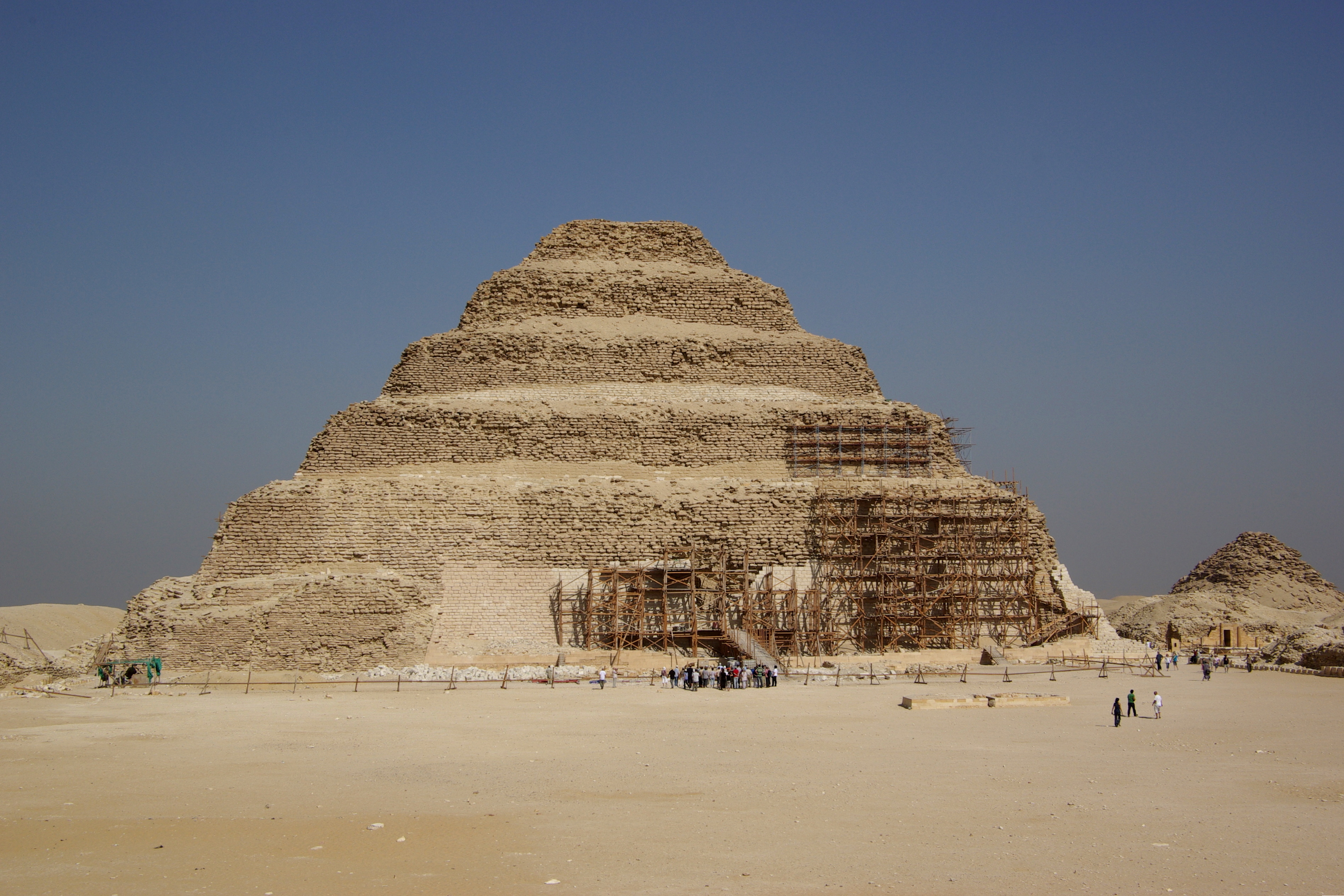 Ägypten, Sakkara, Stufenpyramide
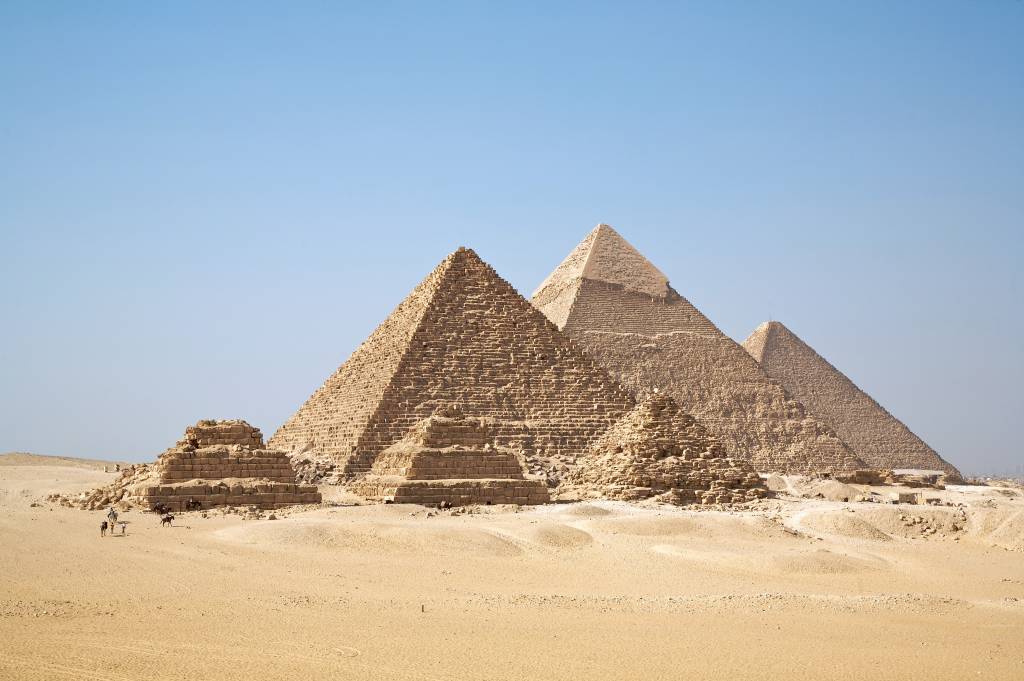 All Giza Pyramids in one shot. Русский: ВÑ...
 The Pyramid of Khafre and the Great Sphinx of Giza...
Everything from
religion, to architecture, to art has been handed down, generation by generation, to us in
the present day. Although many of the ancient Egyptians' traditions have been modified or
altered, the majority of their core principles remains constant. Yet, despite the ancient
Egyptians' conservative nature, there were some changes within the infrastructure of their
society. Throughout the ages known as the Old Kingdom, Middle Kingdom, and New
Kingdom, there has been alterations to their religion, art, and architecture. Internal forces,
as well as outside influences, have molded ancient Egyptian civilization. This paper will
attempt to determine these forces which changed the Egyptians. Modifications of
Egyptian life were subtle, but noticeable and significant nonetheless. Art, architecture, and
religion will be the focus of this paper. Let us begin at the beginning, with the Old
Kingdom.
The Old Kingdom began in the year 2700 B.C. and ended 2200...
Nice
This is quite good, but also simple; add more thoughts about each of the ancient times.
0 out of 0 people found this comment useful.