Over the past fifteen years a powerfully charged drama has
unfolded in New York's Broadway venues and spread to the opera houses
and ballet productions of major cities across the country. Its
characters include angry college students, aging rock stars,
flamboyant B-movie queens, society matrons, and sophisticated fashion
designers. You can't buy tickets for this production, but you might
catch a glimpse of it while driving in Bethesda on particular Saturday
afternoons. If you're lucky, Compassion Over Killing (COK), an animal
rights civil disobedience group, will be picketing Miller's Furs,
their enemy in the fight against fur. These impassioned activists see
the fur trade as nothing less than wholesale, commercialized murder,
and will go to great lengths to get their point across. Such
enthusiasm may do them in, as COK's often divisive rhetoric and tacit
endorsement of vandalism threaten to alienate the very people it needs
to reach in order to be successful.
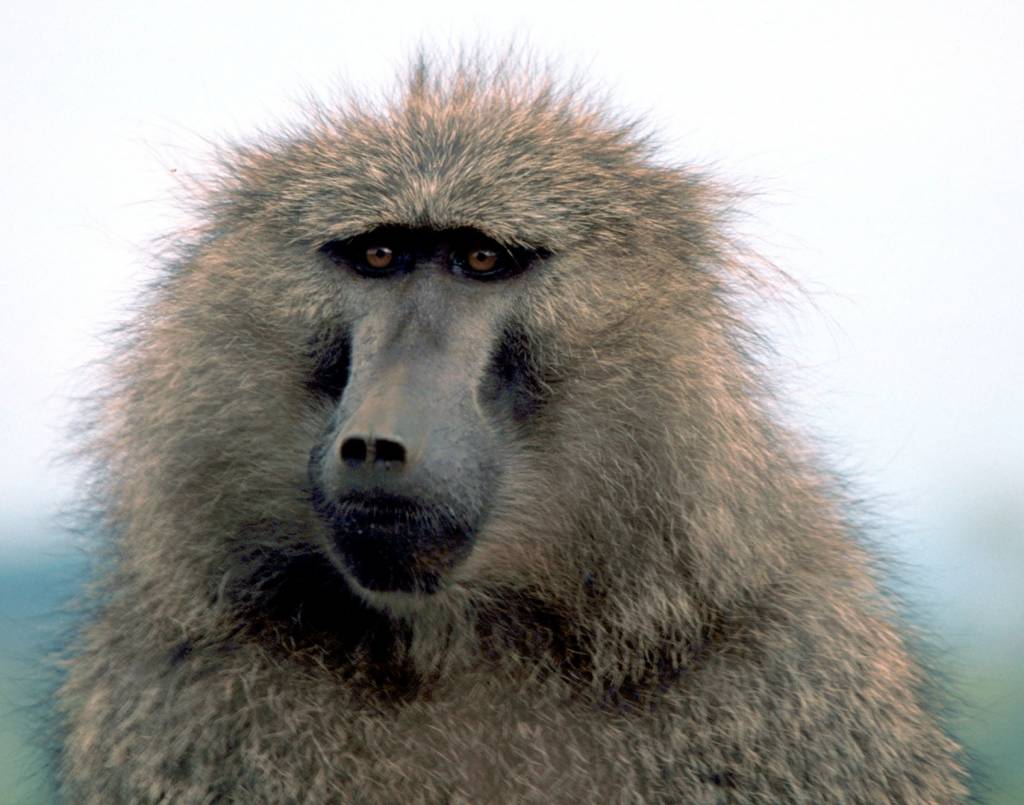 Papio anubis (olive or anubis baboon)
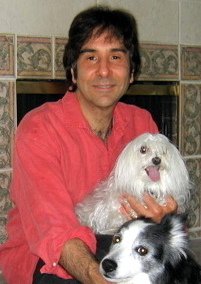 English: Cropped from :Image:Gary Francione.jpg.
 Released into the public domain by PETA.
The animal rights idealogy crystallized with the publication
of philosophy professor's exploration of the way humans use and abuse
other animals. Animal Liberation argued that animals have an intrinsic
worth in themselves and deserve to exist on their own terms, not just
as means to human ends. By 1985, ten years after Peter Singer's
watershed treatise was first published, dozens of animal rights groups
had sprung up and were starting to savor their first successes. In
1994 Paul Shapiro, then a student at Georgetown Day School, didn't
feel these non-profits were agitating aggressively enough for the
cause. He founded Compassion Over Killing to mobilize animal rights
activists in the Washington metropolitan area and "throw animal
exploiters out of business." Since then, COK has expanded to over 300
members with chapters across the country, including one at American
University, which formed in the fall of 1996. COK organizes...