Apple Trees
The Life Cycle of Apple Trees:Apple trees rest in winter. On the branches are buds, some of which contain leaves and others that contain five flowers. During spring, the leaf buds unfold and flower buds begin to grow on the ends of the twigs.
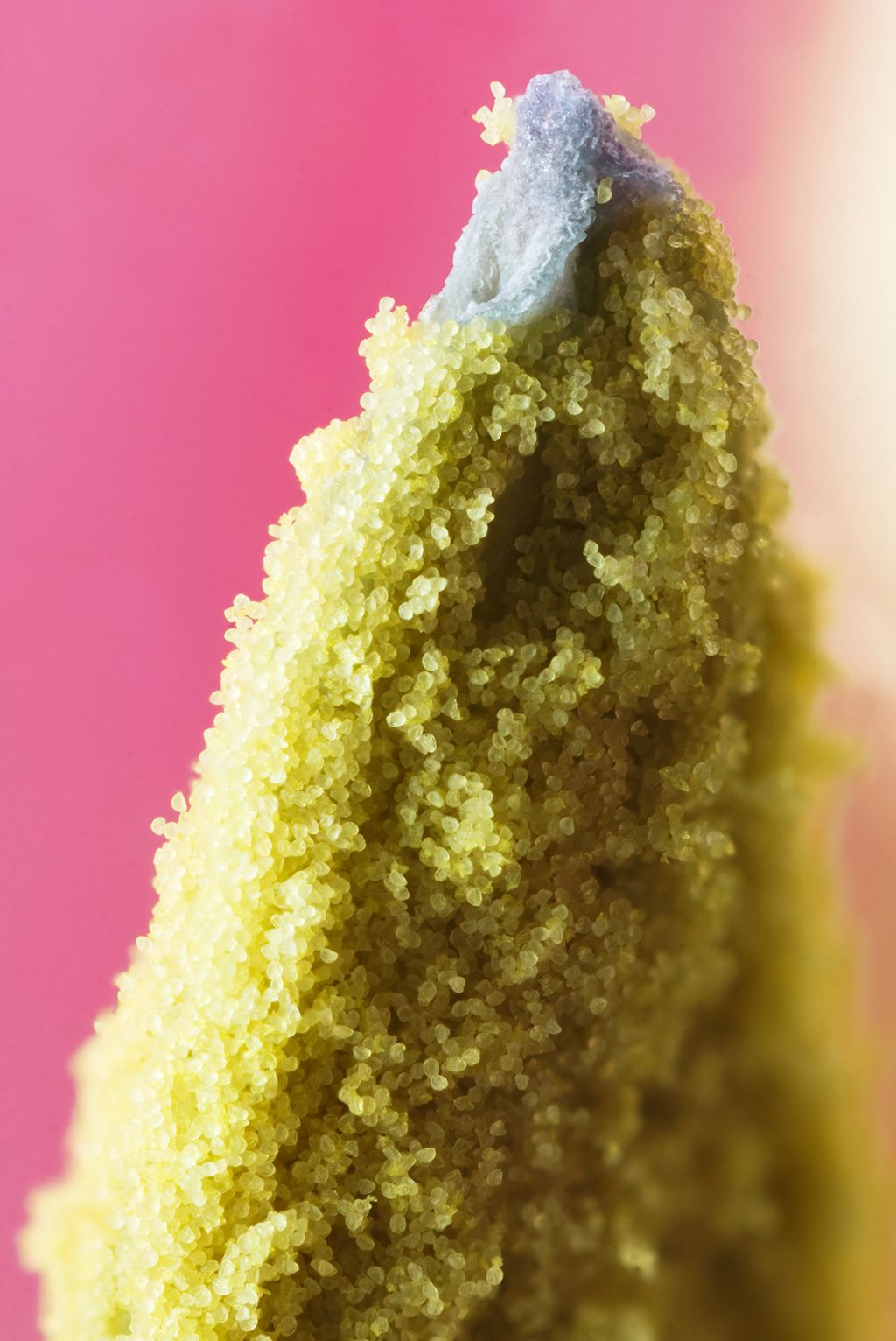
Honeybees are attracted to the apple flowers by nectar and the scent of the petals. As the bee collects nectar, it also picks up pollen. When the bee lands on a flower on another tree, it brushes against the pistil of the flower, leaving pollen grains on the sticky stigma. The pollen grains send tubes down through the styles to reach the ovary (pollination). Through the filament the sperm present 'in pollen can reach the ovules that are in the ovary. The fertilized ovules will become seeds.
The outer wall of the ovary develops into the fleshy white part of the apple. The inner wall of the ovary becomes the apple core around the seeds.
In summer, the apples grow bigger and eventually change color, and the tree produces new growth. In autumn, the apples ripen. About two weeks before the harvest, the apples' food supply from the tree is cut off and the apples become sweeter. Most apples are harvested by hand at around September and October.
Parts of the flowers from apple trees: Sepals - five green, leaf like structures that make up a flower's calyx Petals - the part of a flower that attracts insects by their color and scent Stamens - the male reproductive part made up of an anther and filament Anther - the part of the stamen that produces pollen Filament - the stalk of the stamen Pistil - female part of the flower, made up of a stigma, style, and an ovary Stigma - the top of a flower's...
More Plant Biology
essays:
Notes on chapters of Botany covering the topics: Multicellular Algae, Mosses/Ferns, Plants with Seeds, Seed Plant Reproduction, Plant Structure, and Control of Plant Growth/Development
... The stamen is the male reproductive structure -Consists of a long thin filament that supports the anther -The anther is the structure that produces the pollen grains -The pistil is the female flower part -Base is called the ovary -The ...
Plant Independent Study: Dissection of a Flower
... insect pollinators. Sepals- Specialized leaf, modified to protect the flower bud, as the flower develops within. Stigma- The part of a flower's female reproductive organ (carpel) that receives the male pollen grains. Style- A slender ...
Plants
... different parts of a plant help it make food. Some plants cross-pollinate. These plants have male (the stamen), or female (the carpel) parts. Wind and water sometimes scatter the pollen, but ... (mainly trees). Some plants eat insects. These plants have moving parts, sticky substances, or pools of fluid ...
Evolutionary Adaptations to Flowering Plants
... on wind pollination generally lack brightly colored petals. Stamens are male reproductive organs in a flower, whereas the carpel houses the female reproductive organs. A stamen consists of a supportive filament, and an anther, where pollen is ...
Introduction About Angiosperms
... the calyx;the stamens enclosed by the corolla, andthe pistil in the center of the flower. The Calyx. The calyx is the outermost whorl of a flower. It consists of sepals, that are green. The ...
Plants And Seeds Of Hybrid Corn Variety
... into parts of a plant. Exemplary types of tissue cultures are protoplasts, calli and plant cells that are intact in plants or parts of plants, such as embryos, pollen, flowers, kernels, ears, cobs, leaves, husks, stalks, roots, root tips, anthers, silk ...
Discuss the xylem and phloem. (Structure, Changes in the Xylem of Woody Plants, Transport)
... center of the tree laterally supplying materials to the living tissues in the vascular cambium and phloem. Flowering plants have a quite efficient xylem. The last act in life of some conducting cells is to digest parts of their ... tip of a veinlet in the leaf. (3) Water molecules attract each other, in ...
The Structure of Ferns and their reproduction
... Some filamentous colonies show the ability to differentiate into three different cell types. Despite their name, different species can be red, brown, or yellow; blooms (dense masses on the surface of a body of water) of a red ...