Aristotle
384-322 BCE
Introduction
Who was Aristotle? Many consider Aristotle as one of the three greatest ancient Greek philosophers. His work has greatly influenced both western philosophy and western theology. The writings of both Plato and Aristotle shaped and formed the foundation of ancient Greek philosophy. It was Socrates that finally finished their ideas.
Aristotle is known for being one of the only historic figures that studied almost all of the subjects possible at the time. In science, Aristotle studied anatomy, astronomy, embryology, geography, geology, meteorology, physics,and zoology. In philosophy, Aristotle wrote on aesthetics, economics, ethics, government, metaphysics, politics, psychology, rhetoric and theology. He also dealt with education, foreign customs, literature and poetry. All of his works combined together practically make an ancient Greek encylopedia.
Aristotle's life
Aristotle was born 384 BCE (Before Christ Era) in Stagirus, a Greek colony and seaport on the coast of Thrace. His father, Nichomachus, was a physician for the king of Macedonia.
 Portrait of Aristoteles. Pentelic marble, copy of ...
 Detail of The School of Athens by Raffaello Sanzio...
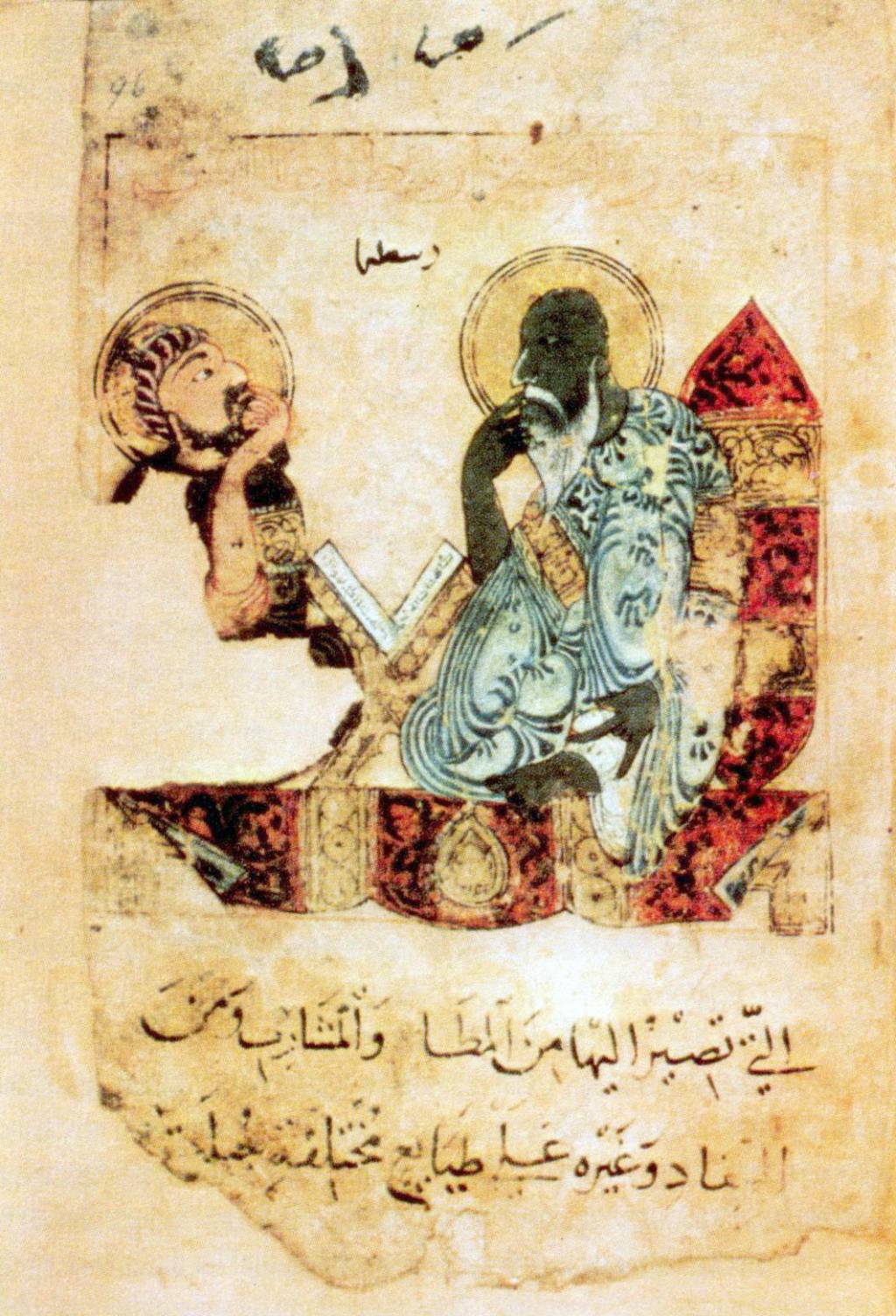 Ancient Greek philosophers such as Plato and Arist...
From this began Aristotle's long association with the Macedonian Court, which considerably influenced his life. Both his father and his mother died when Aristotle was only 10 years old. There is not much recorded about Aristotle's life between his parents death and his leaving to Athens when he was 18 years old. From the ages of 18 to 37 Aristotle remained in Athens as a student of Plato and distinguished himself at the Academe. In the later years of his stay with Plato and the Academy, he began to study on his own, especially on the subject of rhetoric. When Plato died in 347 BCE, it seemed like Aristotle would most likely become the next head at the academy. Instead, Plato's nephew Speusippus was elected because of the difference of views between Plato and Aristotle. His friend Hermeas, ruler of...