Aristotle was born in 384 BC and lived until 322 BC. He was a Greek philosopher and scientist,
who shares with Plato being considered the most famous of ancient philosophers. He was born at
Stagira, in Macedonia, the son of a physician to the royal court. When he was 17, he went to Athens
to study at Plato's Academy. He stayed for about 20 years, as a student and then as a teacher.
When Plato died in 347 BC, Aristotle moved to Assos, a city in Asia Minor, where a friend
of his named Hermias was the ruler. He counseled Hermias and married his niece and adopted
daughter, Pythias (wierd names, huh). After Hermias was captured and executed by the Persians,
Aristotle went to Pella, Macedonia's capital, and became the tutor of the king's young son
Alexander, later known as Alexander the Great. In 335, when Alexander became king, Aristotle
went back to Athens and established his own school, the Lyceum.
 20 px
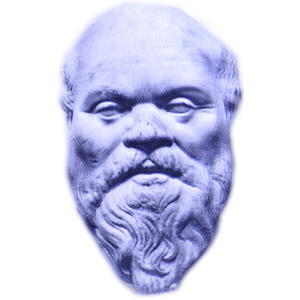
20 px Portrait of Aristoteles. Pentelic marble, copy of ...
 Detail of The School of Athens by Raffaello Sanzio...
Since a lot of the lessons
happenned when teachers and students were walking, it was nicknamed the Peripatetic school
(Peripatetic means walking). When Alexander died in 323 BC, strong anti-Macedonian feeling
was felt in Athens, and Aristotle went to a family estate in Euboea. He died there the following
year.
Aristotle, like Plato, used his dialogue in his beginning years at the Academy. Apart from a
few fragments in the works of later writers, his dialogues have been wholly lost. Aristotle also wrote
some short technical writings, including a dictionary of philosophic terms and a summary of the
"doctrines of Pythagoras" (the guy from the Pythagorean Theorem). Of these, only a few short pieces
have survived. Still in good shape, though, are Aristotle's lecture notes for carefully outlined courses
treating almost every type of knowledge and art. The...
Nice
Nice essay, will help me with ideas for my essay in world history :-D
0 out of 0 people found this comment useful.