Perfect From Beginning to End
"Ah God! It was true! All the prophecies! O Light, may I look on you for the last time! I, Oedipus, Oedipus, damned in his birth, in his marriage damned, damned in the blood he shed with his own hand!"(229) The play Oedipus Rex, written by Sophocles, is an ideal example of the perfect tragedy. When this play is placed next to the definition from Aristotle's Poetics, the evidence of this statement is undeniable. Aristotle had many ideas pertaining to what makes the perfect tragedy. Poetics states that a tragedy must be complete, _"the plot ought to be so constructed that, even without the aid of the eye, he who hears the tale told will thrill with horror..."(242). In order for a perfect tragedy to be complete, it must have a beginning, middle and end that embody tragic elements. The observer should be able to feel fear and pity for the main character while the plot is unraveling,
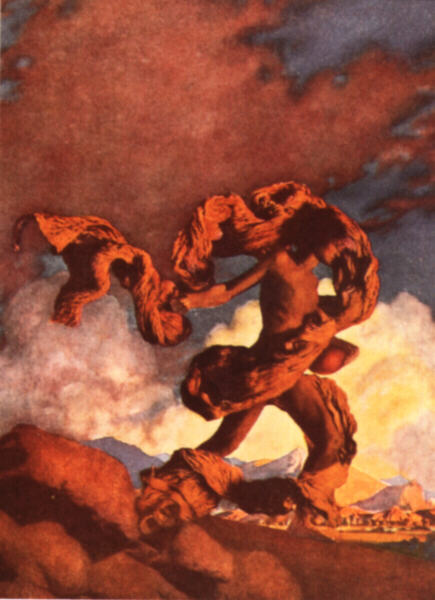 Cadmus Sowing the Dragon's teeth, by Maxfield Parr...
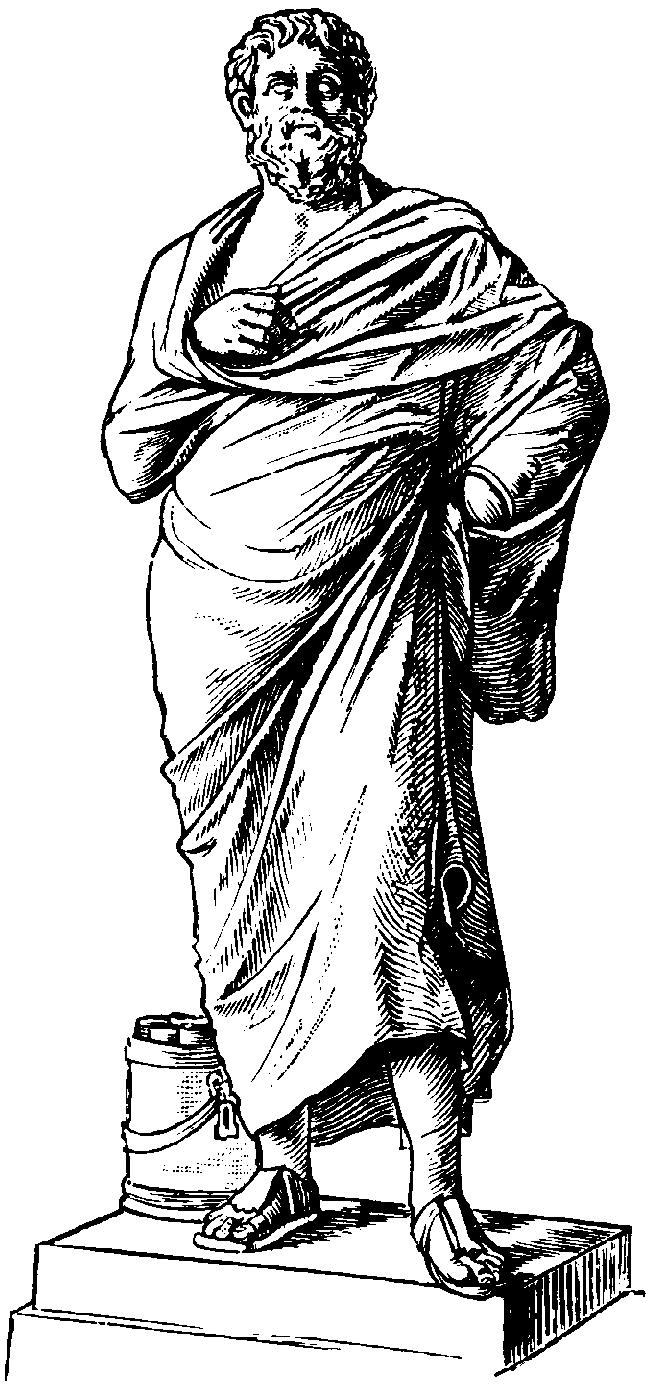 This image was first published in the 1 st (1876&n...
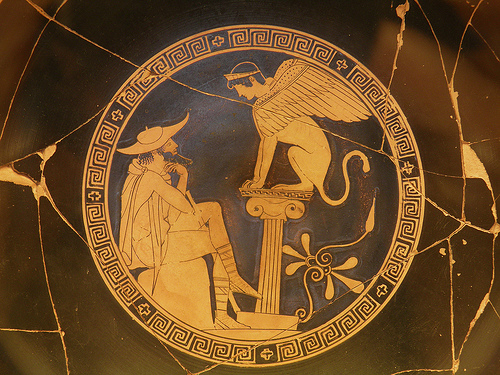 Oedipus and the Sphinx of Thebes, Red Figure Kylix...
.
In Aristotle's Poetics as follows: "a beginning is that which does not follow anything by casual necessity, but after which something naturally is or comes to be"(241). This means a narrator or special introduction should have no part in a tragedy. The observer should be able to understand what is happening by the actions and words on the stage. When Oedipus Rex opens the stage is set up with stairs leading to a set of double doors at the palace of Oedipus the King. A group of suppliants who have come to speak with their king are crowding the stairs and the look on their faces tells the audience that they have troubled thoughts. The king enters and addresses his subjects, and immediately it is known that all is not well in the city of Thebes.