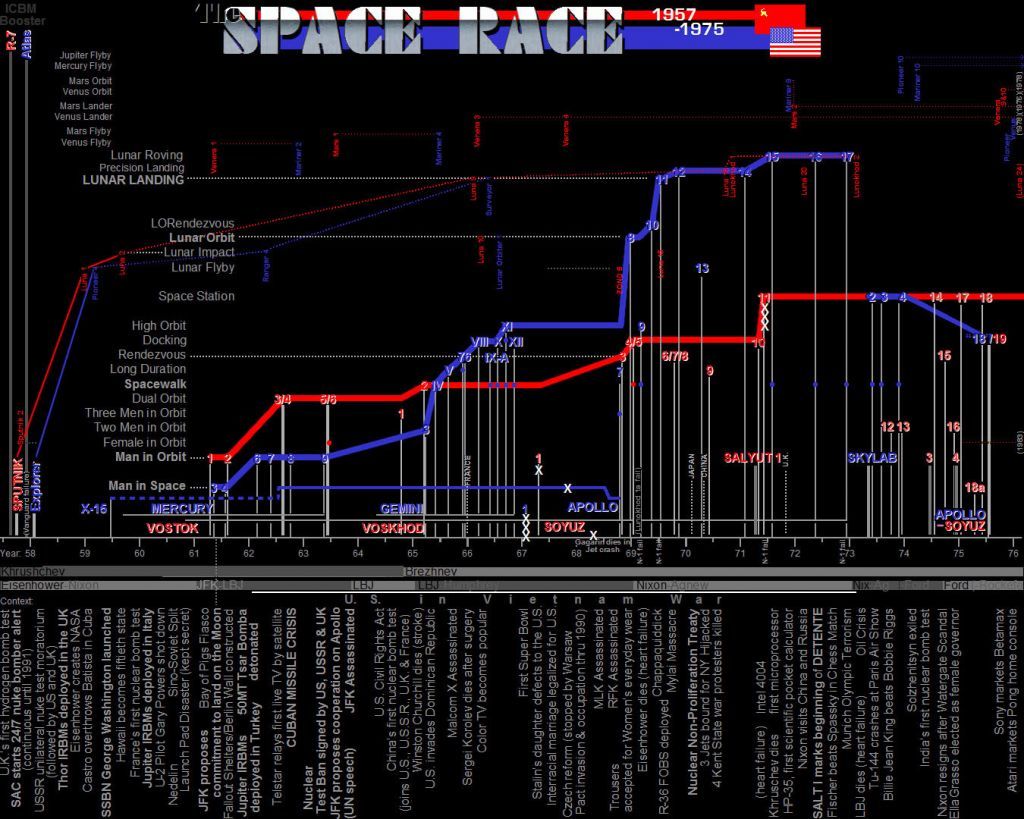
The Arms and Space Race - What was really going on during the Cold War
When on the 6th day of August 1945 the world's first atomic bomb was dropped on the Japanese city of Hiroshima, some 66,000 people died almost instantly after the explosion and the subsequent firestorm. The power of nuclear weapons was instantly apparent and it would bring about an entirely new era in worldwide arms. It brought around a bitter Cold War of words and competition that would last some 45 years between the two former wartime allies: the United States of America and the Soviet Union. This rivalry brought about the feverish development of arms and space exploration equipment so technologically advanced that it would change the world forever. The key objective for the development of these weapons was to prevent the enemy from declaring war. These weapons acted as the symbols of each nation's technological prowess which did, with the evolution of time, encourage and propel an attitude of rivalry between the two countries.
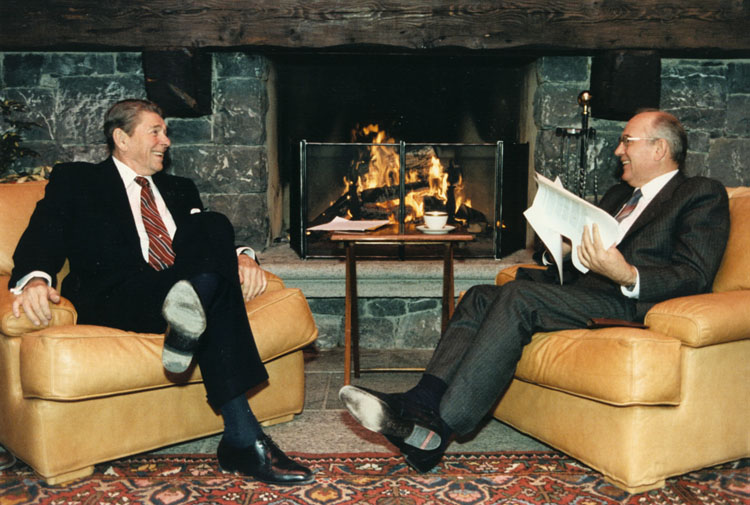
The Arms Race represented to the core what each of the countries believed: that their weapons, systems and infrastructure were grossly superior. This therefore led both nations to create new arms which would, given that neither country could agree on or restore diplomatic relations, act as deterrence to the other nation. Given the scope of the surrounding circumstances, the Arms Race's products were the fruit of that rivalry. They were the pride of each nation and the sheer chagrin of the other. The arms and space races were and are the lasting symbols of the greater rivalry between the two nations. Weapon system which was, like most weapons of the period, designed to deter the USSR. According to the successive United States Presidents, it had never been the intent of the United States to launch a nuclear-tipped missile against another nation
When in 1957 the...
Reviews of: "The Arms and Space Race - What was really going on during the Cold War"
:
More International Organizations & Conflicts
essays:
Assess the reliability and usefulness of the documentary 'Prelude to War,' in determining the failure of the League of Nations.
... clearer as the documentary goes on to explain the 'damning' war plans of the Axis Powers; Germany Italy and Japan. It describes the Japanese as 'bucktooth pals' and the Germans as 'having an inborn ...
What was the reason the U.S Dropped the Atomic Bomb on Hiroshima And Nagasaki? Find out some of the reasons why this happen and how it got started. DBQ
... an atomic bomb on Hiroshima was strictly military measure calculated to intimidate the Soviet Union in the post-Second-World-War era rather ...
How did the Soviet Union develop their Atomic Bomb?
... first atomic bomb, as well as Fuch's own concept of an initiator. On December 21, Fuchs was accused of giving secret information on the development of nuclear weapons to Soviet scientists ... The Soviet Union did not keep a record of the Soviet atomic project ...
The development of Nuclear Weapons.
... first soviet bomb would give Americans permanent lead in nuclear weapons technology. Soviets believed that instruments of force always have political capabilities. For the Kremlin weapons were political tools. This led Americans to the same conclusion. The beginning of Cold War ...
"the cuban missile crisis" 2500 words detailed analysis of the cuban missile crisis 1962, including long and short term causes, the crisis itself, and the long and short term consequences
... unfair nuclear advantage: "Why shouldn't the Soviet Union have the right to do the same as America?"(Khrushchev). Concern had been growing within the US government about the new relationship ...
Was the league of nations a success or a failure?
... they did the best they could in their time. The technology was just not with them. They language was a major ... the Japanese told them to. Later in 1932 Japanese airplanes and gun ships bombed Shangai. When the army was told to withdraw by the Japanese civilian ...
Was the atomic bombing on Nagasaki necessary?
... to declare war against Japan, the U.S. dropped the bomb on Hiroshima. The U.S clearly did not give the Japanese any ... The atomic bombings of Hiroshima and Nagasaki were nuclear attacks at the end of World War II ...
Cuban Missle Crisis
... the Soviets. He needed answers and he needed them fast. Having these offensive nuclear weapons only ninety miles from American soil was unacceptable. He called a meeting at 11:45 that ...
NICE
You gave a very good detail to your essay. GOOD work!
1 out of 1 people found this comment useful.