ART AND THE RISE OF CIVILIZATION
The Building And Meaning To The Great Giza Pyramids
Many hundreds of years ago the construction began on one of the
seven wonders of the world. Today they are looked upon as not only a tomb
for the dead, but also an artistic masterpiece inside and out.
The three great pyramids of Giza stand on the west bank of the Nile
river (outside Cairo). These pyramids were build around 2600-2500 B.C. The
largest one was built for King Khufu (better known as Cheops by Grecians).
The second largest was built for King Chephren, and the third was built for
King Mycerinus.
King Cheops' pyramid contains more that 2 million stone blocks that
average 2.5 tons a piece. It originally stood 481 feet tall, but considering
some of the top stones has fallen off, it now stands only 450 feet tall. Its base
covers 13 acres.
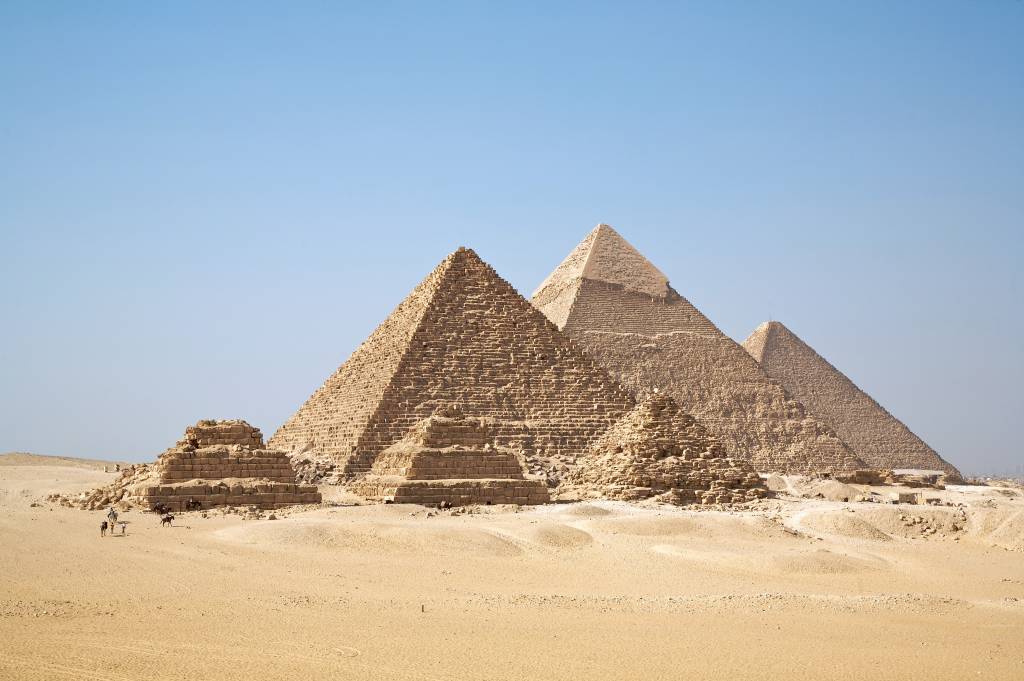 All Giza Pyramids in one shot. Русский: ВÑ...
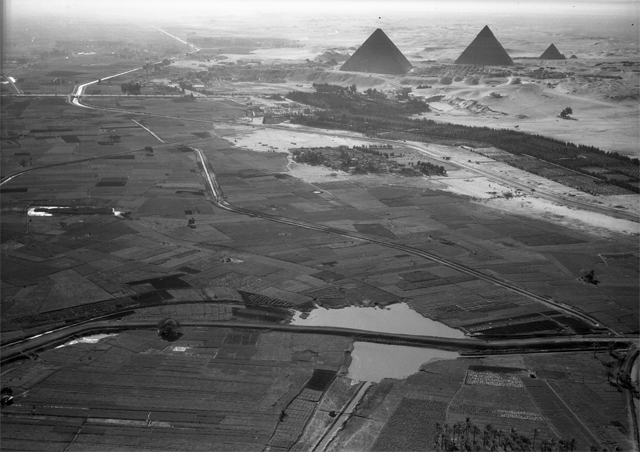 English: January 24, 1938. Cairo, Egypt: Another v...
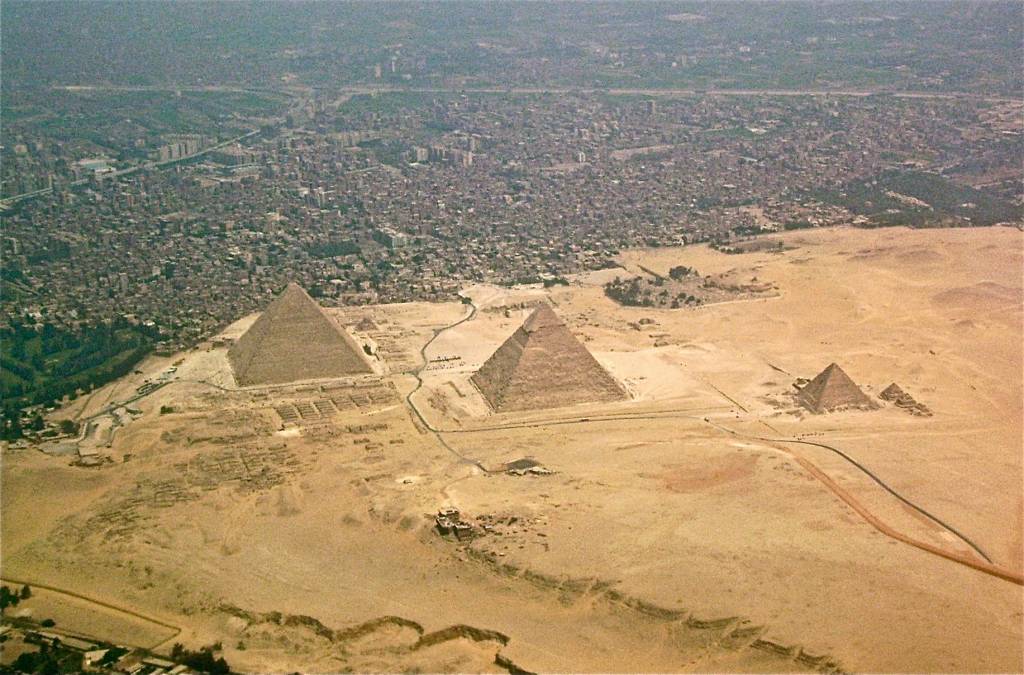 English: The Giza-pyramids and Giza Necropolis, Eg...
The quote "It is estimated that it took 400,000 workers working
everyday for 20 years to build the Great Pyramid" was said by the ancient
Greek historian Herodotus, however archaeologists now doubt these figures,
but the true figures can't be specified. All archaeologists have discovered to
the best of their knowledge is that they believe that peasants worked on the
pyramids during the flood season (when the Nile flooded the crops).
These magnificent structures were built to bury the dead body of the
pharoh, however as large as they were, they were often broken into and
looted for all of the jewels and gold that was entombed for the pharo's
passage out of this world. Therefore after the great pyramids in Giza were
completed, there were no more built (at least in Egypt). Instead, the bodies of
the pharo's were buried in secret tombs in cliffs or in valley's...