The discovery of Tutankhamun's tomb by Howard Carter in 1922 is considered the most important archaeological find of the century. As one of the most intact monuments of Ancient Egypt, Tutankhamen's tomb reveals a great deal about the burial customs, role of the king, religious beliefs, leisurely pursuits and food of New Kingdom Egypt.
Being so intact when Carter made the discovery, the shrine of Tutankhamun gives us a strong indication of the burial practises of the New Kingdom Egyptians. The Canopic Shrine situated on the east wall of the Treasury holds Tutankhamun's embalmed internal organs. A gold chest held four Canopic jars containing the dead pharaoh's internal organs - lungs, stomach, intestines and liver - in each jar. Clearly, during the process of mummification, the embalmers must have removed the viscera and preserved them in the Canopic jars, perhaps to be taken with the pharaoh to the next world.
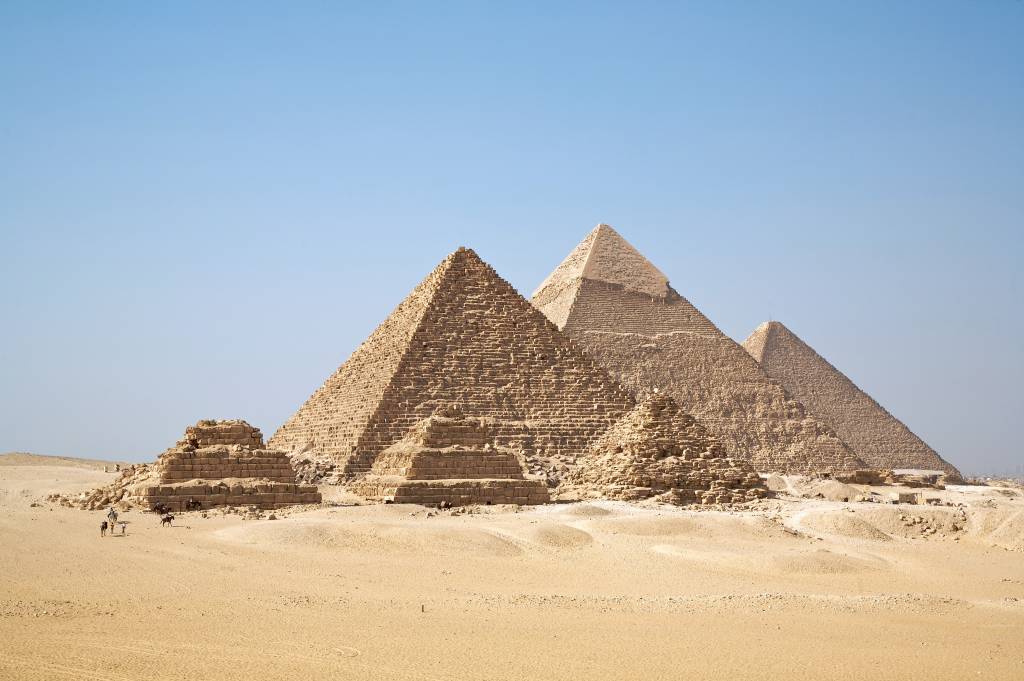 All Giza Pyramids in one shot. Русский: ВÑ...
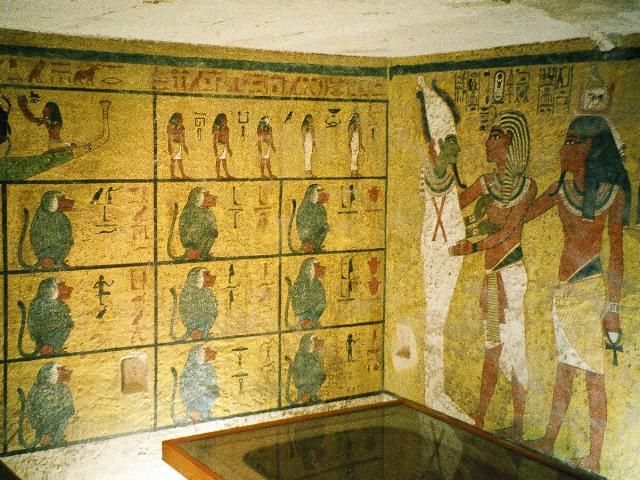 Tomb of Tutankhamun in the Valley of the Kings
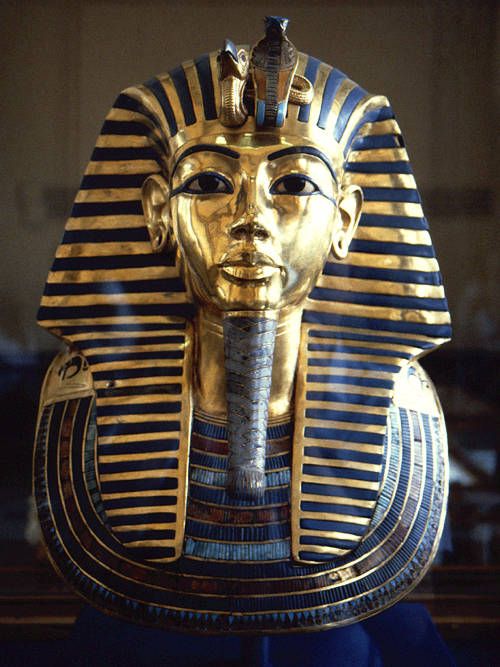 Golden funeral mask of king Tutankhamun
The third and innermost of three mummiform coffins of Tutankhamun is made of solid gold and is inlaid with semiprecious stones and coloured glass. It is covered with incised decorations and inscriptions inside and outside. It bears the names and epitaph of the deceased king and also protective texts. From this we learn how important the decoration of the mummy was, and the power the coffin was believed to hold. The coffin is shaped in the form of the god Osiris holding the sacred insignia, the heka sceptre and the flail. He wears a divine beard is made of gold inlaid with blue glass, and a vulture and cobra situated on his forehead are protecting him from evil and ensuring safe passage into the other world. All of these are royal symbols of the Pharaoh and signify once again his direct alignment with the gods.
The 35 model boats found...