In this exercise we are required to investigate a claim that touts Australia's active participation Iraq as illegal. First, we will look at whether there is merit in the debate, in terms of the extent to which International resolutions influence Australian Law. Then, we will then further consider whether Australian courts are able to intervene and review our physical involvement in the conflict.
The constitutive law of the United Nations is its Charter, and its contents prescribe the conditions of international conflict for all its members. The question of whether war against Iraq is valid at international law, hinges on whether there has been a breach of the Charter. It can be seen that therein exists a general veto on the use of force. Article 2(4), details an explicit 'refrain...from the threat of force', and such is subject to two exceptions, action taken with the authority of the Security Council and self-defence in response to an armed attack.
 Australian Coat of Arms (adopted 1912)
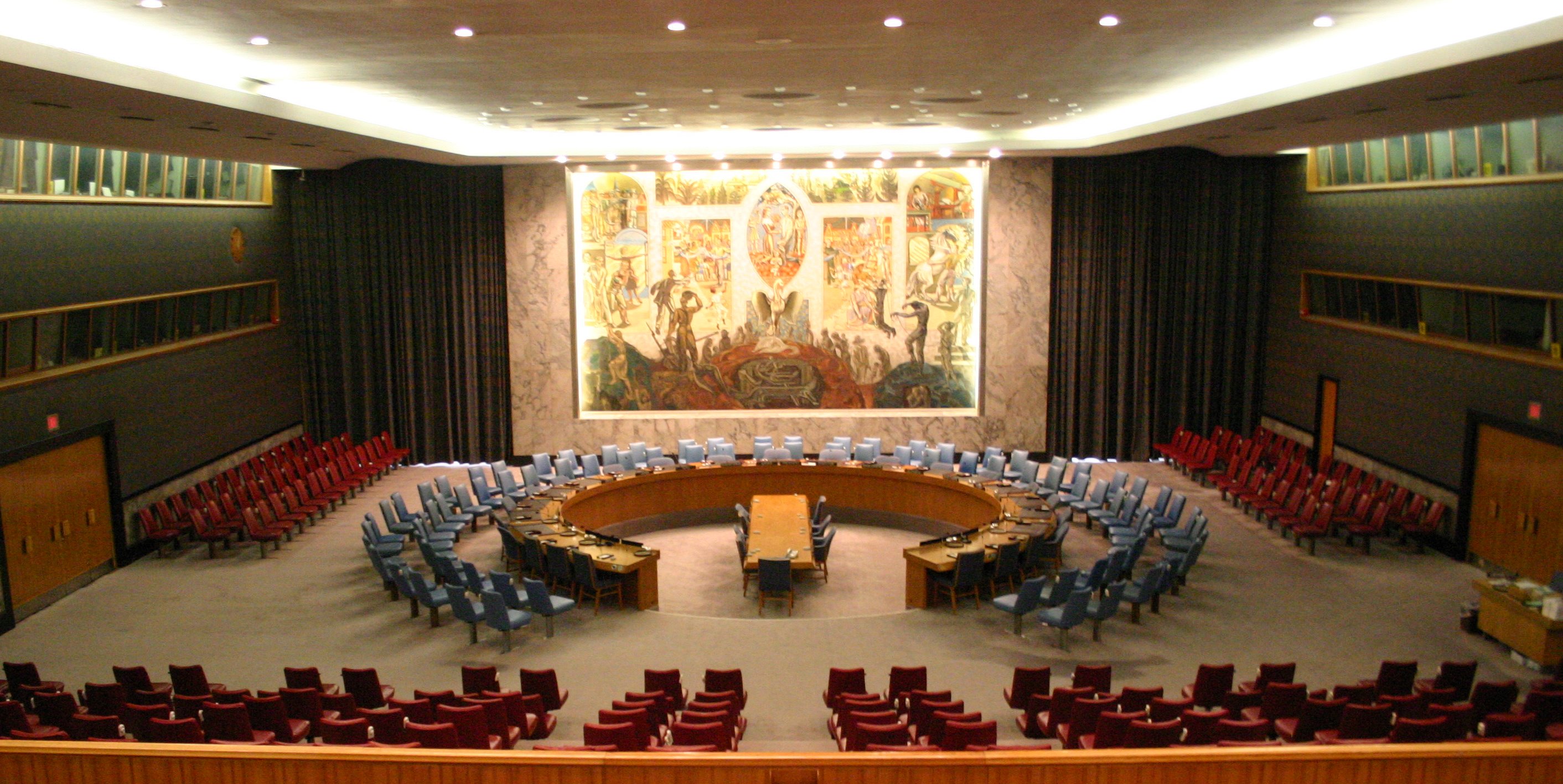 English: The United Nations Security Council Chamb...
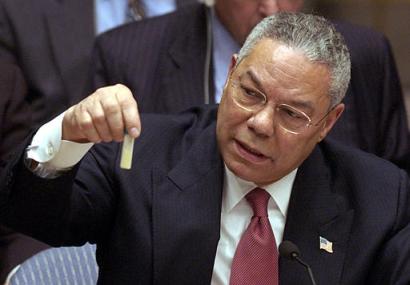 English: At the UN, Colin Powell holds a model via...
In this respect it can be said that the charter would be breached if troops were committed, as the proposed use of force is not an exercise of self-defense and is in the absence of authorization. Simply, members would not be acting in 'accordance' with 'the decisions of the Security council.' However, whether these resolutions are binding on domestic law will ultimately determine the legality of the conflict in Australia.
It is generally accepted that Australian law does not recognise the conditions of international treaties as enforceable, unless they are first incorporated through executive and legislative action. The authority established in Bradley v The Commonwealth supports this concept, wherein it was held that the Charter of the United Nations was not exercisable upon individuals in Australia, as 'neither the charter nor the resolutions of the Security Council had been carried into effect...