INTRODUCTION
Gamelan is a form of unique and exotic music originating in the islands of Indonesia in South East Asia. Gamelan music is played on an orchestra consisting primarily of metal-keyed percussion instruments ("metallophones") and gongs, but also including hand or stick drums, flutes, and occasionally also bowed instruments and bamboo rattles.
Gamelan is the music of Indonesia, Gamelan orchestras are usually percussion oriented, but some varieties may feature flutes, bowed and plucked strings, or vocalists in a prominent role. Many different islands, or regions within islands, have their own unique Gamelan instruments and traditions. The word Gamelan comes from the ancient roots "gambel" (Bali). Most Indonesian languages define gambel as to make a sound by striking or playing a musical instrument, such as a gong or a drum.
Function
The use and purpose of gamelan music. Originally, to played in outdoor temples for religious rites, to inspire trance and to invite ancestral spirits.
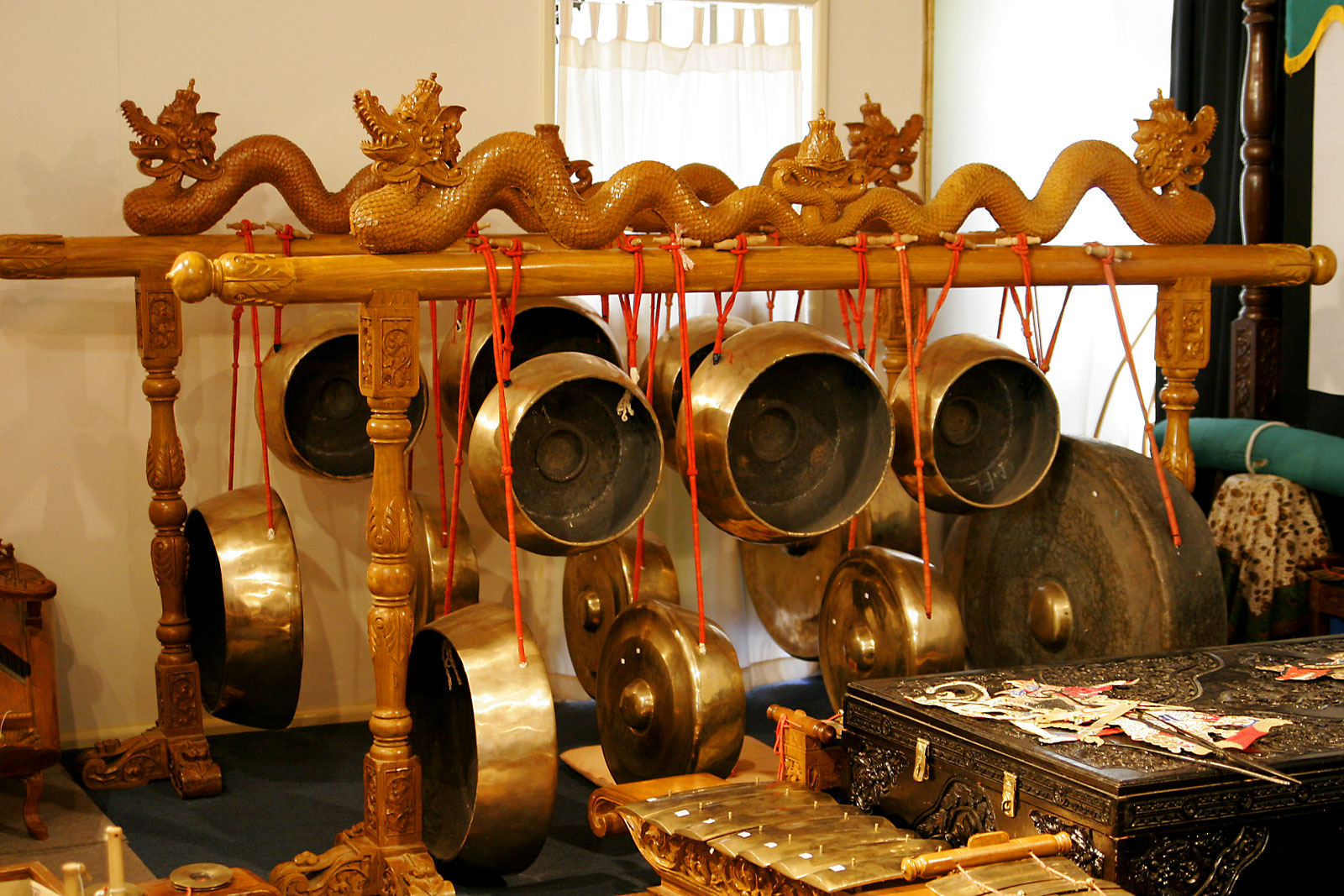 A gong collection in a Gamelan ensemble of instrum...
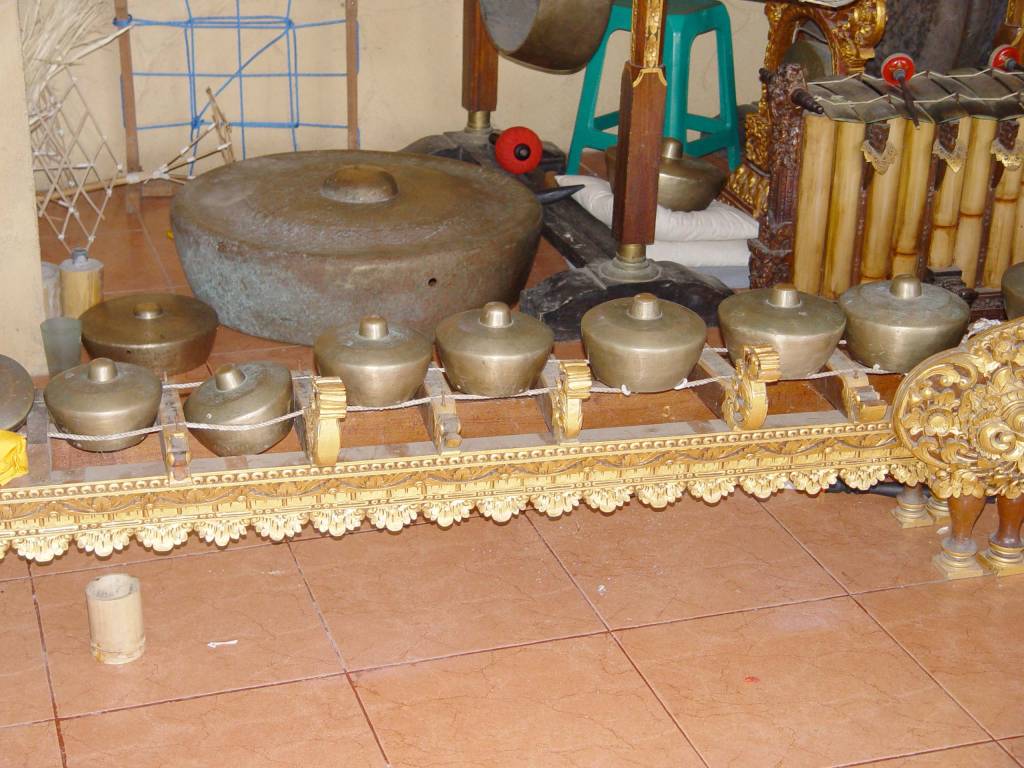 Balinese reong, a one-row rectangular gong chime s...
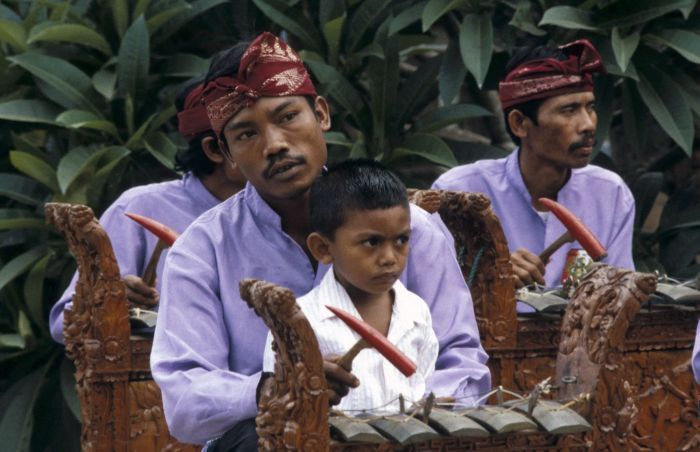 English: Child learning to play in a gamelan orche...
But, in Java religious worship was redirected to the royal courts and the old Hindu and Buddhist temples were left to decay. This change of environment gave rise to many of the aesthetic differences between Balinese and Javanese musical styles. Music in Java moved from open-air temples to large roofed platforms within the royal court. Mallets were softened to allow the instruments to reverberate within the space in a more pleasing manner. Forms were also slowed down and elongated to take advantage of the new acoustics and lend austerity to the court. Music became largely a cerebral pursuit of the aristocracy and musicians became servants of the courts.
Gamelan Bali
Balinese gamelan music has many different forms. The most common that a visitor to Bali might encounter are the marching gamelans - often seen in street processions including cremation processions.
KOTEKAN
Bali has a great diversity...