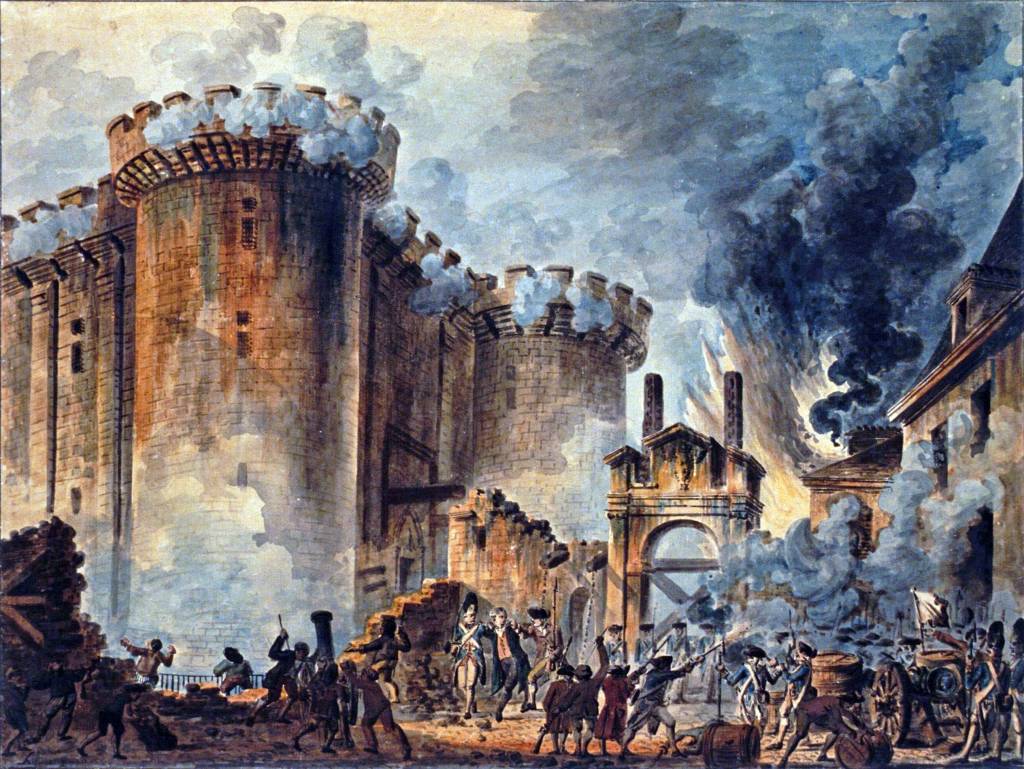
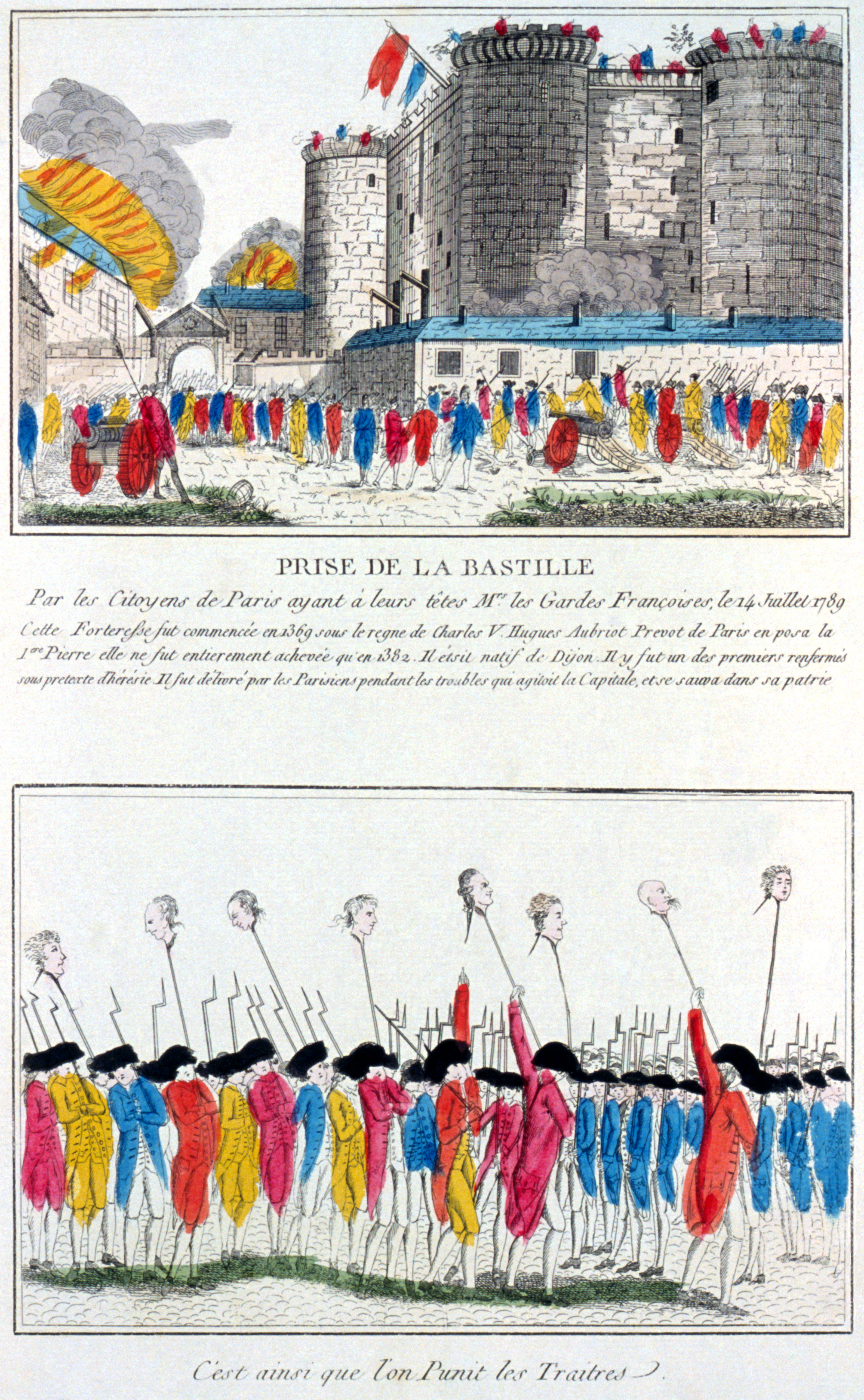
The Bastille became the focus of the opening of the French Revolution. Why?
The Bastille had been transformed from being used as a military fortress to protect the Eastern wall of Paris in the 14th Century to it's less imposing role as a prison by the 17th Century . The walls were over eighty feet high and it held weapons arsenals from its glory days as a military fortress . Acting under King Louis XIII, Cardinal Richelieu imprisoned many undesirable characters arbitrarily so that the Bastille's reputation became notorious for the secretive and capricious way that citizens could be taken away by demand of the King (called 'lettres de Cachet') , with no trial and for as long as the State wanted . By the time King Louis XV1 was in power, the Bastille no longer housed commoners but generally held only two classes of people: writers whose work was considered treasonous, and delinquents whose families requested they be put away (the infamous Marquis de Sade was one such prisoner) . The conditions of the prison depended upon the wealth of the prisoner- many secured privileges such as writing materials, visitors, extra pillows, tobacco and alcohol - though the reputation of the Bastille still remained as a dark and vermin- ridden place where the King hid away his opponents. Books circulated in the 1780's- Linguet's ' Memoirs of the Bastille', for example - that cemented the Bastille as a perfect example of why people should be in opposition to state power: it was a secretive process of incarceration, it was given special power over the life and death of its inhabitants and it was careless with its power . The conditions of the Bastille were exaggerated and condemned by the writers of the day, partially because incarceration is a terrible...
Reviews of: "The Bastille became the focus of the opening of the French Revolution. Why?"
:
More The French Revolution
essays:
The French Wars of Religion : What were the causes and consequences of King Henry IV's death?
... son, King Louis XIII. However, he was only nine years old, therefore, his mother, Marie de Médicis became as the Regent and received help from Cardinal Richelieu until Louis XIII was ...
French Revolution - What were the causes of the downfall of Louis XVI?
... the French Revolution (1789-1799). Retrieved 25 March, 2006 from . - Landry, Peter. (1997-2004). Blupete - Literature - Biographies - John Locke. Retrieved 25 March, 2006 from - Bok, Hilary. (2003). Stanford Encyclopedia of Philosophy - Baron de Montesquieu, Charles-Louis de Secondat ...
Reign of Terror was during the French Revolution.
... the French Revolution. Under the Reign of King Louis the XIV, France still maintained a basically feudalistic society in which the monarch ruled with divine and absolute authority. This "ancien regime" had persisted for centuries throughout ...
Legacies Of The France Revolution
... nineteenth-century European literature wrote about the French Revolution, including Honoré de Balzac ... time, passed along specific ideas to the legislators through the Marquis de Lafayette. Although the French Revolution took a far different path than the North American variety ...
Bread Riots as a cause of the French Revolution
... the Bastille. Similar uprisings against the government followed. Rural citizens began hearing rumors that King Louis XVI was ordering his troops into the French countryside ...
What were the causes and the effects of the French Revolution?
... the Revolution, only moderate reforms were wanted by the people. An example of why they wanted this was because of king Louis XIV' s actions. At the end of the seventeenth century, King Louis XIV ...
AP European History: The French Revolution.
... the Revolution. However, due to the suppression of the Estates General, hunger, and taxes, in Paris the people riot and storm the fortress called the Bastille on July 14th, 1789 ... century in France, there was a horrible economy, since Louis XIV spent a lot of money on wars and buildings ...
The French Revolution and the Terror
... the French Revolution were bourgeois and they included names such as Robespierre and Danton. The bourgeoisie was discontent with inequalities that obstructed them from governing, tax collection, military service ... after King Louis the 16th sent a letter to his Brother the King of ...
Very well done!
A very descriptive essay and certainly Bastille was just the beginning and the tensions was what lead to the revolution. The bibliography adds to the excellence of the essay. very good job!
2 out of 2 people found this comment useful.