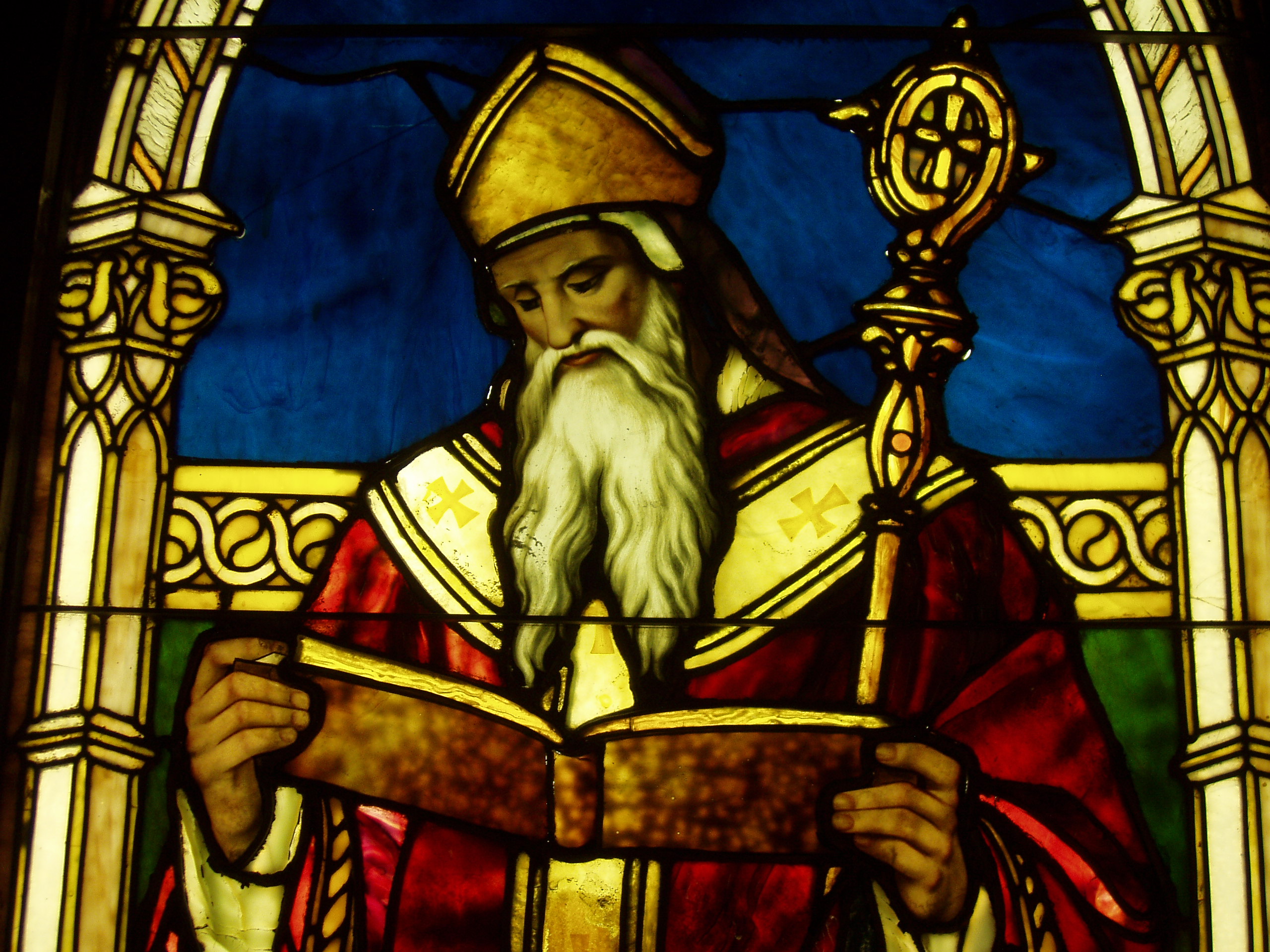
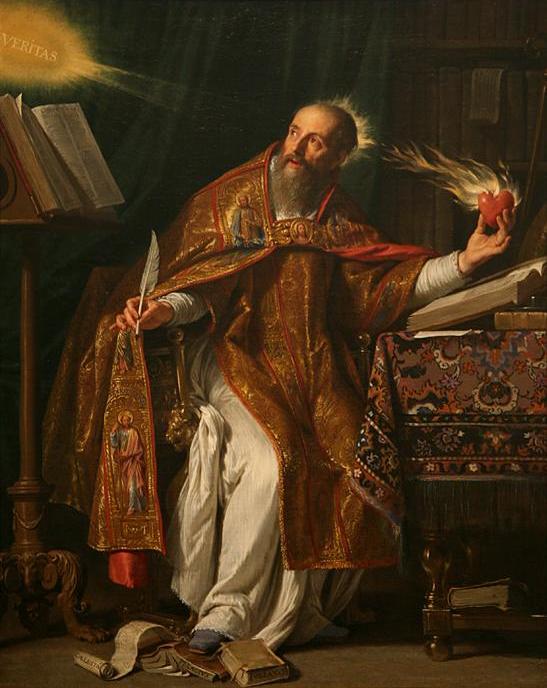
Believe What One Wills: An essay questioning the motives for St. Augustine's conversion.
As a general rule, human beings want their lives to have harmony and little conflict. In order to accomplish this, many attempt to align their personal philosophy with a widely accepted philosophy. For many years of his life, Saint Augustine tried to do just that. He knew what he felt and thought, but was not quite sure how to express it until his conversion to Christianity. In the first part of the autobiographical book, Confessions, Augustine reveals what his life was like before his conversion. In his examinations of other faiths, and membership in at least one, he didn't feel completely feel satisfied with what they offered. He continued to search for a religion that embraced what he needed and desired, a way to control his will. Augustine's concept and ability to manage his will played a very important role in what faith he finally adopted as his own.
As an adolescent, Augustine fell into a similar trap as many others at the same age; he desperately wanted to be loved. He said, "The single desire that dominated my search for delight was simply to love and be loved" (24). However, his trouble was not that he wanted to be loved; it was that he didn't understand what love is. "The bubbling impulses of puberty befogged and obscured my heart so that it could not see the difference between love's serenity and lust's darkness," (24) is how he described his confusion of love and lust. This misunderstanding led Augustine to a life where lust and its carnal impulses controlled his will. While only sixteen years of age, he had multiple sexual relationships. His parents did little to stop him, and his father was proud of his son's virility. Augustine described Patrick's, his father, reaction in writing, "he was overjoyed to...
More Christianity
essays:
St. Augustine's important philosophical contributions to defend the philosophy of Christianity.
... some very important philosophical contributions to defend the philosophy of Christianity. One of these contributions concerned the philosophical problem of evil. Up until St. Augustine's time, philosophers questioned the idea proposed by Christians that ...
Faith and It's Virtues.
... a very important trait to have, therefore anything that may jeopardize the existence of faith would be detrimental to the human person. Two major attacks can be recognized. Despair, when a person refuses ...
Introduction to the New Testament
... a very important role in the spread of Christianity. Apostle Paul was the one, who shitted the focus of the religion from proclamation of Jesus to the proclamation about Jesus. This remarkable person could be called ...
Religion Assessment - Analysis of the Rituals of Christmas and its Meaning
... has very important roles to do with Christmas. The meaning of Christmas and how Jesus was born to be sacrificed for us plays a vast role towards Christians and their beliefs. Christians show ...
From Sinner to Saint: Augustine's Conversion to Christianity
... finalized Augustines conversion of the heart to the Christian faith. In conclusion, Augustines Confessions presents a very in ...
An essay discussing the christian holidays Christmas and holy sunday. Compare/contrast the two and how they effect the religion and modern american society.
... In Christianity, the Sabbath and Christmas both play important roles in ... historical Saint Nicholas was known in early Christian legends for saving storm-tossed sailors, standing up for children, and giving gifts to the poor. Although many of his stories can't be proven ...
The essay is about The Saint Augustine Confessions, by (big Shocker) St. Augustine. It is a literary analysis of a passage.
... moving up the imperial hierarchy. In this passage from his Confessions, Saint Augustine turns the literary artistry of his oratorical talents to the ...
Theology defining Christianity, disproving evolution, proving that God created the universe, giving reasons why Jesus was an actual human being.
... philosophies so they followed him and created their own religion set apart from God. The only religion that is all truth is, Christianity. It can answer any problem. 5) Explain 2 reasons to believe that Jesus Christ was an actual person ...