The immune system functions beneficially to recognise and remove foreign agents and abnormal or worn out cells. The processes by which these ends are achieved are extremely potent and whenever there is an immune reaction against a foreign body regardless of whether it is removed, there is always some damage to the surrounding tissue cells in the process, making them innocent victims of war! The diseases that sometimes result from such damage are the basis for a collection of disorders known as immunopathology.
The control processes of the immune system are extremely complex and may fail resulting in either:
* an excessive but basically normal reaction - HYPERSENSITIVITY
* and abnormal reaction against self - AUTOIMMUNITY
* a failure to respond to an antigenic challenge - IMMUNODEFICIENCY
This latter type of disease may not always be due to a failure of the immune control processes but might be the result of genetic abnormalities or external factors.
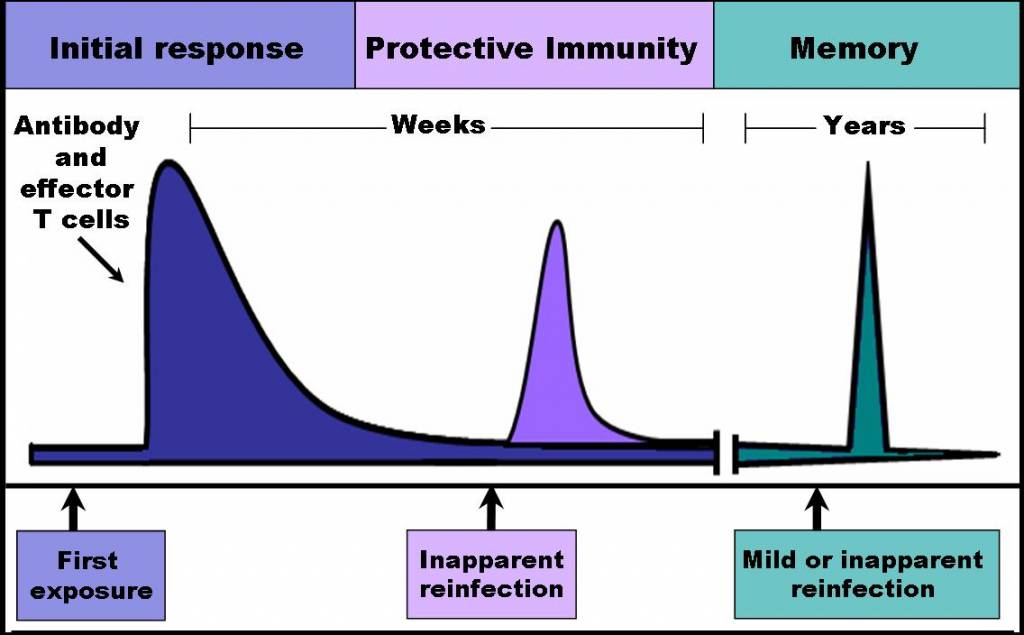 The time-course of an immune response begins with ...
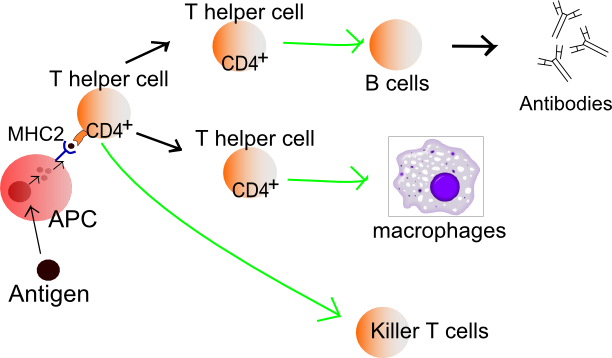 T helper cell function
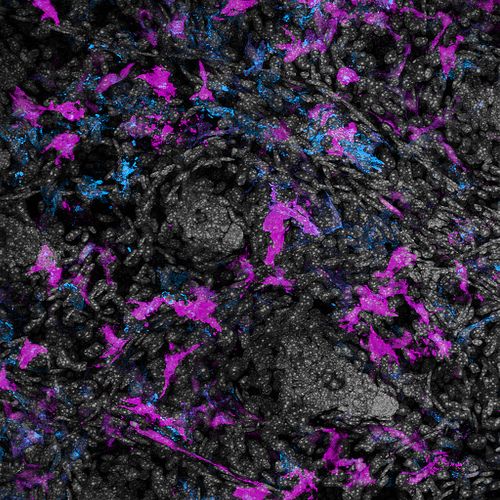 Immune Cells Surrounding Hair Follicles in Mouse S...
Whilst the immune systems benefits by far outweigh it's shortcomings, it should still be noted that the potential for serious damage to occur is great. All immune effector mechanisms while having major beneficial effects in protection, always cause some damage to innocent cells of the tissues in which the reaction occurs. Normally the body is capable of coping with this damage and repairing it, however, on occasions the damage is excessive and it described as a hypersensitive reaction.
Of course, the immune system is a very powerful front-line defence against infection. It provides a high level of specificity to any particular type of infection yet is also diverse enough to allow most types of infection to be detected and dealt with suitably. It's ability to learn is unrivalled in the human body, and for this reason, it is able to deal with virtually anything...