Bertolt Brecht approached acting in an especially distinct manner, separating himself and his plays from conventional theatre of mid last century. Brecht aimed to develop an experimental theatre that challenged convention and allowed the audience to not only be entertained, but to make them think. Brecht wanted his audience to leave a theatrical event and discuss and debate the issues at hand. His distinctive techniques and epic approach to acting allowed him to pursue this aim whilst equipping actors with the physical and theoretical method with which to work. Brecht's teachings and ideas continue to effect contemporary theatre performance.
Brecht entered a theatre ruled primarily by realistic acting, often focusing on the techniques employed by Stanislavski and his System. Realism was definitely the norm and achieving empathy with an audience seemed the primary concern of actors of the time. It has been suggested that Brecht believed,
"On the Epic Stage...
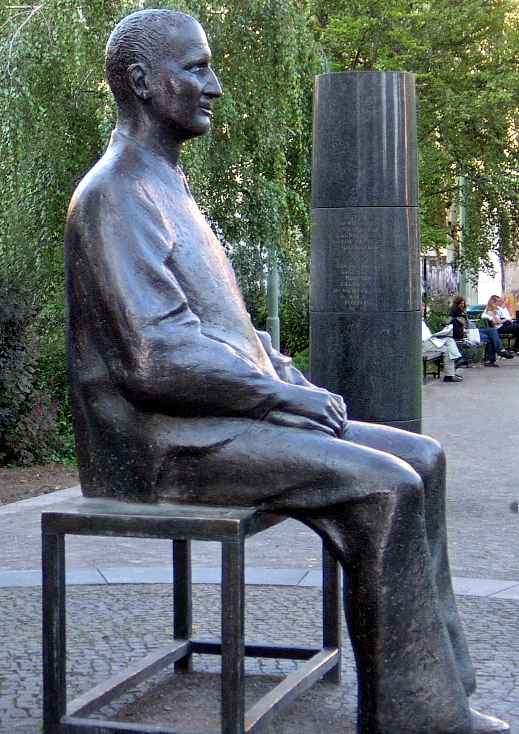 A statue of Bertolt Brecht
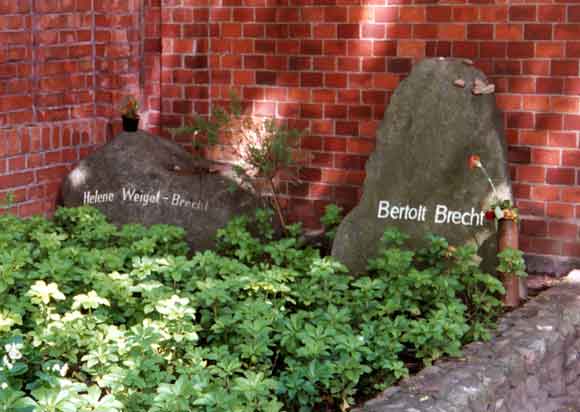 Graves of Helene Weigel and Bertolt Brecht.
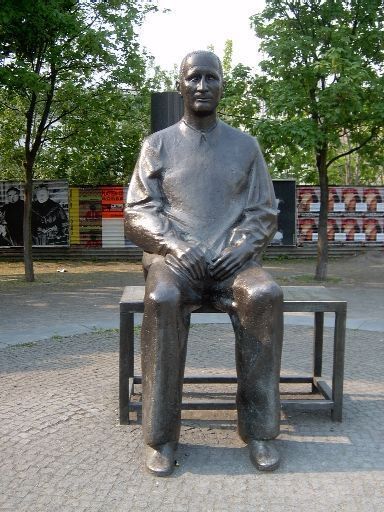 Statue of Brecht outside the Berliner Ensemble's t...
no effort is made to put the audience in a trance and give them the illusion of witnessing natural, unrehearsed events." ("Actors on Acting" 1970: p308)
Brecht's distance from conventional theatre and its techniques made his approach to acting particularly individual.
Brecht's approach to acting was categorised as epic for a number of reasons. Epic theatre originated from Classic Greek Theatre, from which Brecht developed many of his distinct acting techniques. Brecht's plays were also very descriptive, an aspect also typical of epic drama. In addition to this, the plays Brecht wrote or directed were also all set in the past. This historical perspective of the action of the play was also characteristically epic. Brecht wrote that,
"The concern of the epic theatre is [that] human behaviour is shown as alterable; man himself as dependant on certain political and economic factors and at the same time as capable of altering...
Excellent stuff!!!
this stuff has really helped me with my assignments..I'm studying drama right now..learning bout modern theater and the different practitioners...dis essays has really helped me...thanks buddy
0 out of 0 people found this comment useful.