Was Bismarck The Key Figure In The Unification Of German?
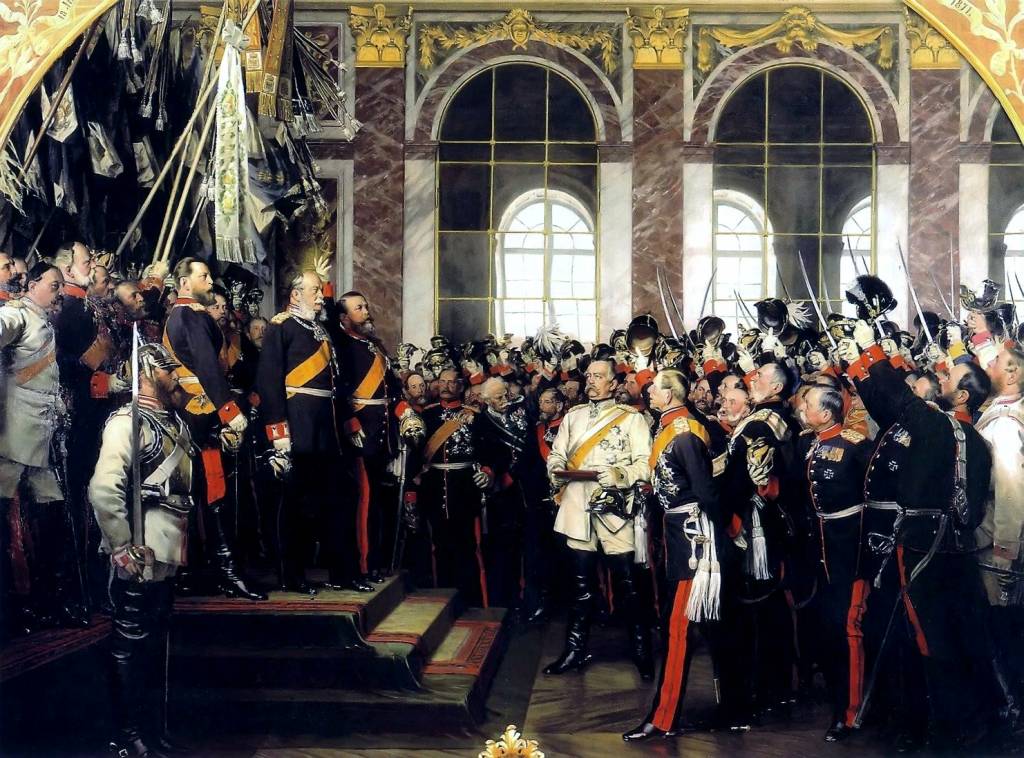
Every country has its creators. In Germany, Otto Von Bismarck is one of them. Bismarck was a man with great diplomatic skills and admirations to achieve exactly what he desired without compromise.1 Under the guidance of Bismarck, the Prussian chancellor, the unification of a Germany took place in 1871 after Prussia defeated France. There is often historical debate over who was responsible for the unification of Germany. Controversy is caused amongst those who believe that Bismarck was fully responsible for German unification and those who believe other factors played an equally or even more important part. The historian Pflanze is an example of someone who considers Bismarck to be solely responsible, as opposed to Bohme, who gives full credit to economic factors in unifying Germany1. However, there is also a middle view, supported by historians such as Medlicott, who argue that Bismarck and other relevant factors caused unification1. Bismarck's determination, strong leadership, considerable political experience, and political cleverness demonstrate the importance of his role in German unification.
The strong and determined leadership displayed by Bismarck played a very important part in uniting the German states. An example of this is when Bismarck illegally raised money for army reforms, boldly ignoring the opposition of the Prussian parliament who refused to vote the sum of money needed. 1 In a speech to the parliament in 1863, he claimed that: "Whoever has the power in hand goes ahead with his views". 4
Despite the outrage of the Prussian parliament, Bismarck was able to collect enough money to enable him to build up the army, which was essential in helping Germany to become united. Bismarck's forceful approach was also important in unifying Germany. After the failure of the Frankfurt Parliament in 1848, he believed that idealism and talking were not going to result in...
Reviews of: "Was Bismarck The Key Figure In The Unification Of German?"
:
More German History
essays:
Otto von Bismarck's foreign policy genius after the unification of Germany
... brilliance of Otto von Bismarck Germany was able to unify, in 1871, as well as become a major European power. After the unification, he served for nineteen years, as the first Chancellor of Germany. During ...
The Role of Nationalism in German Unification: Three Post-Holed examples
... by Prussia, wanted every German state except Austria to be unified under Prussian government (Your German Past). However, because Bismarck, who was Prussian, led the unification of Germany, the ...
5(b): How far were the roles of Bismarck and Cavour decisive in the unification of Germany and Italy?
... defeat of Germany in the war and developed via propaganda. This violating the party's system of democratic centralism and the principle of combining collective leadership with ...
Critically assess the role of terror and violence in the establishment of the Nazi dictatorship between 1933 and 1939
... the 'unification of the office of Reich president with that of the Reich chancellor'. In simple terms, Hitler now led Germany with doctorial style powers and had full control of state ...
Assess the importance of the CPSU's internal policies in the defeat of Germany in the Great Patriotic War (WW1).
... the importance of the CPSU's internal policies in the defeat of Germany in the Great Patriotic War. Concepts that should be considered include Industrialisation, Modernisation, Nationalism and Leadership. The Soviet-German War is the most brutal episode of the ...
What obstacles were there to the re-establishment of Jewish life in occupied Germany and in the two German states during the 1950s, and to what extent were they overcome?
... presence of Jews. In the year 1949 after the Federal Republic of Germany was founded Chancellor Konrad Adenauer announced the readiness of the German population ... in even more anti - Semitism rumours in the non - Jewish population. The new eastern German state ...
The Road to World War II (What were Germany and Britain's foreing policy and do you agree that agressive nationalism, weakness of the League and appeasment caused WW II)
... 3rd of September 1939 but three of these reasons, in my opinion, are more important than the rest these are: the aggressive nationalism of Germany, Italy ... decisive economic measures or by war. It was only as strong as the determination of its ...
Martin Bormann's role in the Nazi Party.
... source of debate among historians. Personal Life and Background Martin Bormann, son of a former Prussian regimental sergeant-major, was born on June 17th 1900 in Halberstadt, Central Germany. Brought ...
Was Bismarck The Key Figure In The Unification Of German?
Where are the references that are cited
0 out of 0 people found this comment useful.