Indonesia, Army & State: Indonesia Since 1945 (History 2105)
Cormac Griffin (A1177407)
What brought the downfall of Suharto and the New Order? To what extent were these factors outside the regime's control?
Introduction
Suharto, the President and the unconditional ruler of Indonesia since a military takeover in 1966, stepped down as President the 21st of May, 1998. His choice to hand power over to his Vice-President was the result of an extended period, of almost 2 years in duration, of extreme public and political insecurity and volatility within Indonesia. Political shifts and realignments in Indonesia have a history of being long drawn out issues; it has been suggested that "all the turmoil in Indonesia during this (20th) century have been due to the stubbornness and failure of those in control to recognize the collapse of their own mandates."� Suharto is an excellent illustration of this. In spite of universal denunciation he attempted to maintain his rule, seemingly oblivious or simply too stubborn to notice, or care about the escalating political demands for his removal.
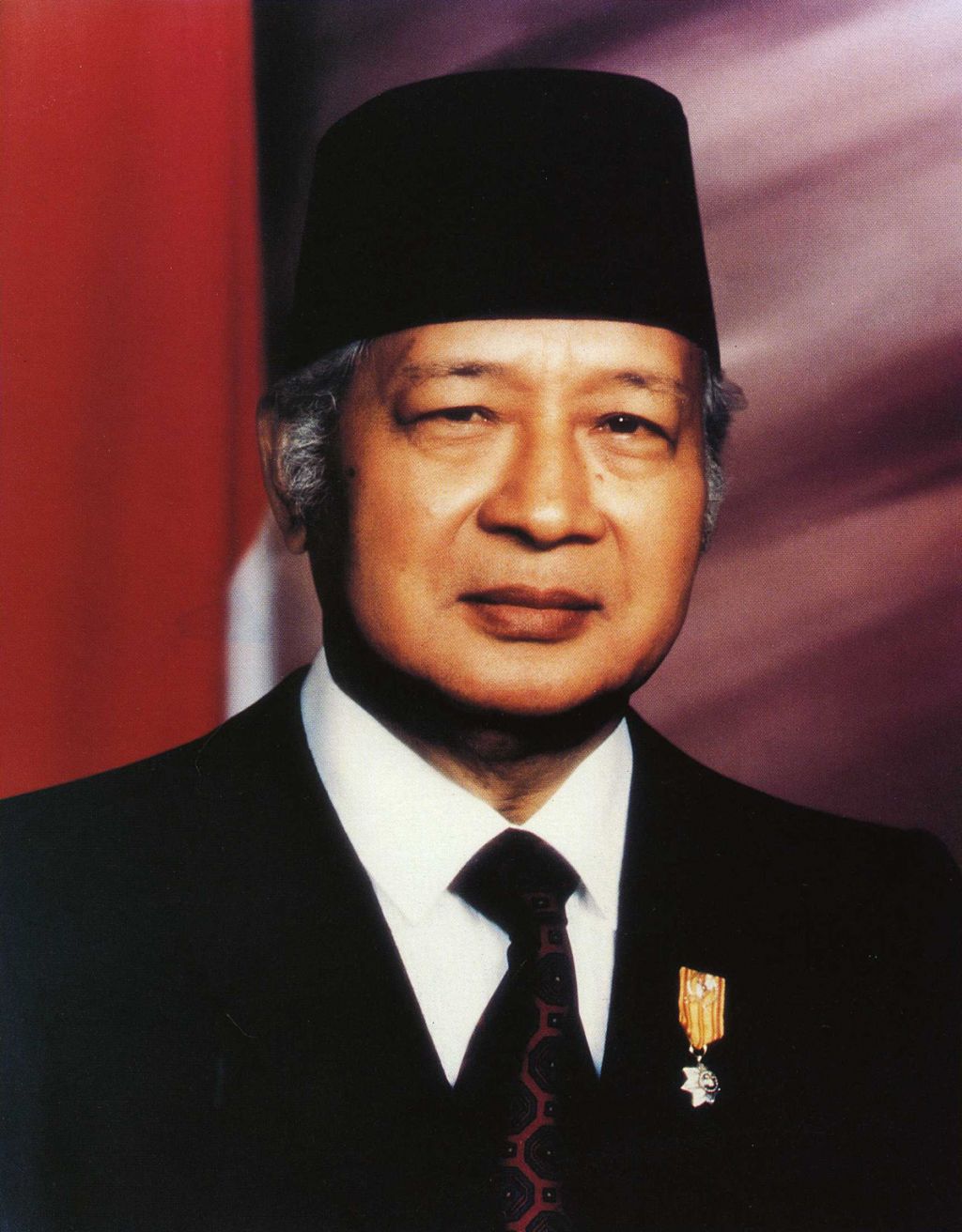 English: Suharto, second President of the Republic...
 English: Mr. Suharto presented his address of resi...
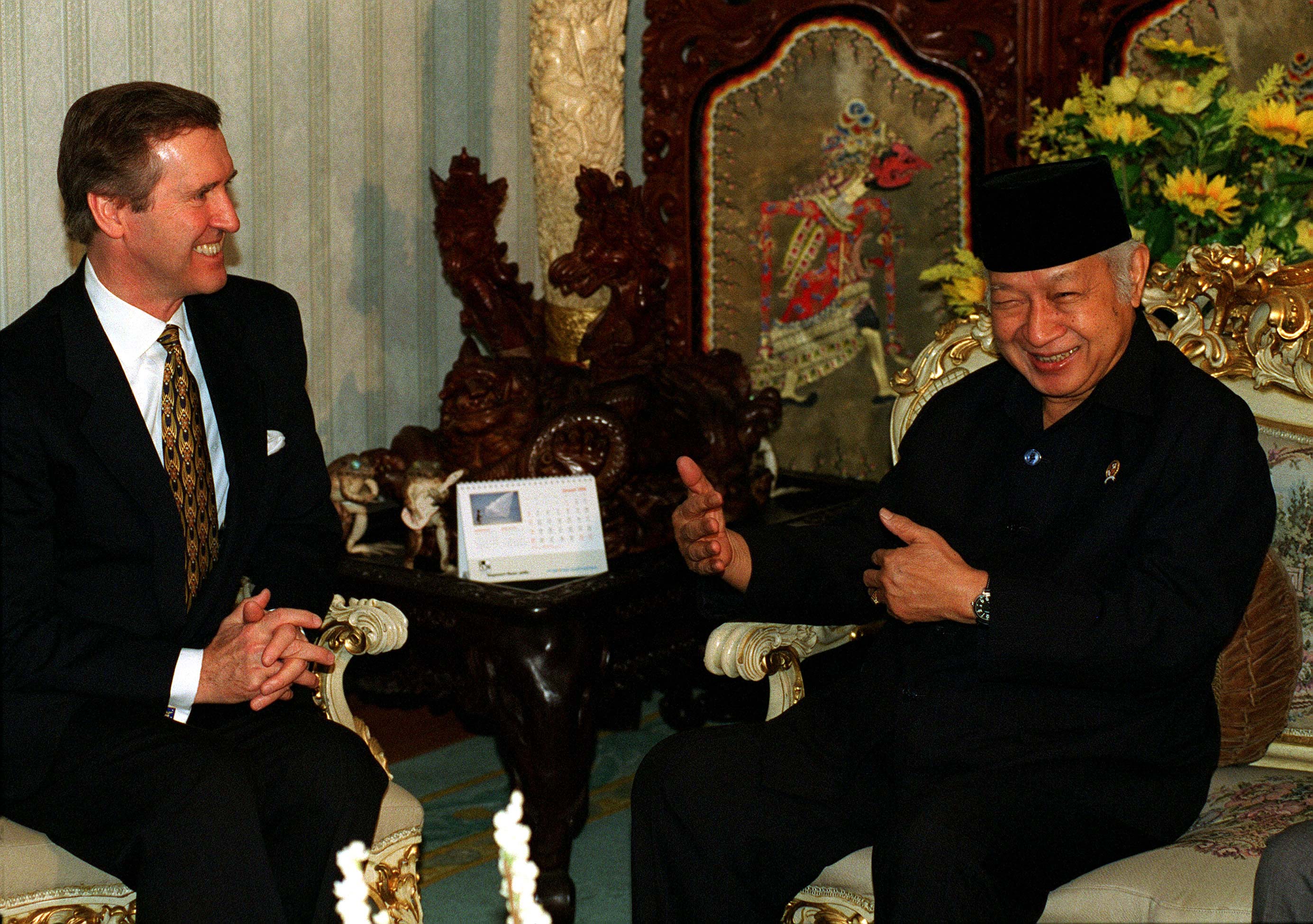 Suharto with U.S. Secretary of Defense William Coh...
The key question to be examined is why Suharto and his New Order political values could fall apart with such swiftness. After all a mere two months prior to his removal Suharto was voted in for a seventh term, admittedly by many who owed their position to his rule. Within two months, political groups which had backed the dictator were now clamouring for his removal. A totalitarian, authoritarian political structure, one widely considered - not least by the Australian government - as secure and coherent simply dissipated. This essay examines the causes of Suharto's, and thus the New Order's, demise. It argues that while a number of internal factors, such as political resistance and opposition to Suharto's regime and extensive corruption, played an significant part in...