Buddhism
Task 2.
Principles teachings of Buddhism
The 4 noble truths.
1. That existence in the phenomenal universe is inseparable from suffering and from sorrow.
2. That the cause of suffering is desire for existence in the world of phenomena.
3. Eradicating all desire for existence in this universe of phenomena brings about that cessation of suffering.
4. That the way to the cessation of suffering is by treading the noble Eightfold Path, wherein are expressed right belief, right intentions, right speech, right actions, right living, right endeavour, right-mindedness and right concentration.
The principal teachings of Buddhism are for oneself to reach enlightenment. To overcome suffering, desire and temptations. For a person to reach enlightenment they must have the basic training of the eight fold path. One must have the right point of view, which is achieved by understanding the 4 noble truths (as shown above). They must have the right intent, to pursue the goal of becoming enlightened with single-minded persistence.
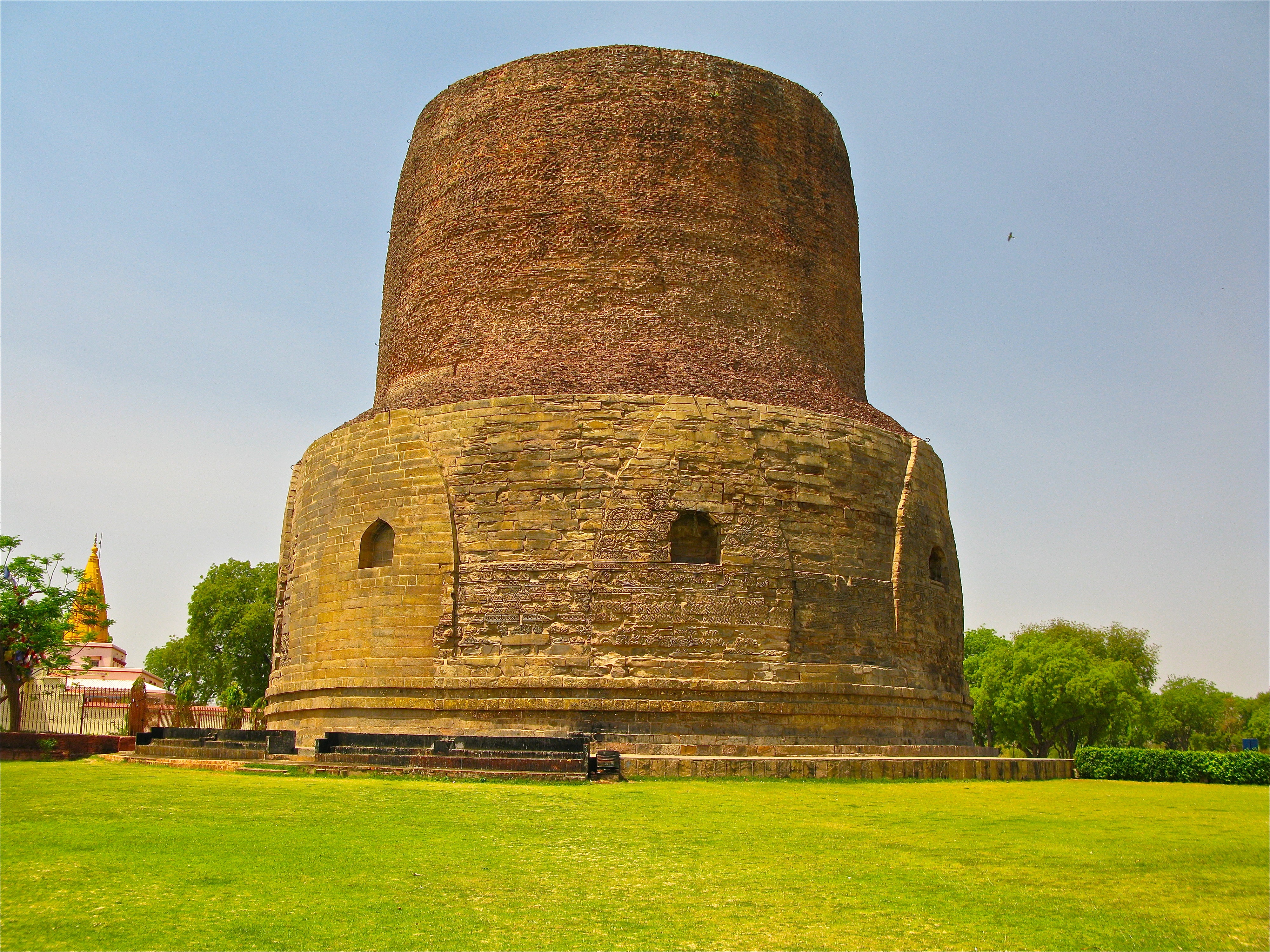 Dhamekh Stupa, where the Buddha gave the first ser...
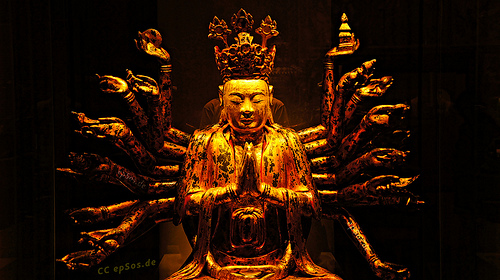 Golden Buddha Statue of Gold Buddhism Religion
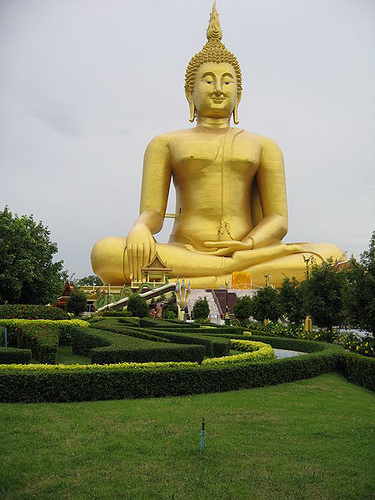 THERAVADA BUDDHISM INFORMATION--NOT MY PHOTO
They say they must have correct speech and not speak untruthfully or in an uncharitable way. Having the right conduct and be guided by the five precepts is essential. They must have the right livelihood, and have a strong effort of will and correct controlling of mind. One must overcome ignorance, ultimately seeing that there is no separate individual self behind all the busy thoughts. To have various mind/body techniques similar to yoga.
Buddha: Enlightened One
Tipitaka: Literally, "Three Baskets." According to Buddhist belief, the scriptures were stored in three baskets, dividing Buddha's teachings into the code of discipline for monks, his sermons and discourses, and the higher doctrine (Buddhist philosophy and psychology)
Nirvana: Literally, "extinction." The ultimate goal of Buddhists, characterized as the extinction of both craving and the separate "ego." The state of peace and...