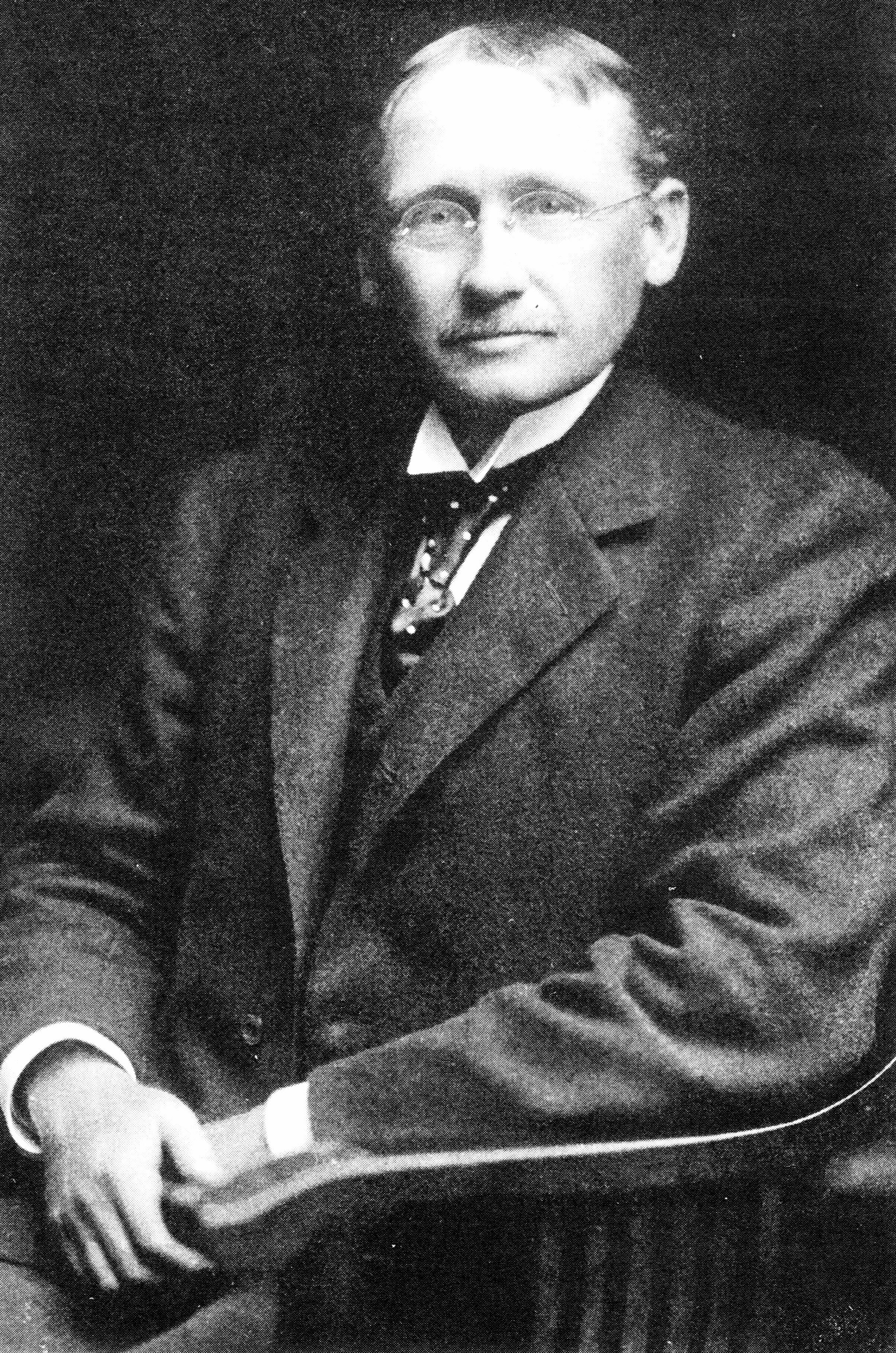
Bureaucracy theory of Weber.
Bureaucracy theory of Weber
Weber's theory of bureaucracy (1958) is one of the most popular themes of the studying of organizations. He identified the legitimate of power with authority. 'Power' means the ability to ask people to accept the orders; 'Legitimation' means people regard this power as legitimate so as to obey the orders. Weber identified this authority as three types:
Charismatic authority, where the rule can be accepted because the leader has some outstanding personal quality.
Traditional authority, where is obeyed for a respect of the old order.
Rational-legal authority, where is designed to achieve particular goals though a basis of rules and procedures. (Mike Jackson, 2000 : 22)
To Weber meant: "the fully developed bureaucratic mechanism compares with other organizations exactly as dose the machine with the non-mechanical modes of production." (Weber, M. 1947: 214) Bureaucracy administration is constituted by hierarchy, continuity, impersonality and expertise. Weber considered that bureaucracy is an ideal-type (1958) of the structure in organization, which means the bureaucratic organization is capable of achieving the maximum efficiency which just likes a machine. Bureaucracy organization was a system of administration which can achieve a continuous basis according to prescribed orders. Weber believed that 'the decisive reason for advance of bureaucracy organization has always been its purely technical superiority over any other form of organization'. (Weber, M. 1947) Even in the modern technology and business, this approach explains the technical knowledge which is completely indispensable to an organization becomes the main source of the superiority of bureaucracy organization. It makes no difference whether the organization is organized on a capitalistic or a socialistic foundation.

The machine modes of bureaucracies exist in every organization: the government, the military, and the business etc. "Bureaucracy can be taken to apply to all sizes and types of formal organizations." (William G.
Reviews of: "Bureaucracy theory of Weber."
:
More Businesss Research Papers
essays:
Bureaucracy and ethics - debate regarding the existance and affect of a bureaucracy on ones ethics.
... able to void the action of any consequential meaning. Hierarchy within a bureaucracy survives on authority, and obedience to this authority. When under authority, a person no longer regards themselves as ethically responsible for their actions. In this type of environment ... . When under authority, a person no longer regards themselves as ethically responsible for their actions. In this type of environment extreme immoralities such as the holocaust were able to occur. However, it is not bureaucracy that created immorality and unethical behaviour ...
Bureaucracy.
... a realatively stable environment."(Wilsom, & Rosenfeld,1990, page109) In addition, bureaucracy is based on legitimate authority, those that are being controlled by others; accept oppression ...
Bureaucracy Theory of Management
... large-scale operation in a relatively stable environment. In addition, bureaucracy is based on legitimate authority, those that are being controlled by others; accept oppression ...
The Pros and Cons of EMU - European Monetary Union. A concise summary (3000 words) of the main pros and cons of EMU and the Euro - covering economics, social issues, national soviergnty, etc.
... of the European nations in an unwieldy federation, hobbled by bureaucracy, commanding little popular support and imposing a crippling burden of ... as it adds to the overall stability (both perceived and legitimate) of Europe as whole. This should help to attract and ...
'Power is a central feature of all workplace interactions'. With reference to the work of Foucault, critically discuss this view.
... legitimate power. If it is embedded in the structure than it has been viewed as normal and inevitable as it follows on from the formal design of the organization. Foucault. Michel Foucault has often been regarding ...
The boundaries of strategic corporate social responsibility
... contributions come via the inefficiency and plodding pace of government bureaucracy and legislators through faceless bureaucrats. Granted, taking money out of ...
The human side of mergers and acquisitions - HP & Apollo Computer
... information technology teams. Thus, a misfit between HP's corporate "bureaucracy" and the "adhocracy" of Apollo produced a number of misunderstandings ...
The New South Wales Teacher's Dispute of 2003 - 2004 Analysis of a recent Australain Industrial Relations Dispute.
... regarding the nature of the conflict. The Pluralist approach to industrial relations sees power diffused relatively evenly among bargaining groups and accepts conflict as an inevitable and legitimate ...
Bureaucracy theory of Weber
Well written. Discussed 3 classical theories of organizations - by Weber, Taylor and Fayol
0 out of 0 people found this comment useful.