Canada's Part In The North American Free Trade Agreement
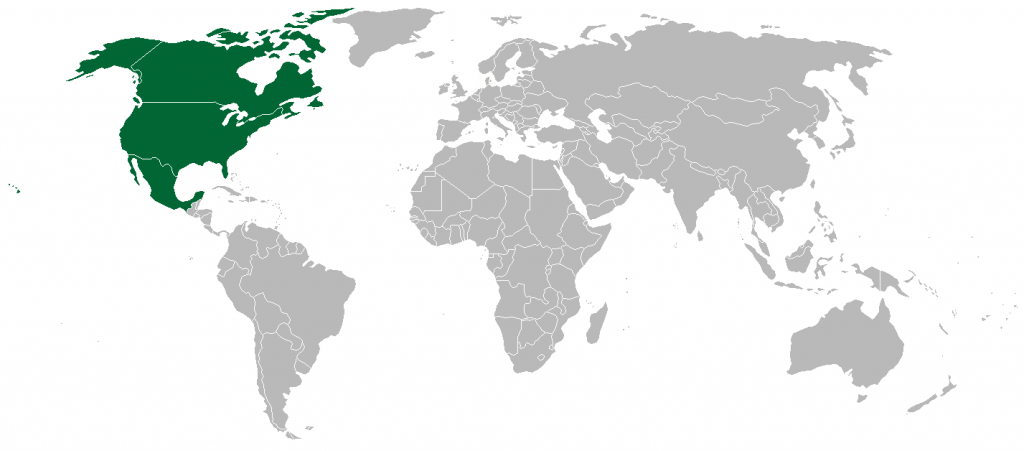
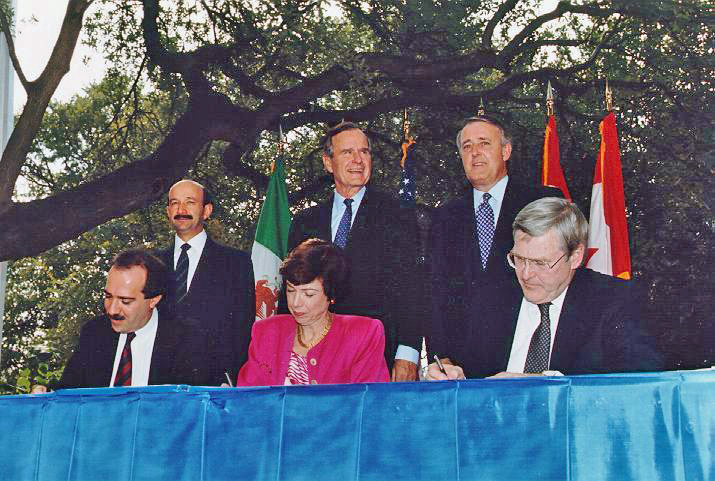
Canada has changed drastically to become the nation it is today. Evolving from a young country, Canada today is viewed as a democratic and proud nation. After Canada received its independency from Britain in 1867 it has progressed into a wise nation that has slowly related it self to the United States of America. The USA has many things that Canada needs to import and the United States ask for the same in return. In the 20 century trade is seen as a growth in a country's economy. This is why Canadian Prime Minister; Brian Mulroney, agreed to a free trade contract with the United States on January 1st 1988. Many Canadians had different views and perspectives on how this contract would turn out. Free trade meant that there would be elimination on most barriers between the two nations, allowing access to each country's goods. As the hype grew Mexico decided to join in this economic growth factor. On January 1st 1994 the Free Trade Agreement was expanded and built upon to produce the North America Free Trade Agreement (NAFTA), This agreement will continue to change the life of many people until January 1st 2008. It was as if the three countries were merging together into an economically powerful nation in a sense of goods. Mexican President Salinas, the US President Clinton and Prime Minister Chretien all felt this would be successful in the years to come. NAFTA's promoters promised 200,000 new jobs per year for Canada, higher wages in Mexico and growing trade between Mexico and Canada. Environmental clean-up and improved health along the border were also promised. In the area of the economy, imports/exports, and businesses The North American Free Trade Agreement had and still has a significant impact on Canada since 1988.
The North American Free Trade...
Reviews of: "Canada's Part In The North American Free Trade Agreement"
:
good job. very useful!
More Canadian History
essays:
A summary of Canada's Involvement in World War I. Covers all major corps, and includes a copy of "In Flanders Fields" and a timeline of Canadian Involvement in WWI.
... use of mustard gas against Canadians. *Oct 26 ~ The Battle of Passchendaele *Aug 29 ~ Conscription became law in Canada. *Nov ~ Prime Minister Borden ...
Canadian History: 1900-Present, Military Participation in world affiars; Lists 4 of Canada's most defining moments, 2 from 1900-1949, 2 from 1950- the present.
... show Canadians as fighters: standing up for their beliefs, defending a weak ally, organizing resources and withstanding repeated enemy attack. This was also a defining moment because Canada is the only country to have participated in the United Nations' peacemaking ...
Metis people and the fur trade in the north(Northern Canada)
... Fur Trade European Fur Trade: Three factors led to the development of large-scale fur trading within the Metis communities of the North. The first was the bountiful supply of furs in North America. The Canadian Shield ...
Were Canada's treaties with the Native peoples freely negotiated?
... Canada's treaties with the Native peoples were not extremely freely negotiated. Firstly, the Canadian government's intention of the treaty was quite well-known. Obviously, they wanted to take the land which belongs to the natives'. In order to achieve ...
World War I: Canada's Role
... a nation. Canadians can't seem to realize the fact that Canada's involvement in the war was for nothing. The "coming of age" of Canada did not only have high economical costs ... war with over 60000 soldiers dead and 172000 wounded, the country could not admit that the war had been worthless. Propaganda ...
Turn of the Century: Canada's Immagration.
... the United States, Britain, and in other European countries. Immigration offices were set up in these countries to coordinate efforts and distribute information, to portray a colorful image of the canadian west ...
Three defining moments in Canadian history in the 20th century, and prove their significance to the maturation of Canada as a nation (I created this question).
... jobs of men. Canadians grew dependant on the United States with NATO, NORAD, and Camp X. At times of war, the panicking people would rush to buy foods and supplies. Therefore, the Wartime Prices and Trade Board ...
Influence of the American Civil War on Canadian Confederation
... the United States of America had recently purchased Alaska. This made western British North America feel ...
Well written
It is well written and very close to what I'm looking for. Great!
0 out of 0 people found this comment useful.