Case: Tinker v. Des Moines, Kuhlmieir v. Hazelwood
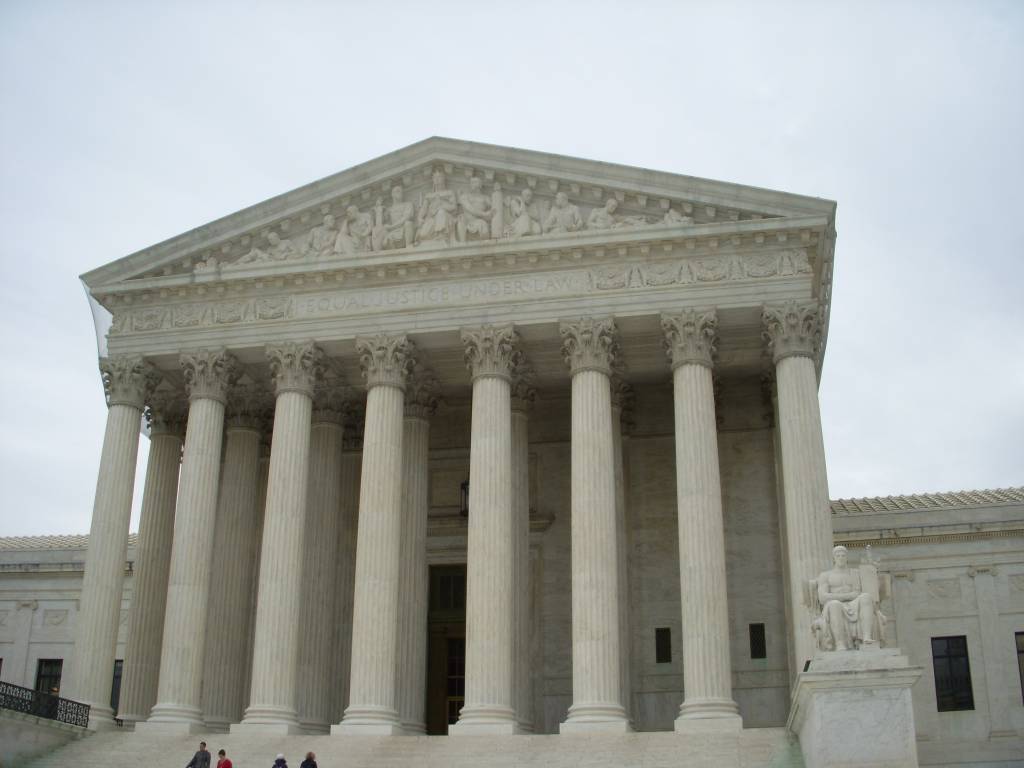
About 32 years ago, in December of 1965, a group of adults and students from Des Moines, Iowa gathered to show their dislike towards American involvement in the Vietnam War. They decided to wear black armbands and fast on December 16 and 31 to express there point. When the principals of the Des Moines School System found out their plans, they decided to suspend anyone who took part in this type of protest. On December 16 - 17 three Tinker siblings and several of their friends were suspended for wearing the armbands. All of them did not return to school until after New Years Day. Acting through their parents, the Tinkers and some other students went to the Federal District Court, asking for an injunction to be issued by Iowa. This court refused the idea, forcing them to take the case to the Supreme Court. After hearing their case, the Supreme Court agreed with the Tinkers. They said that wearing black armbands was a silent form of expression and that students do not have to give up their 1st Amendment rights at school. This landmark Supreme Court case was known as Tinker v. Des Moines Independent School District.
From the case of Tinker v. Des Moines Ind. School Board obviously came some conflicting viewpoints about the armbands. The school board said that no one has the absolute right to freedom of expression, where the Tinkers said that only banning armbands and not other political symbols was unconstitutional. The school board said that the armbands were disruptive to the learning environment, where the Tinkers said they were not. Finally, the school board said that order in the classroom, where political controversy should be discussed, is entitled to constitutional protection. The Tinkers believed that the armbands were worn as the students views,
More Law
essays:
Some Landmark supreme court decisions
... the armbands. All of them did not return to school until after New Years Day. Acting through their parents, the Tinkers and some other students went to the Federal District Court, asking for an injunction to be issued by Iowa. This ...
First Amendment Rights of Children in the School System
... School District v. Kuhlmeier. "Great American Court Cases, 1999). Even though schools have the responsibility to protect all students, childrens First Amendment rights are protected and have been upheld by Supreme Court rulings in Tinker v. Des Moines Independent ...
Freedom in America. Speaks of t he freedom of speech, color, religion, cencorship etc..
... the black armbands. They lost in The Federal District Court on grounds that this type of symbolic expression might disturb school discipline. The United States Court of ...
An essay on censorship in student media and the different levels of censorship allowed by the Tinker and Hazelwood standards.
... Court case of Tinker v. Des Moines Independent Community School District in which it a pro-student expression decision was reached. The actual case had nothing to do with journalism, but actually overruled an earlier decision regarding the wearing of armbands ...
Untitled
... the court of appeals agreed with the district courts, the Supreme Court, in an opinion authored by Justice Byron White, held that the federal courts lacked power to offer injunctive relief ...
The First Amendment
... classroom ("Tinker v. Des Moines Independent Community School District"). The Supreme Court also said that wearing an armband as ... Beth Tinker, and their friend Christopher Eckhardt, decided to wear black armbands to their schools in Des Moines to protest of the Vietnam War. The ...
This paper is about euthanasia: It talks about what euthanasia is and where it is legal.
... S. Supreme Court abortion case, Roe v. Wade because Reinhardt expressed that ... is a natural human process. The Judicial Council of the American Medical Association has taken the position that supporting irreversibly comatose ...
The Case for Euthanasia, Should Physician-Assisted Suicide be Legalized?
... uniform, federal regulation in the near future, especially with a conservative Supreme Court as ... example of one of these groups is the California based Americans for Death with Dignity or ADD . The DDA designed a ...