Cause of the Cold War
Soviet domination of the countries in Eastern Europe was the main cause of the Cold War. Stalin's aim, to take advantage of the military situation in post-war Europe to strengthen Russian influence, was perceived to be a threat to the Americans, thus erupting in a Cold War.
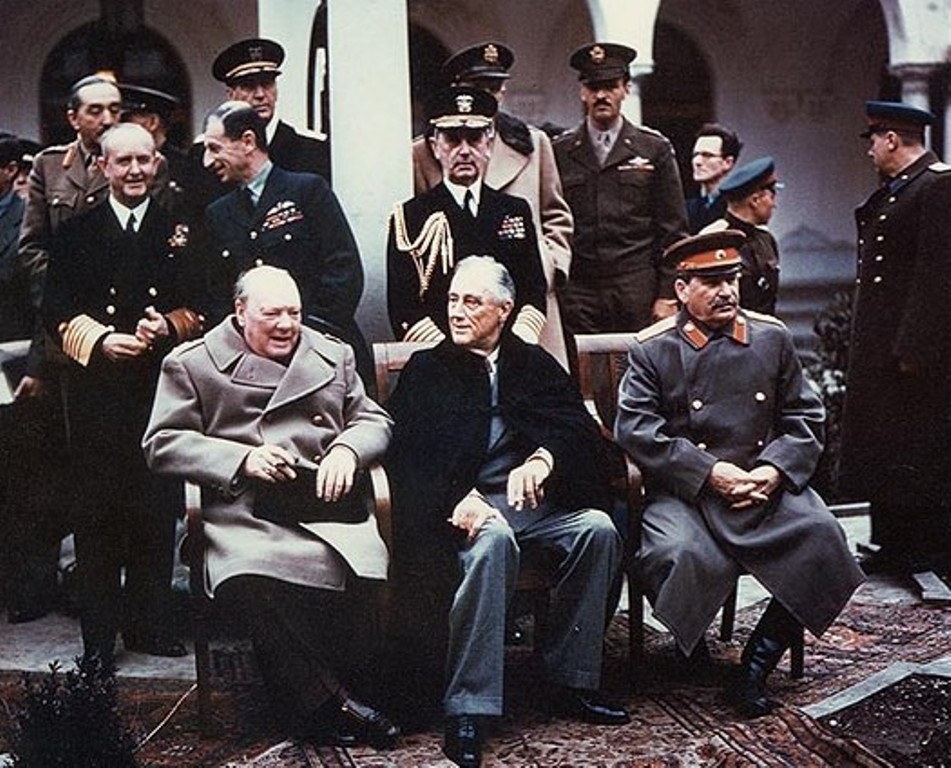
World War II dramatically changed the United States from a bench-warmer to a player in world affairs. Since so much work had to be done in order to restore world peace and reconstruct Europe, the US could not help being a part of world affairs. Meetings among the major world leaders, such as Truman, Attlee, and Stalin, established new boundaries for countries and discussed plans of what to do with postwar nations. The United Nations was an outcome of one of these meetings, in a hope to prevent further wars and promote peace. However, because of the meeting at Yalta, conflicts arose between two great nations: the US and Soviet Union. It was agreed that there would be free elections in the liberated countries of Eastern Europe even though the Soviets controlled the area (Newman and Schmalbach 535). Deceivingly however, the Soviet Union started establishing its own form of government in these liberated countries and took over all of Eastern Europe. This growing threat sparked the beginning of a long, nearly disastrous, Cold War.
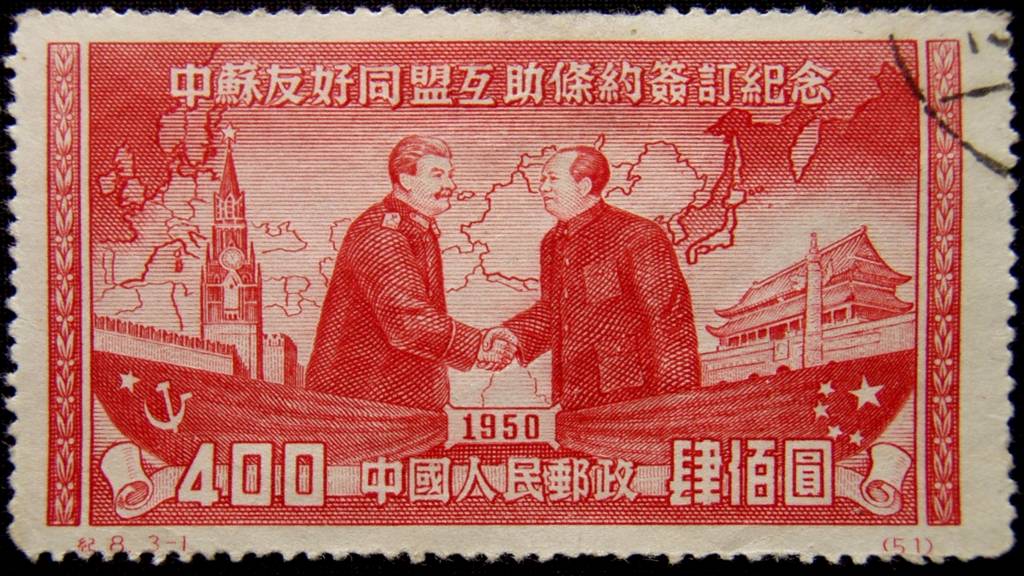
After World War II was over, the Soviet Union wanted to ensure that it would be safe from further invasion. To do this, Stalin decided to establish Communist pro-Soviet governments throughout Eastern Europe. This helped defend the Soviet Union in two ways. First, an enemy could not directly attack the USSR from the west by land, as the Germans had done in both World Wars. Second, since these nations were pro-Soviet and their leaders had to take orders directly...
More The Cold War
essays:
Origins of the Cold War
... Communist nations have proven that Soviet aggression, conditioned by Stalin's personality and Russian authoritarianism, made the Cold War inevitable and compromise impossible.8'9 Gaddis essentially accepts US European policy while separating it from US Third World policies ...
How (and to what extent) did the conferences at Yalta and Potsdam (1945) contribute to the origin of the Cold War?
... the origins of the Cold War was the growing influence of the Soviets in Eastern Europe. As mentioned, the Russians had suffered the most from World War II and Stalin ...
All of the aspects of the U-2 affair during the cold war.
... cost of the Cold War to both sides. Hoping to strike a more compatible tone with Georgi Malenkov, Stalin's successor, Eisenhower suggested the Soviets cease their brazen expansion of territory and influence in ...
Explanation of the Nature of the Cold War from 1945-1963, including reference to the part played by John F. Kennedy.
... cities, the political demonstration of the superiority of the American military created fear in the Russian government. The response was Soviet militarization and a push towards nuclear technology, and so begun a part of the Cold War, the arms ...
"The Berlin Blockade was the turning point in the outbreak of the Cold War in the period 1945-1949." How far is this statement accurate?
... its influence on Eastern Europe, giving rise to negative perceptions on both sides. Soviets were also unhappy with the currency reforms in Western Germany, as stipulated by the MP, which led to the direct cause of the Cold War, the Berlin ...
How did the Berlin Crisis of 1958-61 affect and change the Cold War?
... between nations allied with one another, all significant occurrences in the Cold War. The Berlin Crisis presented the world with arguably the most famous representation or symbol of the Cold War today--a tangible manifestation of the events ...
Account for the origins and development of the Cold War between USA and USSR up to 1962.
... II, Stalinism:Its Origins &Future, www.werple.net.au/~andy/bs/index.htm Peter Calvocoressi (1971), World Politics Since 1945-2nd Edition, Longman, Great Britain. John Lewis Gaddis (1972), The United States and the Origins of the Cold War, Columbia ...
The title is "The Cold War" This essay is a thesis on how the Cold War was in fact a much more heated war than it was made out to be.
... rivalry of the Cold War begun in the years to follow World War II, more precisely the aftermath of the Yalta Conference. In the midst of World War II, Germany defied a cease-fire agreement between them and the Soviet Union ...