Causes of the French Revolution DBQ.
The late 1700's were a period of great social and political revolution in Western civilization. The French Revolution was a major part of this sweeping change in the way Europeans (and the newborn Americans) perceived the function of government and the most effective ways of governing. The French Revolution had many long term and short term causes and effects, and was one of the most violent periods in the history of the country. There were many factors that contributed to the spark of the revolution. There were three main causes of the French Revolution: gross mishandling of governing duties and incompetence in the leadership of King Louis XVI and Marie Antoinette, the large and very unjust social and economic gap between the first two privileged estates and the poor third estate, and finally the revolutionary ideas of the enlightenment and their influence on the philosophies of the people.
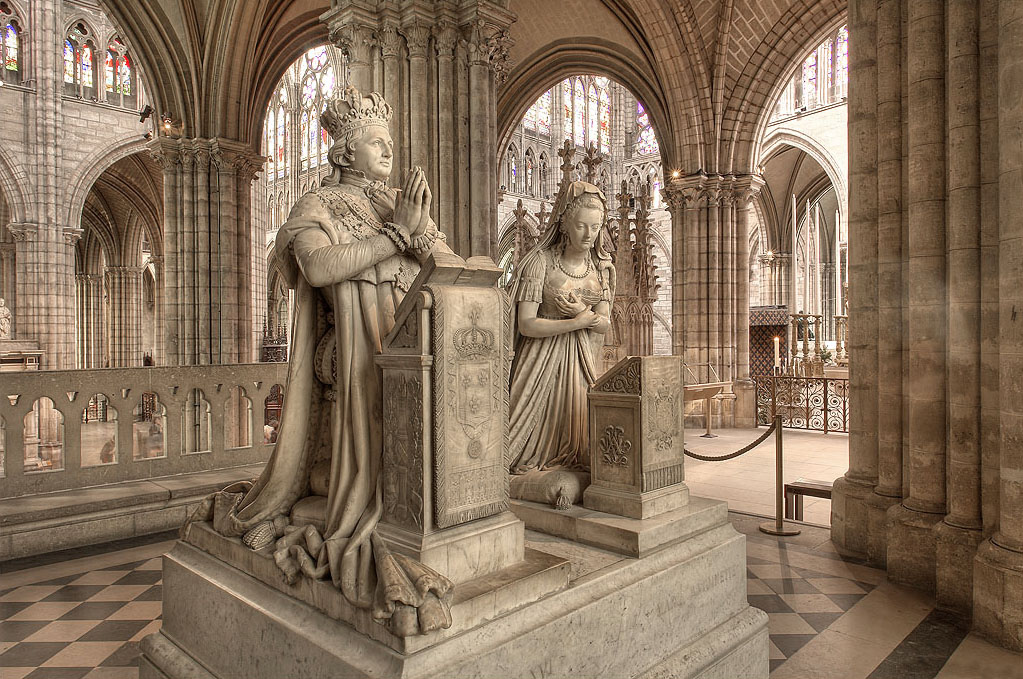
Louis XVI was one of the most incompetent and frankly idiotic rulers in the history of France. He would have absolutely nothing to do with his official duties as king, and his horribly decadent lifestyle contributed greatly to the economic plight France was in. The fact that he was married to Marie Antoinette, a native of Austria, France's sworn enemy, was very detrimental as well. Louis XVI inherited debt from previous rulers, but he made no move of any kind toward paying it off. In fact, he borrowed vast sums of money in order to give aid to the Americans in their revolution, which only worsened France's already outstanding deficit. In 1786, bankers refused to lend the government any more money, and Louis XVI was in serious trouble. Of course, all of this put Louis in a highly unfavorable position with the people of France, who absolutely despised him and his wife.
More The French Revolution
essays:
Legacies Of The France Revolution
... older ways of doing things. Part II: Revolutionary Legacies in the Nineteenth and Twentieth Centuries Since the beginning of the nineteenth century the legacy of the French Revolution has been hotly debated by politicians, revolutionaries, and political theorists ...
"The French Revolution Owed Much to the Philosophes". Discusses the part of the philosophes in causing the French Revolution. Also deals with other long and short term causes.
... History of the French Revolution", William Doyle, 1989, Oxford University Press Inc., NY *"the Dictionary of Important Ideas and Thinkers", Chris Rohmann, 2000, Arrow Books, UK *http://www.wsu.edu/~dee/ENLIGHT/PHIL.HTM "The European Enlightenment and the Philosophes ...
The Primary Immediate Causes of the French Revolution.
... Immediate Causes of the French Revolution. "The revolution was cause by a myriad of problems. The lead up to 1789 saw a sharp reversal in the economic and social developments making a condition favorable to revolution. Contributing ...
Reign of Terror was during the French Revolution.
... perhaps the most influential political philosophies that influenced the beginnings of the French Revolution. Although the Revolution was spurned by these Enlightenment thinkers, the political philosophies they espoused failed to take root, leading to the Reign of Terror. The economic forces ...
Why do Marxist historians see the French Revolution of 1789 as 'Bourgeoisie'?
... cause of the French Revolution. He states that certain factions of the bourgeoisie were integrated into the economic and social structures of the Ancien Regime while others he says, "who were unable to ...
The Rights of Man: French Revolution
... actions of the one in the 18th century. Several philosophs argued not only for the rights of the French Third Estate but also for the slaves and women and this departure from the revolutionary line ...
What Were The Causes of The Downfall of Louis XVI- Is he fully responsible for his own downfall?
... of the French Revolution unfolded, King Louis XVI of France soon found himself in the centre of it and gradually became one of the victims. In the morning of Tuesday 21st January 1793, he was woken by his guards ...
Development of French economic crisis into political revolution by October 1789
... to the public's discontent, as did King Louis XVI's incompetence to rule and reluctance to compromise the absolute monarchy. The Enlightenment played a minor role in creating demand for the King's deposition; nevertheless it provided revolutionaries with ...