Charles Darwin was born on February 12,1809 in Shrewsbury, England. His father, Robert Darwin, was a physician and the son of Erasmus Darwin, a poet philosopher, and naturalist. When Charles was eight, his mother died, leaving him to be raised by his sister. He was taught classics at Shrewsbury and at the age of sixteen, he left to study medicine at Edinburg University. Repelled by the sight of surgery performed without anesthesia, he eventually went to Cambridge University to study theology to become a clergyman. During that period he collected plants, insects, and geological specimens, guided by his cousin William Darwin Fox, an entomologist. Darwin's botany professor greatly encouraged his interest in science. After receiving his degree, the young Darwin accepted an invitation to serve as an unpaid naturalist on an English survey ship, the H.M.S Beagle, which departed on a five-year voyage around the world on December 31, 1882.
 Charles Darwin, photographed by Julia Margaret Cam...
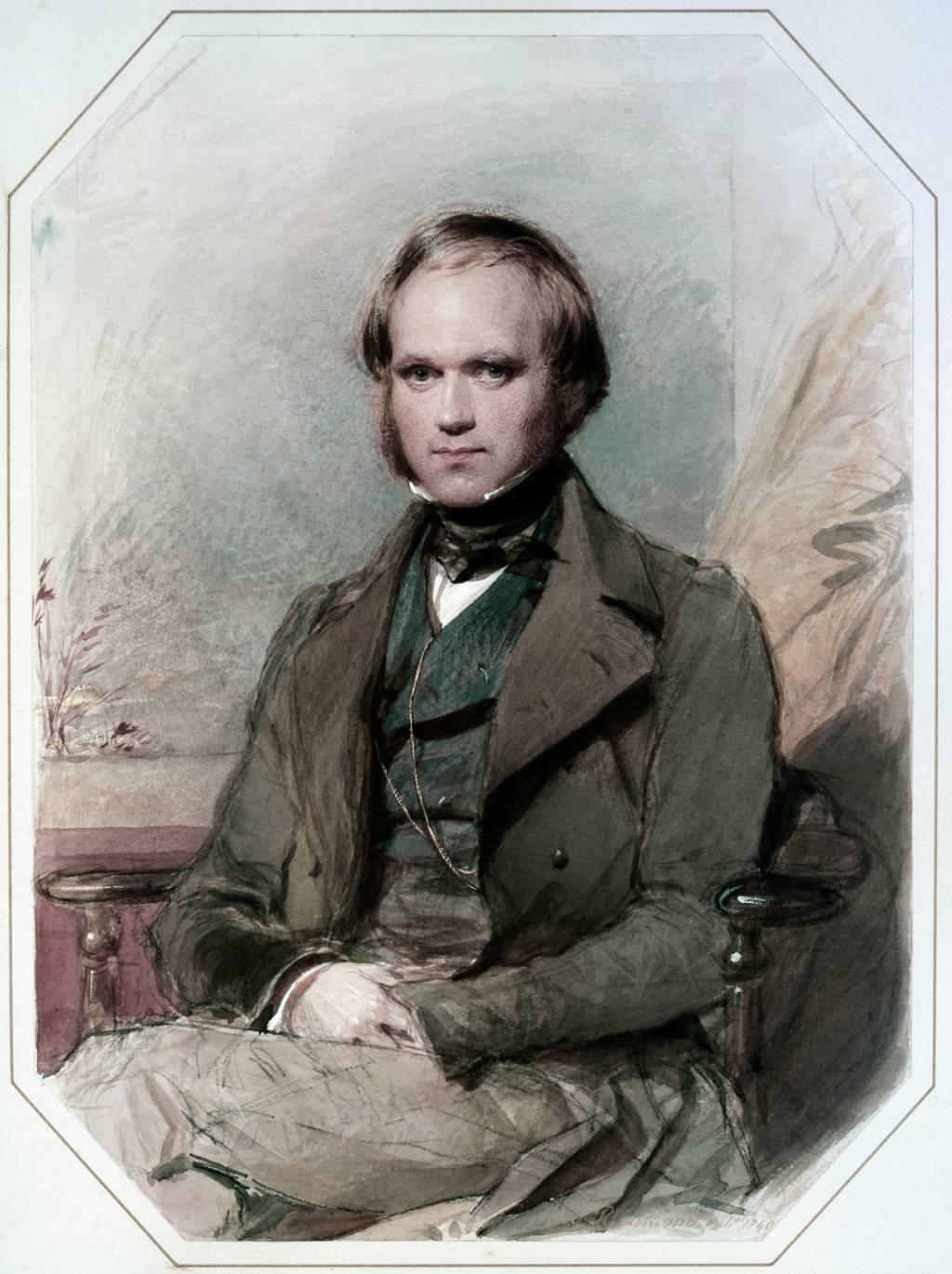 Charles Darwin as a young man, probably subsequent...
 English: Caricature of Charles Darwin from Vanity ...
The purpose of this voyage was to perform a scientific survey of the South American Islands.
Under Captain Robert Fizroy, Darwin visited Tenerife, the Cape Verde Is, Brazil, Montevideo, Tierra del Fuego, Buenos Aries, Valparaiso, Chile, the Galapagos, Tahiti, New Zealand, and Tasmania. This long expedition enlightened Darwin. In South America he found fossils of extinct animals that were similar to modern species. On the Galapagos Islands in the Pacific Ocean he noticed many variations among plants and animals of the same general type as those in South America. As the expedition continued around the world, Darwin studied plants and animals everywhere the ship stopped, collecting specimens for further study. It was during this period when he realized that his observations gave doubt to the popular belief that species were individually created and did not change. He noted that not only did the fossils resemble living species but also that...
Good
Good essay, but could of went into further detail.
1 out of 1 people found this comment useful.