Charles Darwin & Herbert Spencer
Charles Darwin, a British naturalist, revolutionized biology with his theory of evolution through the process of natural selection. Herbert Spencer was the major philosopher of biological and social evolution. Spencer's work significantly influenced 19th century developments in biology, psychology, sociology and anthropology. While Darwin was influential in the fields of natural history and geology, his theory of evolution created great controversy. He changed the way people thought about the role of humans in the natural world. Although these two men made advancement in the theory of evolution they had contrasting views regarding anthropological study.
Charles Darwin was an English naturalist who first solidly established the theory of organic evolution, in his work, The Origin of Species. Darwin was born in Shresbury, Shropshire on February 12, 1809. His grandfather, Erasmus Darwin, was a famous English scientist and poet. In 1825 the young Darwin went to Edinburgh University to become a doctor.
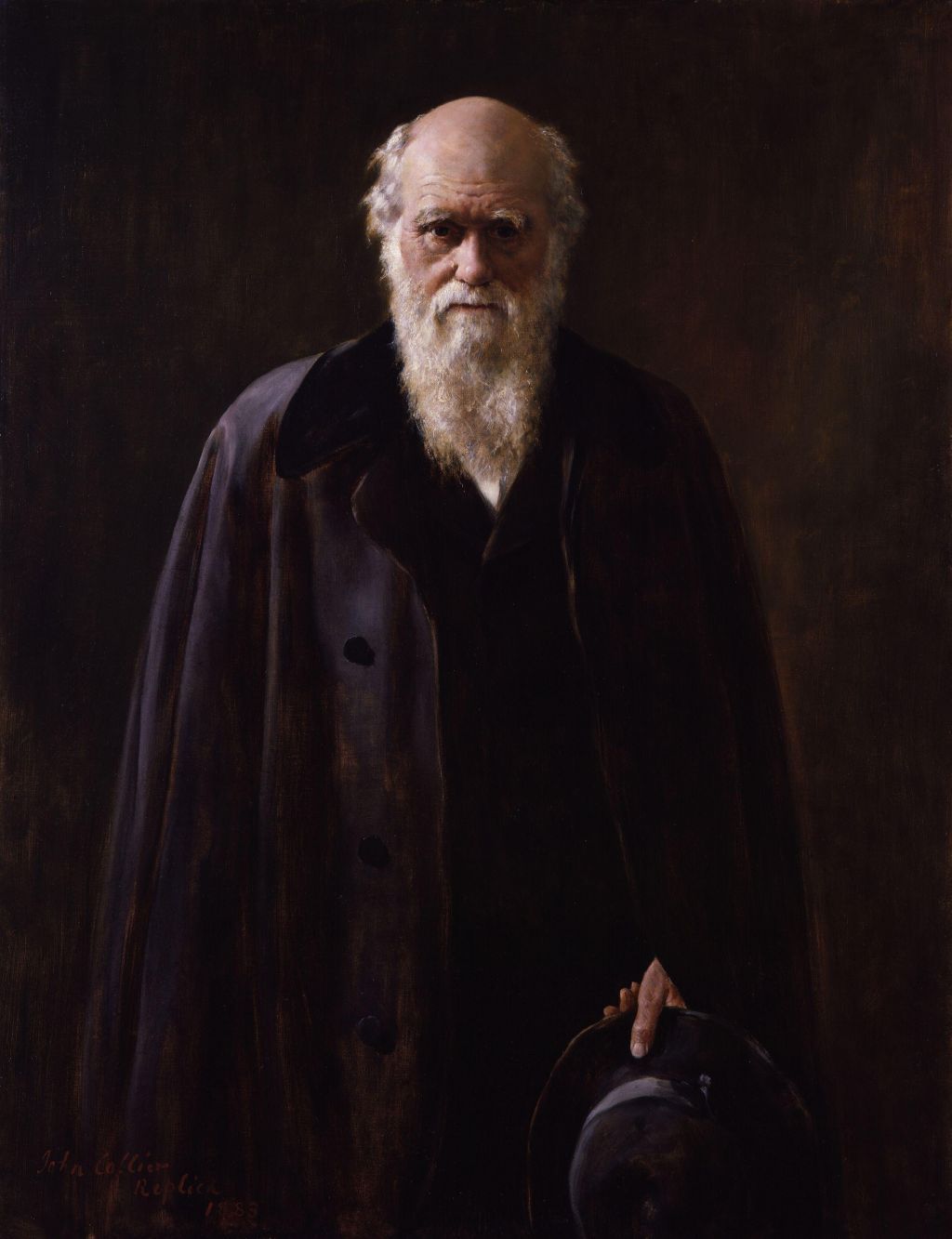 Charles Robert Darwin. A copy made by John Collier...
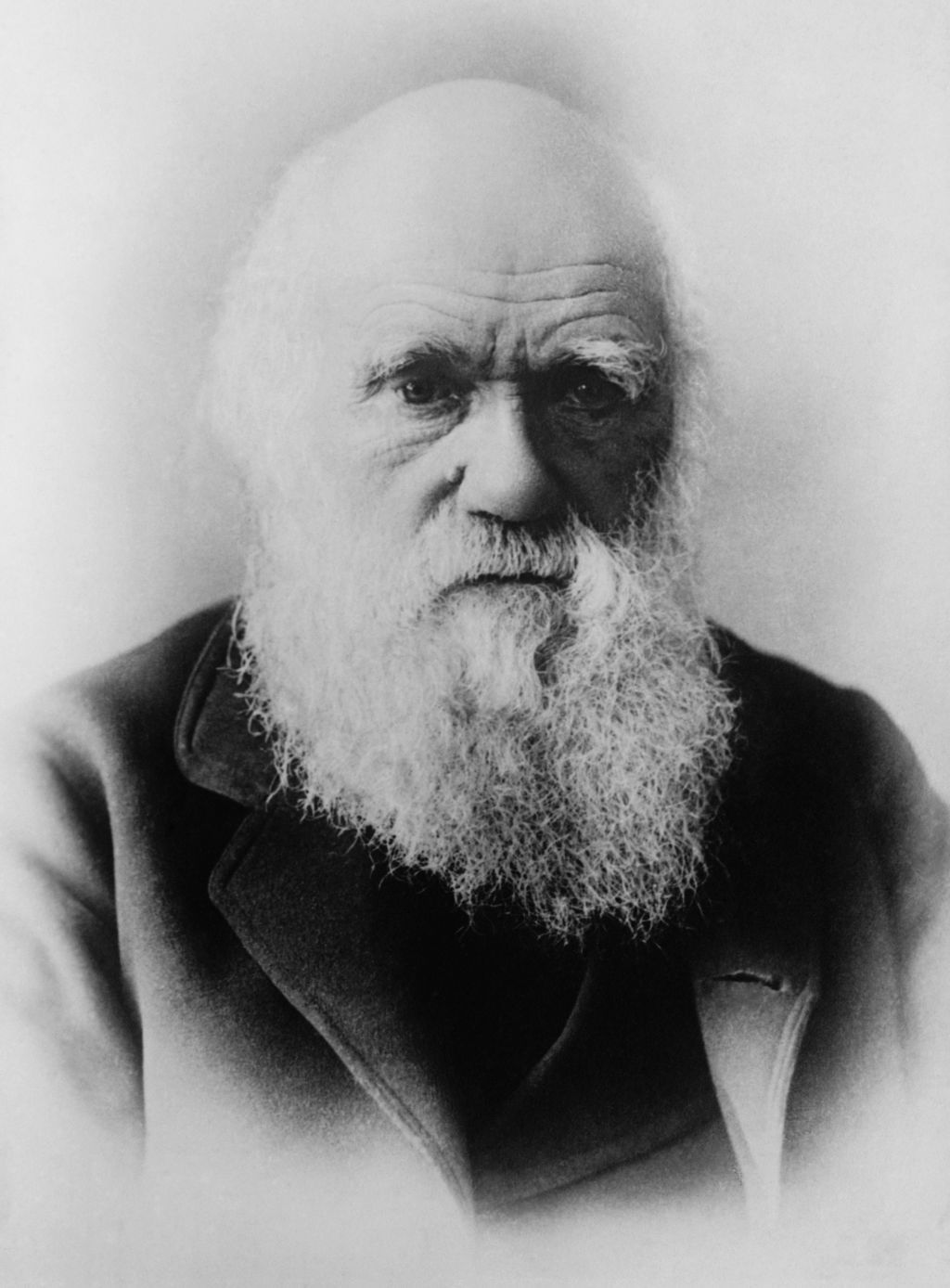 Charles Darwin. 1 negative : glass ; 5 x 7 in. or ...
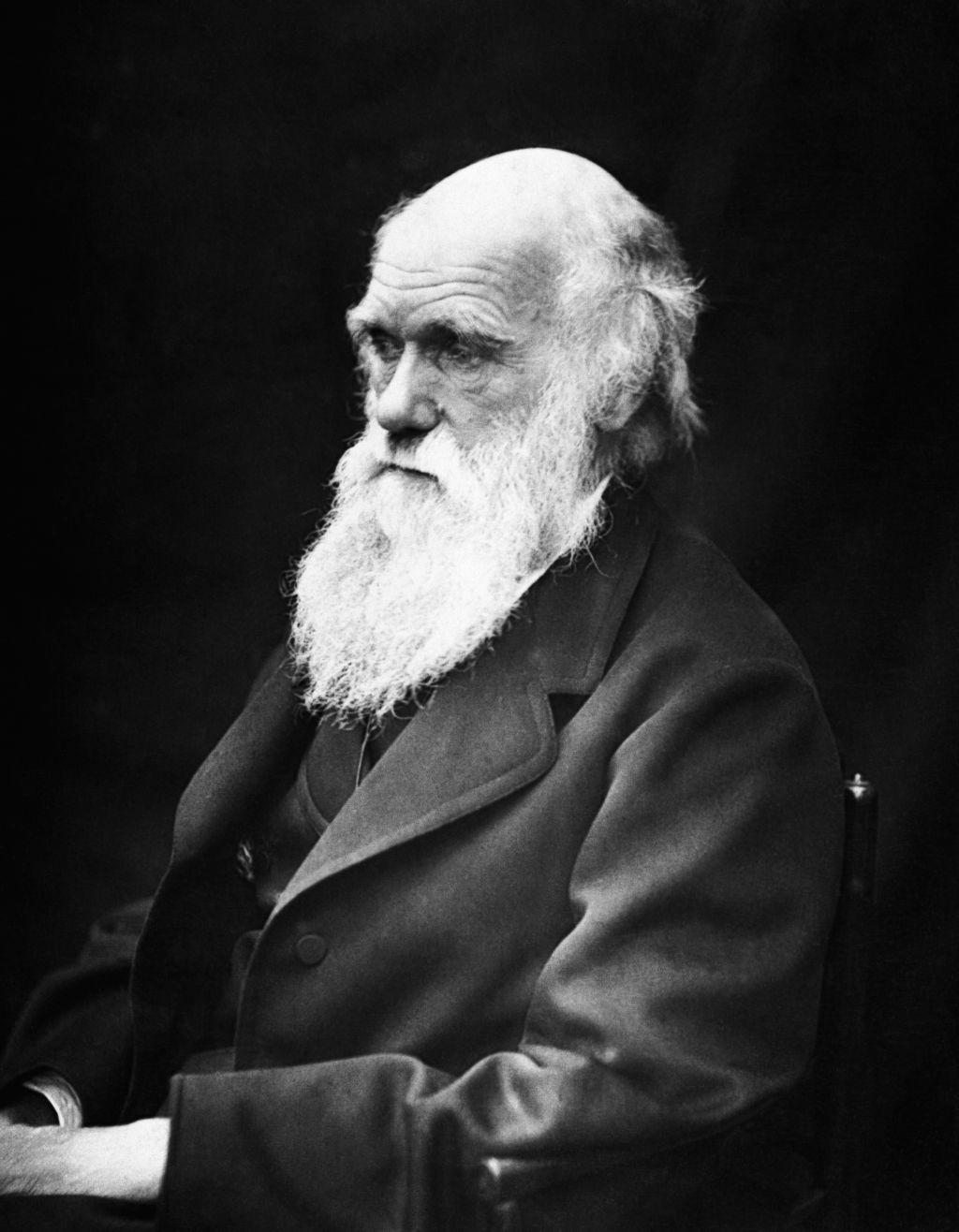 English: Charles Darwin (1809-1882) in his later y...
The same year, however, he transferred to Christ's College in Cambridge in order to become a clergyman. During this time he befriended a man of science, John Steven Henslow. It was Henslow who recommended him for the unpaid position of naturalist on the H.M.S. Beagle.
Darwin set sail on December 27, 1831 to study the Pacific coast of South America and the Pacific Islands. His other duty was to set up navigation stations in the area. He also studied the geology and biology of these areas. Upon his return in 1839, Darwin married his cousin, Emma Wedgewood, and was admitted to the Royal Society. He moved to Downe, Kent in 1842, and was plagued by ill health until his death. He apparently transmitted Trypanosomiastis from frequent bug bites in the Pacific. Darwin died on April 19, 1882 and was buried in Westminster Abbey.
In The Origin of Species, Darwin presented his idea that species evolve from more primitive species through the process of natural selection, which occurs spontaneously in nature. In his theory of how natural selection occurs, known as Darwinism, he pointed out that not all individuals of a species are exactly the same. But, rather that individuals have variations and that some of these variations make their bearers better adapted to particular ecological conditions. He pointed out that most species have more chances of surviving and producing young than do less adapted, and that over the passage of time, are slowly weeded out. The accumulation of adaptations to a particular ecological system leads into the development of separate species, each adapted to its own ecolgoical area.
In 1837, Darwin began work on the concept that evolution is essentially brought about by three principles. The first being variation which is present in all life forms. However, he did not attempt to define it. The second principle is heredity, " the conservative force which transmits similar organic forms from one generation to another (2:57)." Lastly, the struggle for existence "determines which variations will survive in a given environment, thus altering life through a selective death rate (2:57-58)." He concluded that with all three factors combined that life will alter slowly and unnoticeably.
Herbert Spencer lived from 1820-1903. An English philosopher who advocated the importance of the individual over society and science over religion. He was born in Derby on April 27, 1820. He declined an offer to attend Cambridge, and his higher education was a result of reading, especially about the natural sciences. In 1848, he became subeditor of the Economist. In 1851, he published Social Statistics, in which he argues in favor of an extreme form of economic and social laissez faire and proceeded to call progress a necessity. In 1860 Spencer went to work on The Synthetic Philosophy, a combination work including psychology, biology, sociology, and morality. Spencer began writing a series of works called Descriptive Sociology in 1873 about the social institutions of various societies.
However, he died before he could see this work published (it was later published posthumously).
One of the results of Darwin's work is that he demonstrated that the evolution of plants and animals provides no evidence of divine creation. He began to apply evolution to morality and it evolved from improved social standards (3:101). As he grew older he abandoned his Christian views and became agnostic.
Unlike Darwin, Spencer's work and views revolved around people and societies. On the other hand, Darwin dealt more with plants and animals. Spencer's work tried to combine sociology and social philosophy, however, Darwin's work was more biological. Spencer also used metaphysics to prove some beliefs. He believed that acquired characteristics can be passed on to descendants. He did not think that acquired characteristics or survival of the fittest were the ultimate principles of evolution. He felt being able to create a heterogeneous society was the most fundamental principle.
Spencer combined a belief in the reality of time with a belief in the eventual actualization of every possible variety of being. Believing in this gave religious support to the liberal principle of variety. He also believed in the reality of time with a belief in the eventual actualization of every possible variety.
Spencer was one of the first to affirm that human society may be studied scientifically. He did so from an evolutionary point of view based on the assumption that human behavior is socially determined. His evolutionary theories were conceived before those of Darwin (1:15).
Spencer, however, applied his general evolutionary scheme to human society. He believed that social evolution would be governed by a process of increasing individuation. Human societies evolved from similar hordes by means of increased divisions of labor, into complex civilizations. Primitive men were smaller, less intelligent and more emotional than civilized men. According to Spencer they became more intelligent by studying children in civilized societies. Religion is the result of ghost souls in dreams and worship was directed toward the souls of dead ancestors. This led Spencer to believe that civilized religions were more or less elaborate variations on this primitive idea. The major social distinction was between military societies and industrial societies. In military societies, co-operation was gained through forced measures. Whereas in industrial societies, cooperation was optional and spontaneous.
Spencer also made a comparison between animal organisms and human societies. There is a regulative system or the central nervous system in an organism and government to societies. A sustaining system found in one, industry in the other, and both shared distributing systems: veins and arteries and roads and telegraphs. The major difference between the two is that everything happens for one thing. while in society everyone acts as an individual and nothing goes back to the whole.
Spencer's attempt to combine the sciences has never been repeated. His sociology, based on society, was taken over by social anthropology and is more concerned with providing a rationale for his social ideals. For example, primitive men were not childlike emotional animals as he thought them to be.
Darwin and Spencer made great advancements in the study of evolution. They became forerunners in their fields and the two most revered scientists in the study of evolution. Their theories are still in existence today and have not been discounted. Spencer mostly dealing with society and Darwin with nature. They both are famous for their theories of evolution, but their theories differ. Darwin felt that evolution was gained through natural selection. However, Spencer believed in survival of the fittest in order to create a heterogeneous society. Both men's writings and theories became greatly controversial, but greatly influenced future scientists.
Works Cited
1. Hudson, William Henry. An Introduction to the Philosophy of Herbert Spencer. Haskell House Publishers: New York, 1974.
2. Huxley, Julian. Charles Darwin and His World. Viking Press: New York, 1965.
3. Skelton, Renee. Charles Darwin and the Theory of Natural Selection. Children's Press Choice: Chicago, 1987.
Biography
This essay is a straight-forward biography of two men. It is a back-to-back listing of facts. Do not use if you are looking for an answer type essay.
2 out of 2 people found this comment useful.