"The Asiatic Cheetah classifies as a critically endangered species due to an estimated population of less than 50 mature individuals." In the last century the cheetah's range and numbers have steadily declined. Cheetahs have disappeared largely due to uncontrolled killing by humans for sport. Today the cheetah is apparently extinct or nearly extinct in all these areas, except or nearly extinct in all these areas, except for east, central, and South Africa. We need to start to think about all the endangered species and make an effort to try and protect them immediately and try to save and grown the small population of Cheetahs that still remain alive. ("Specie Profile" www.endangeredspecie.com)
Cheetahs have their own habitat and range. Cheetahs adapted to the dry habitats such as savanna grasslands and semi-deserts. Cheetahs can survive for long periods without water, gathering much of the water they need from the body fluids of their prey.
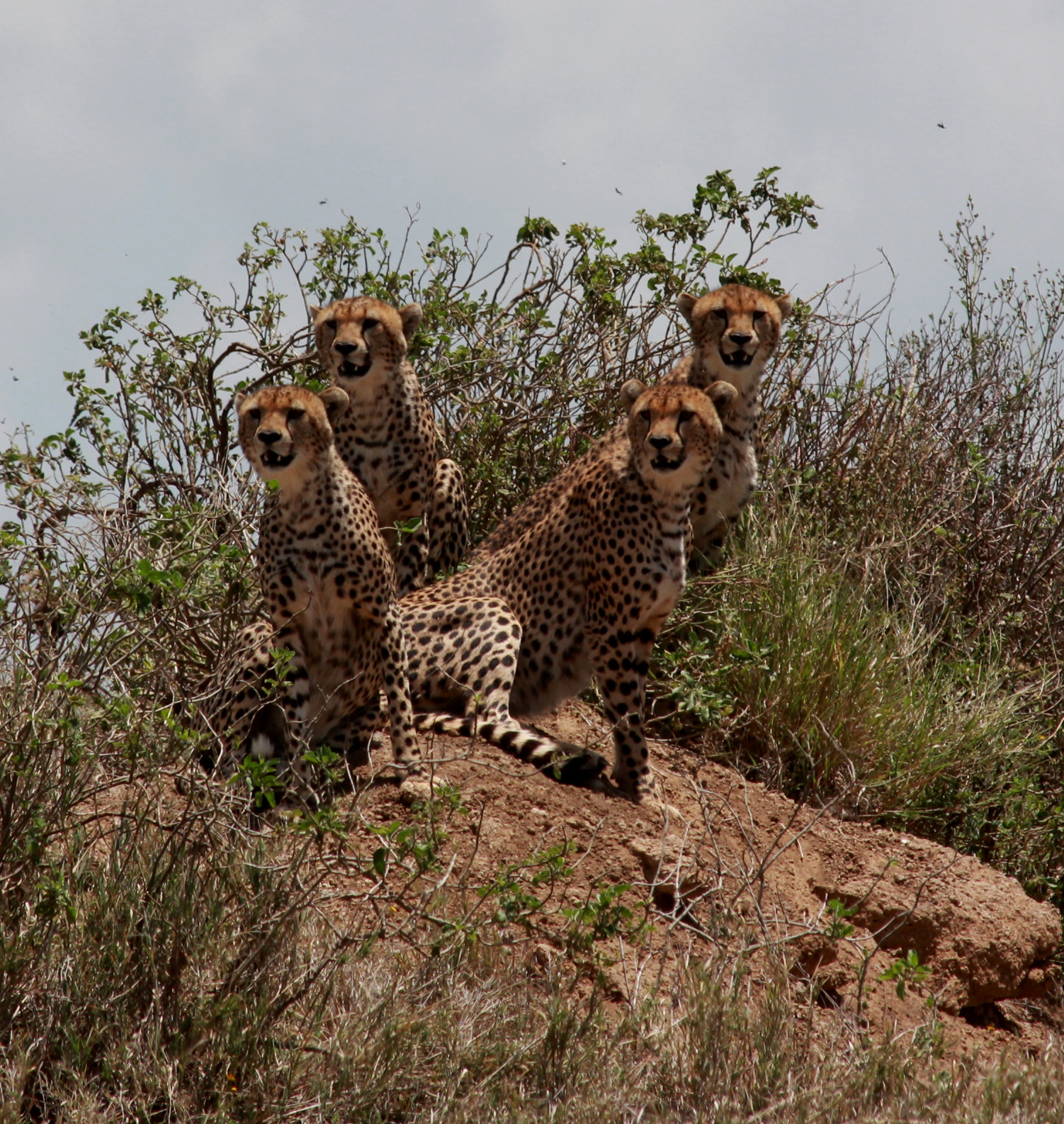 English: Four cheetahs at the Serengeti National P...
 English: A close-up view of a Cheetah Acinonyx jub...
 A cheetah in southern Namibia. It is urinating ove...
When cheetahs stalk their prey they use the camouflage protection of bush, scrub and other vegetation.
There is a certain physical description of the Cheetah. The single species, Acinonyx jubatus, is classified in the family Felidae, order Carnivora. The name cheetah comes from the Hindu word chita, meaning "spotted one," a reference to the cheetah's light brown to tawny yellow coat that is covered with round, solid-black spots of various sizes. The sports merge into a band pattern on the end of the tail that is distinctive in each individual cat. A long stripe extends from the lower inside corner of the eye to the edge of the mouth. Cheetahs have an excellent vision to find their prey. The cheetah is a medium-size sized member of the cat family considered the fastest of all four-legged animals. ("Cheetah," Microsoft Encarta Online Encyclopedia 2004)
Cheetahs have their...