Christian Fundamentalism has the potential to stop the further advancement of human rights and science with its inability to move forward with the times. Fundamental Christianity has for hundreds of years denied the rights of minority groups by persecution and prejudice and this continues to happen in these current times. Science throughout the ages has been and will continue to be constrained to what Christian fundamentalist believe to be morally and ethically right until such time as they wield insufficient power to change or govern the way science is conducted. For human rights and science to advance further the shackles of Christian Fundamentalism must be broken in order to allow for new, drastic changes that confront the beliefs of Christian fundamentalism.
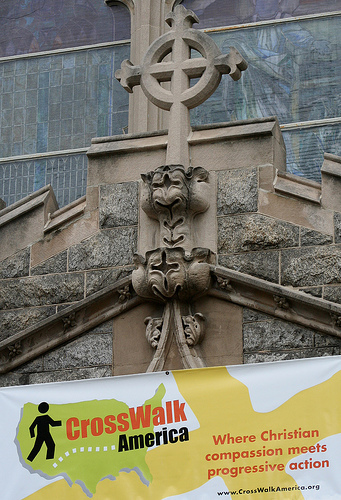 CrossWalk America; inspired by the Phoenix Affirma...
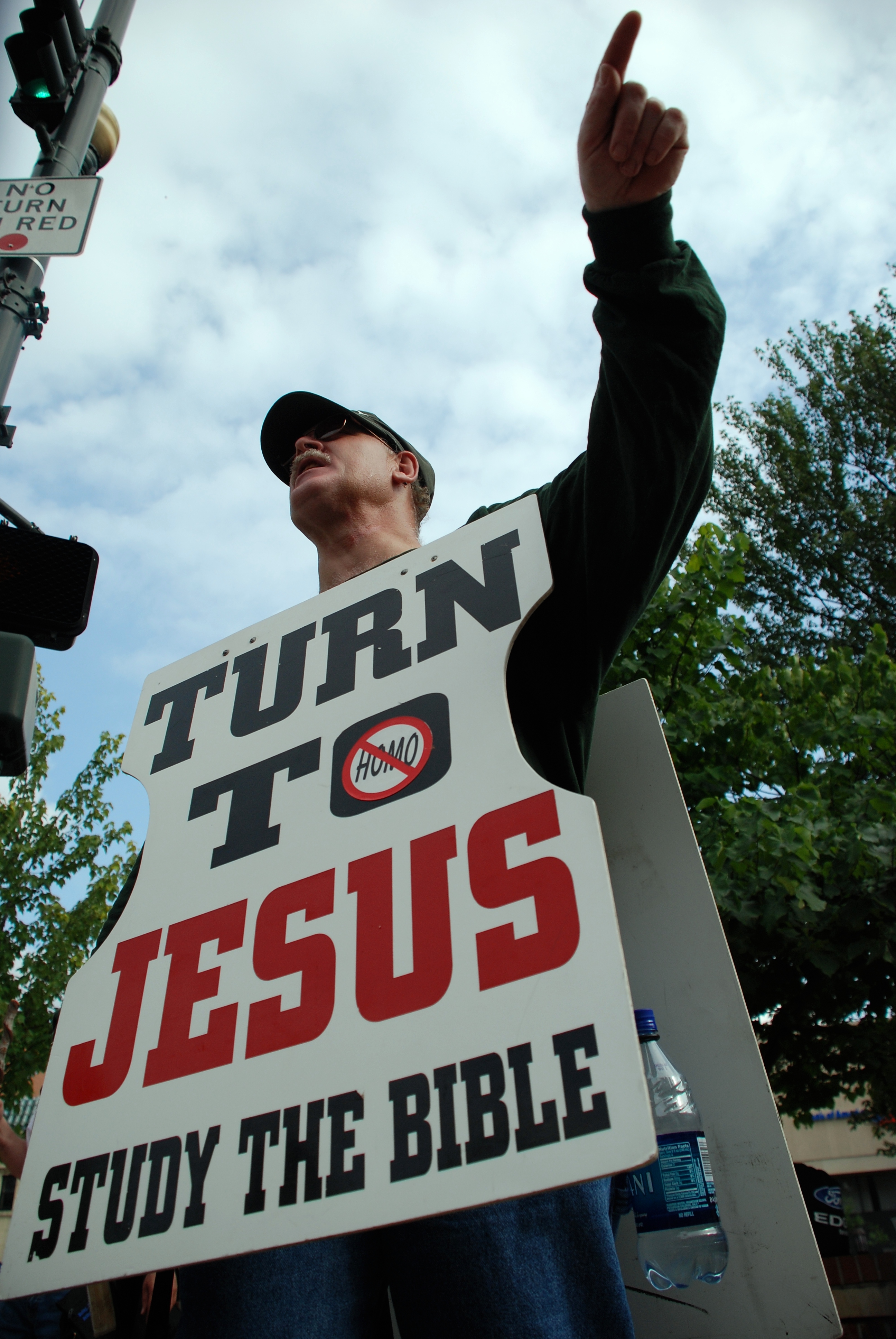 In the thick of the street festival, some demonstr...
 Christian Rock Sucks
Christian fundamentalism can trace its roots back to the 18th century during American revivalism. Fundamentalism originally started as a movement among Protestants. The movement emphasized a number of essential Christian beliefs. These included: the infallibility of the Bible, the virgin birth and the divinity of Jesus Christ, the sacrifice of Christ on the cross as atonement of sins for all people, the physical resurrection and the second coming of Christ. Fundamentalism developed out of a series of bible conferences called by members of varying denominations who strongly objected to the following: The historical-literacy study of the bible, also known as the higher criticism which saw the bible analyzed for historical accuracy and fault; the attempts to reconcile traditional Christian beliefs and doctrines with contemporary experience and knowledge that still continues today; and the acceptance of a scientific view of the world, especially the growing popularity of the theory of evolution. These trends and beliefs were opposed by many conservative members of the Protestant community.
At first these more conservative denominations tried to exclude those from their own churches...