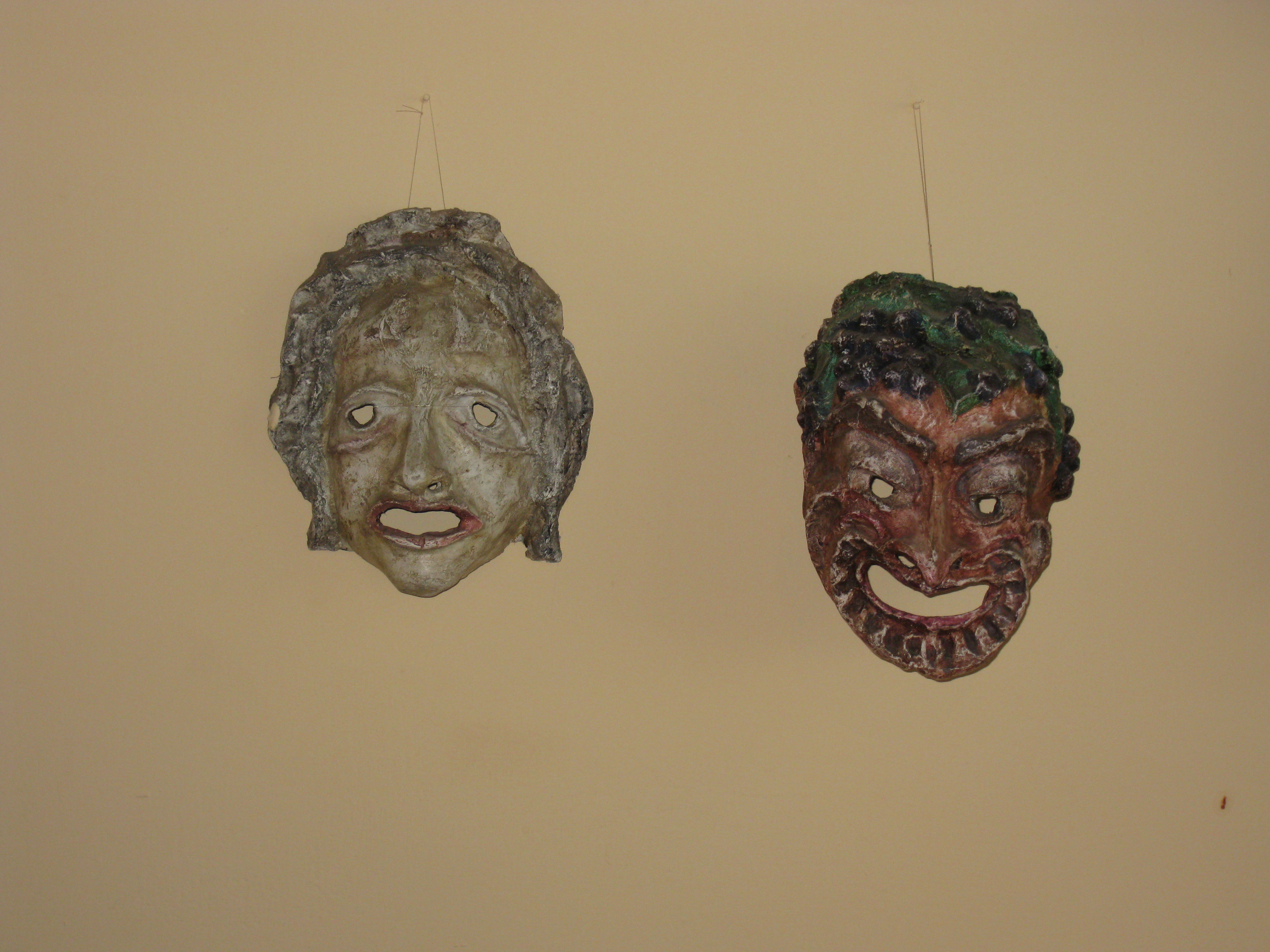
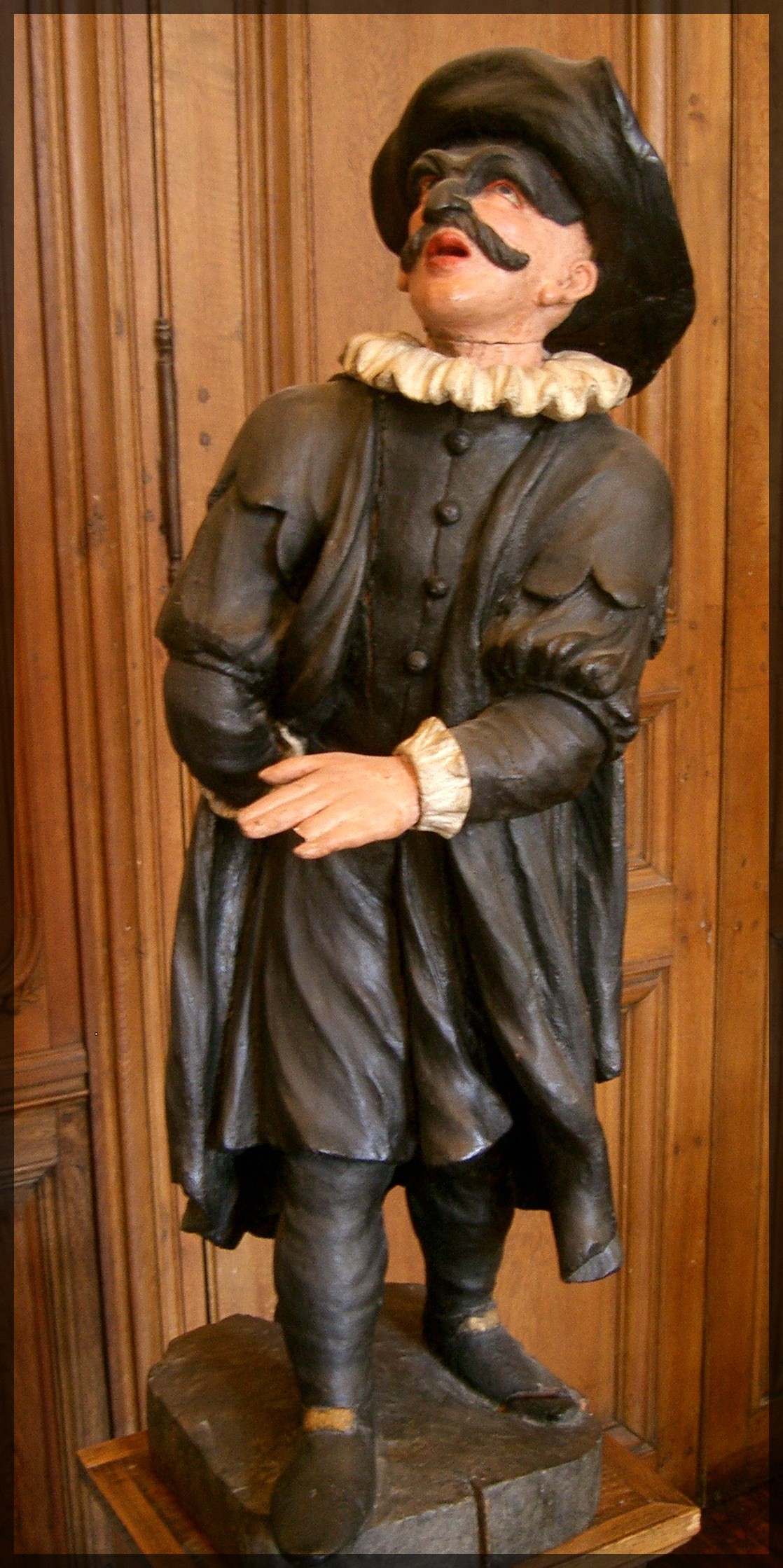
Commedia Del'Arte.
Commedia del'arte emerged in Tuscany around 1550, although its origins are difficult to trace. It had its roots in the masked comedies of ancient Rome. The form combined mime, improvised and scripted dialogue (often coarse), with tumbling and acrobatics. Commedia del'arte performances and techniques spread throughout Europe during the 16th and 17th centuries, with offshoots in France, Spain and England.
A del'arte company consisted of 10 or 12 strolling players. Each was assigned a stock part and had his standard costume and established peculiarities. The Doctor (Dottore), for example, always dressed in black and talked in a high-sounding manner. The actors all knew long speeches off by heart, which was related to their character which the actor would use and adapt in different performances.
The players (actors) life revolved around his/hers stock character and in doing so their own personality became lost somewhere in between their actual selves and their alter ego. The two personalities in a way merged into one forming its own distinct personality which the player had made its own. Some Actors were even known to change their name to their chosen character in order to feel a closer relationship between themselves and the alter ego. The group or troupe of players were as close as many families. Each actor belonged to their own troupe and it was unheard of for an actor to leave and join another Commedia based group.

Commedia was purely an actor's theatre because there was no director. Just the actors getting together without a director, without the writer, and coming up with a play. Commedia del'arte means literally 'comedy of the (actor's) guild' and is essentially improvised comedy, which followed a plot outline, a 'scenario', rather than written dialogue. These plots usually revolved around the attempts of young lovers to meet or...
More Drama
essays:
Commedia Del'Arte - Character Analysis and Traits of Pantalone, Il'Capitano and Il Dottore.
... the character world of commedia, therefore his orders are usually obeyed by all. He is the father of Isabella. He wears dark colours of black, grey and red; dynamic Pantaloons, tight-fitting long red trousers or red breeches and stockings, a ...
Commedia Del'Arte. Character Analysis and Traits of Columbina, Isabella, Arlecchino and Lelio.
... everything back in its place. She even beats the male characters in strength and intelligence, sometimes even her master. ISABELLA Isabella ... cat, and he has a superficial coarseness which makes his performances all the more amusing. He plays the role of a ...
History of the Actor.
... the commedia del arte (b). He was highly interested in the sculptured aspects in acting and taught his actors to ... his characters. These were revealed through individual rhythms of the actor's speech, motions ...
A thorough explanation of the dramatic discipline of Commedia Dell'Arte
... amateur actors recited their memorized lines onstage with no apparent emotion. Commedia dell'Arte - in English, "Artistic Comedy" or "Play of Professional Artists" - was the exact opposite: loud, colorful plays using stock characters (culturally ...
The Face Of Virtue/The Face Of Evil:
... was originally produced it would have had many of the commedia elements that were fashionable at the time: an extraordinarily physical performance, boisterous acting, and stock characters ? all ...
The Face Of Virtue/The Face Of Evil:
... was originally produced it would have had many of the commedia elements that were fashionable at the time: an extraordinarily physical performance, boisterous acting, and stock characters ? all ...
With reference to Bertolt Brecht and John Osborne, discuss ways in which political viewpoints have been communicated to a theatre audience within the last century.
... Commedia dell'-Arte. These playwrights wrote for a popular theatre of their own time and many of their themes are still relevant today. Jonson, for instance, exposed greed and corruption in both Volpone and The Alchemist. However, playwrights of this century ...
The Face Of Virtue/The Face Of Evil:
... was originally produced it would have had many of the commedia elements that were fashionable at the time: an extraordinarily physical performance, boisterous acting, and stock characters ? all ...