Compare and contrast the Communist Manifesto by Marx and What Is To Be Done by Lenin.
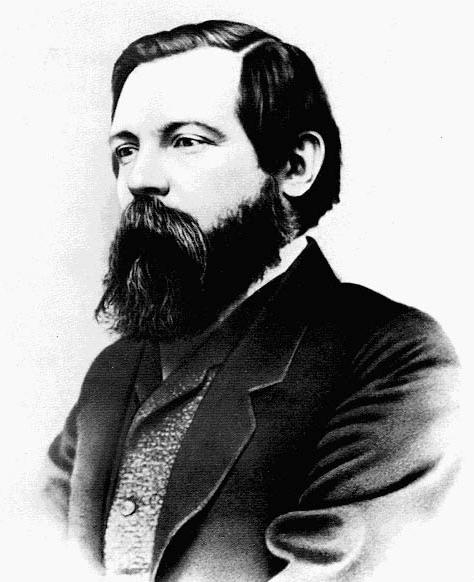
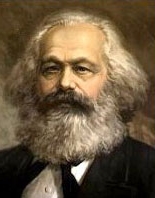
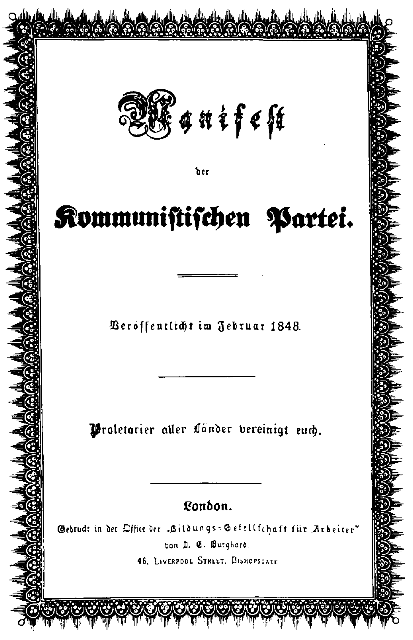
The Communist Manifesto was written by Karl Marx and Friedrich Engels in 1848. During this time, many intellectuals were examining Europe's capitalist system and the effect that industrialization had on the working class. Marx was not the creator of the socialist movement. While attending the University of Berlin, Marx studied the works of Saint-Simon, Fourier, and Cabet and he found their principles too idealistic. Marx began using history, economics and science to create the "foundations of scientific socialism." In 1847, Karl Marx and Friedrich Engels both joined the Communist League. Together, Marx and Engels wrote The Communist Manifesto to depict the League's agenda.
In The Communist Manifesto, Marx and Engels explained that history is made up of class struggles. The authors believed the struggles arose between the "oppressor and [the] oppressed." Marx and Engels stated that each struggle ended in either a radical reconstruction of society or in the destruction of the revolting class. The writers go on to illustrate that there are "two great classes directly facing each other - bourgeoisie and proletariat." The bourgeoisie represented the industrial millionaires while the proletariat represented the working class.
Marx and Engels also believed that the class struggle in Europe during the Nineteenth Century was unique. The writers explained that the class struggle had been simplified. In earlier times, society was broken into several different classes. Now there were two, completely opposite classes representing Nineteenth Century Europe. Marx and Engels explained the cause of society's division into two classes. The men believed that the giant increase in free trade had resulted in this two-sided class struggle. Marx and Engels explained that free trade caused the "naked, shameless, direct, brutal exploitation" of the proletariat.
In The Communist Manifesto, Marx and Engels described the creation of the modern bourgeoisie. "From the serfs of the...
More World History
essays:
Compare and contrast the style of commands of Ghengis Kahn and Napoleon. Incl. Strategy and Operations, and army organization. In what areas did they succeed over their contemporaries?
... while campaigning against numerous hostile states simultaneously. However, both men mastered the rapidity of movement, the concentration of their mustered force, and the lightning quick change from defense to offense that forced the fall of their opponent. For Napoleon, the emergence ...
This is just a general essay on Vladimir Lenin, his life before and after communism.
... group of radicals who were also impressed by the ideas of Marx and the influential Russian Marxist Georgy Plekhanov. The Marxist activists of Saint Petersburg, with Lenin among them, began working with the industrial workers of the ...
Lenin and the downfall of the Romanov Dynasty
... the movement of soldiers. Kornilov surrended and was relieved of his position. The Bolsheviks position immensely strengthened within the country. By September 1917 increasing numbers of socialists and lower class Russians ...
American Civil War The purpose of this paper is to illustrate...
... who were in the process of besieging Petersburg and Richmond. These battles had been up a new plan for a flanking movement against the Confederates right below ... their homes to work on their farms and in their shops." ((Sherman 200). The meeting lasted for a number of hours and near its end, Lincoln ...
What are the first few civilizations? If so, why is
... , are composed of different classes, meaning order is a strong point because of their established system of organized ... Mesopotamia should indeed be considered to be a civilization because of it’s characteristics—and, now, as promised, the next civilization. Another river-valley country ...
Compare and Contrast the American and French Revolutions
... palace of Versailles. Which again, caused peasants to lose jobs, because many women involved in the cottage industry sewed clothing for those living in Versailles. The lower class had had it, the rebellions had begun. First they attacked the Bastille and ...
Compare and contrast the differences between the Northern and Southern colonies in the 17th century. Colonies Essay
... more industrialized. The differences between the two sides were that the North had more raw materials for trade than the South, but the South had larger farms and work areas ...
A Comparative Essay on the Effect of the Demise of the Empress of Ireland and the Titanic.
... 1900s, there weren't nearly as many celebrities as there are today, but if you were of upper class society, travel was only arranged on the finest of ocean liners. Both the Empress and the Titanic had luxurious accommodations in first ...