The Medieval and Renaissance periods present two distinct cultures and worldviews in the human development. Unlike the Middle-Ages, several Renaissance scientists desired to learn about the earth apart from the idea of a Divine Creator, and philosophers brought in humanistic thinking. Innovations during this period like the gunpowder, telescope, microscope and the print press changed dramatically the people's lifestyles and views of the world around them. Religion also varied greatly between these two eras. Reformation brought about turmoil during the Renaissance as opposed to the monastic life of the medieval period. One of the less obvious of these changes was that of music. In comparing Medieval and Renaissance times we can see a definite contrast in the style and content of what the music emphasized.
The Medieval Era (450-1450), also known as the "The Dark ages" in Europe began about 450 with the disintegration of the Roman Empire, and the most important musicians were priests.
 Renaissance Faire 2012
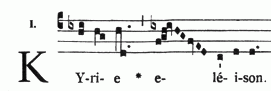 The Liber usualis uses square notation, as in this...
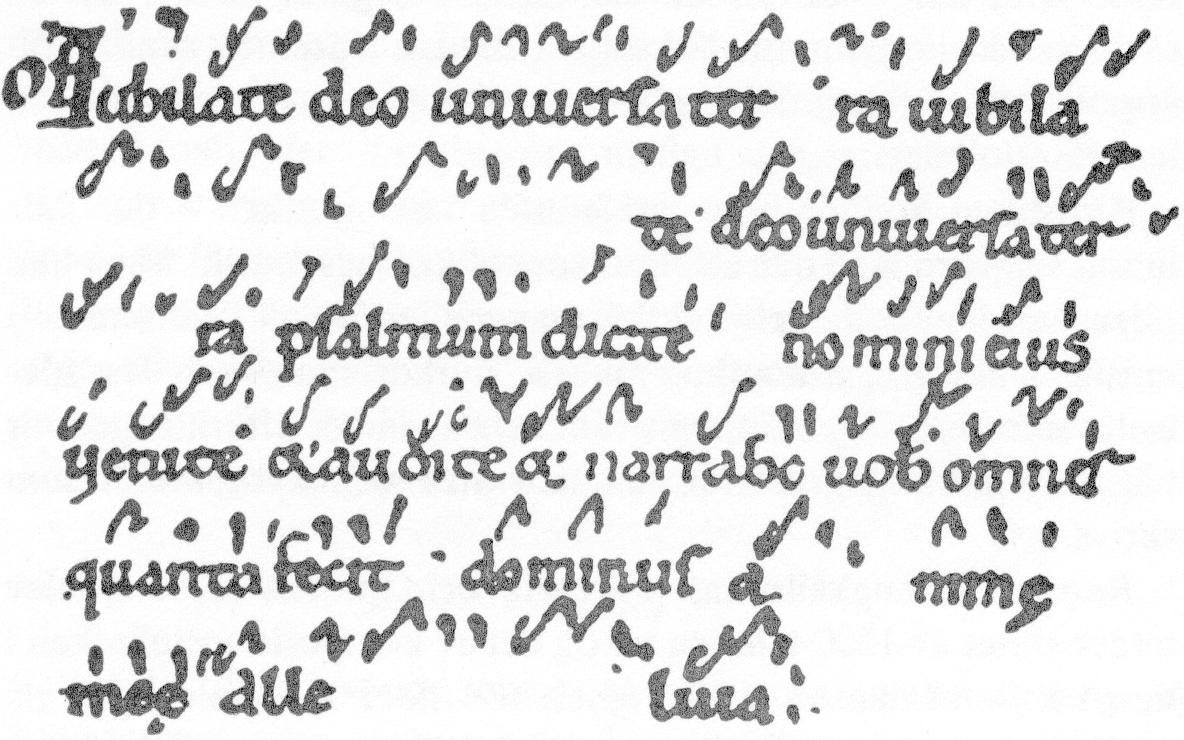 "Iubilate deo universa terra" shows psalm verses i...
The majority of liturgical music throughout this era was plainchant (Gregorian chant), which indicates a single sacred melody, without accompaniment, sung by a single person or by a choir in which each member sings the same part. In many respects, medieval chant is the same chant which can be heard in monasteries today, and much of the most important chant (or plainsong) was composed by early medieval saints. Another word to describe plainchant is monophony, which - as opposed to polyphony. It means a single sound, whether sacred or not. The concept of mode was created to categorize plainchant, and is something which can often apply to polyphony in only strained fashion. The other very important feature was that most medieval music was vocal. The plainchant conveys a calm, otherworldly quality. Its rhythm is flexible, without meter, and its melodies tend to...