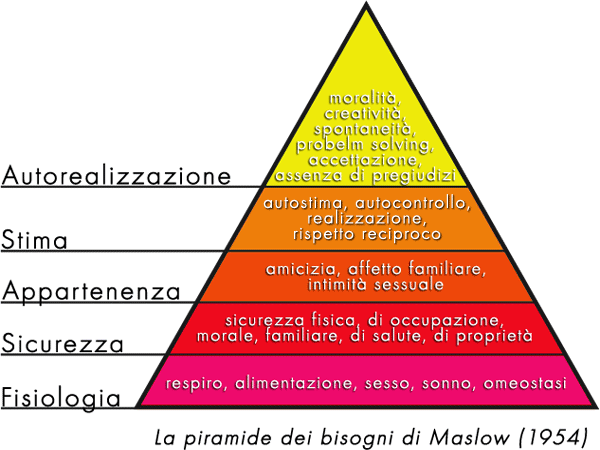
A comparrison of the theories of Carl Rogers and Abraham Maslow.
The Theories of Abraham Maslow and Carl Rogers
Maslow and Rogers come from a school of thought, which is referred to as Humanistic. Such an approach steers away from the idea that man is a robot, who is the total product of outside forces, as the Behaviorist would maintain; or that man simply results from the interaction of primal drives and the demands of community - a belief held by many Freudians.
The Humanistic approach accepts the 'human qualities' of the individual; that man is born with an inherent potential for self-actualization. Maslow considers such self-actualization to be the pinnacle of human expression - the final stage of human development. The self-actualized person is 'wholly and fully human'.
There are several factors which distinguish the Humanistic Approach from other approaches within psychology, including the emphasis on subjective meaning, a rejection of determinism and a concern for positive growth rather than pathology.
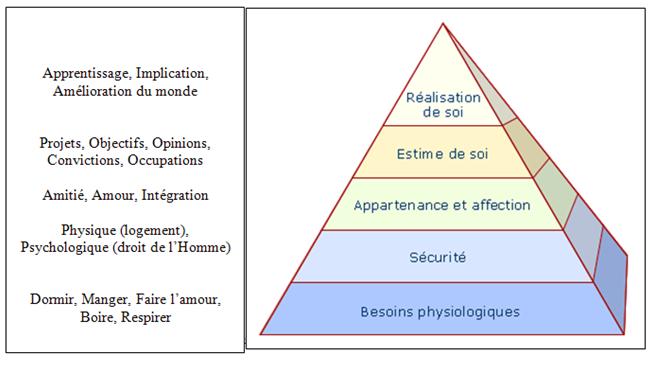
The theories of Abraham Maslow and Carl Rogers both include a much emphasized concept of self actualization and the characteristics which are required in order to achieve it. Their theories in the aspect of self actualization are very similar with only a few slight variances. Both Rogers and Maslow categorize self actualization as the highest goal or driving force of the human needs system.
Carl Rogers was not only one of the founders of the Humanistic Approach, but also arguably the most influential therapist in the 20th century: a number of surveys, including several done after his death, found that more therapists cited Rogers as a major influence on their thinking and clinical practice than any other person in psychology (including Freud).
Like Carl Rogers, Abraham Maslow is widely regarded as one of the founders of the Humanistic Approach. While less influential among therapists than Rogers, Maslow became very...
More Psychological Theories & Authors
essays:
Comparison of the Individual in Freuds "Civilization and Its Discontents", Buford's "Among the Thugs" and Weir's "The Truman Show"
... approach to demonstrate the conflict between the individual and society, and how civilization forces its members to conform. In the movie, Truman Burbank displays his individuality throughout every moment of ...
This essay is a brief description and self explanation of Freud's "death wish" theory. This essay also speaks of the mythological beginning of "Thanatos".
... . Bibliography Schmallenger, Frank.(1996). Criminology Today, 2nd edition. Prentice Hall Goldberg, Carl. Speaking With The Devil: Exploring Senseless Acts Of Evil. New York: Penguin Books USA Inc., 1997. Fromm, Erich. The Anatomy of Human Destructiveness. New York: Fawcett Crest Books, 1973 ...
MORAL DEVELOPMENT overwiew of moral development and who were some of the major theorists of this topic. Interviews, have been done so using Kohlberg's theory
... and human welfare. Kohlberg followed the development of moral judgment beyond the ages studied by Piaget, and determined that the process of attaining ... Arnett Jensen Jeffrey. (2001). Adolescence and Emerging Adulthood a Cultural Approach (1st ed.) (M. Rottino, Ed.). Upper Saddle River, NJ: Prentice ...
A concise review of Watson's "Little Albert" tests and the results.
... field of psychology during the early 1900s. He is credited with founding the school of thought known as behaviorism, which believes that much of human behavior ...
Compare And Contrast The Theories Of Personality D
... can develop further if there is any other difference. Identity versus role confusion (12-18) sees the two major influences in a human's life. A balance is needed between the constant and the changing aspect of the self. However ...
An overview of Psychological Theories of Crime
... beginnings of thought on law and society. Early thought operated off of a principle of moral ... lack of emotional expression), apathy, and social withdrawal). This disorder breaks the bonds with society that keeps behavior in check. A recent development is the application of operant ...
How useful is psychoanalysis when viewed from feminist perspectives? Identify and discuss the main criticisms that have been made of the work of Freud, as well as the main strengths.
... actually a kind of mutated creature. (Gelb, L.A. (1973). It is my belief; therefore, that if Freud felt women did not mature fully into "human beings", his theory of psychosexual development can not be considered a philosophy on human development ...
Applying Theories of Human Development
... social historical theory of human development. This simply stated that our development is shaped ... with personal feelings and thoughts of there own. He believed that children naturally developed based ... and sever mental illness. It seems that understanding there development as children would be of little ...