Concept of the Automobile
The invention of the automobile has been one of the greatest achievements of the 20th century. To mankind, it has been a definitive icon of independence and personal freedom. But with the birth of the automobile now comes the beginning of the concept vehicle.
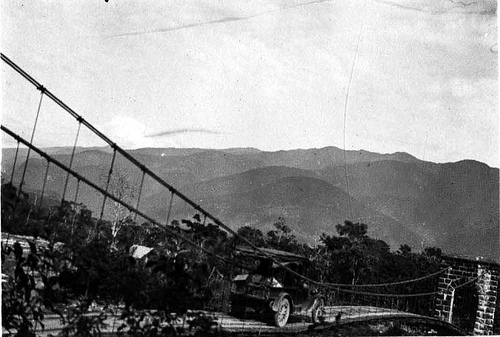
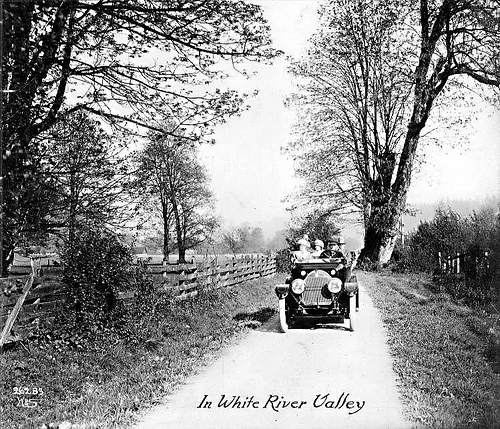
The invention started with the Tin Lizzies in the 1900's. Vehicles in the early days were produced to look the same. These vehicles looked like a box on wheels, similar to a horseless carriage. They were started with hand cranks that could turn into a weapon if the vehicle were to backfire. Kerosene used to light the headlamps was foul smelling, and the tires were made of pure rubber, which didn't cushion the bumps. In those days however, it was only the wealthy that could afford to own a vehicle.
At that time, there was not much competition in the design and economical value of the car. As time passed, necessity dictated that these vehicles be updated. Engineers began to look towards the future and were required to enhance the design of the cars, as well as their safety. It is one of the major transportation sources for people as well as manufactured goods. But is that all there is?

It has also been an ever-changing symbol in history. For many years man had tried to widen the resources for a faster, sleeker and cost-effective vehicle. It progressed into cars with smooth lines and large fenders.
Then there was the gas crisis in 1977. At this point in time, the automobile manufacturers were forced to design a car that was more fuel efficient and economical. This also was a time when the Japanese automakers started to import their cars into the United States. With the introduction of the Japanese automakers, the United States would have more...
More Art Essays
essays:
A report documenting early 20th century Chinese history using the movie "Farewell My Concubine" and Peking Opera as a reference point of how the arts were affected by the cultural revolution.
... from the harsh reality that normal Chinese people were facing during the beginning of the 20th century. It ... either the flat side of a sword to the bottom, a beating of the inside of their mouths with a metal weight, or a series of blows to the palms of their hands which ...
Art and Censorship in the 20th Century
... in the 20th century: selling democracy, Carnegie Publishing, Great Britain, 1999. Toby Clark, Art and propaganda in the twentieth century: the political image in the age of mass ...
The war of man against himself
... and the impacts of advertisement in the late 20th century, which are offering us the impossible: fame, beauty, wealth, immortality, on consumption patterns. The narrator looks at Ikea catalogs and wonders what dinner set defines him as a person. The narrator ...
Music Viva Voce 1900-1945 (Early 20th Century)
... and personal expression in the romantic era grew even more pronounced in the 20th century. This was partly the result of several features of 20th-century life ...
Music Awareness, Contextual Studies: "National Schools within the Romanticism"
... branch of the late 19th century, by dissolving traditional rules and conventions into a new musical language with infinite possibilities of harmony, rhythm, form and colour. "Prèlude à l'Après-Midi d'un Faune" (orchestral "experiment") is the definitive work ...
Discuss how modernity has influenced the practice of artists- Pablo Picasso;Jackson Pollock and Josef Albers
... for the 20th century. Many artists have paved the way for future generation in creating art. Three of these ... in the choice of brushstroke and colour).Artists began to seek freedom not just from the rules of academic art, but from the demands of the public ...
Film Analysis of The Movie "Fight Club"
... as the 90's everyman, the IKEA man. The film shows the extensive emphases the consumer-based culture of the 20th century has on individualism and values associated with being a man. Corporations have replaced personal qualities ...
Picasso
... a 20th century movement that he didn't inspire, contribute to or--in the case of Cubism, which, in one of art history's great collaborations, he co-invented with ...