Conceptual Rocket Propulsion Systems
Rocket engines of today are insufficient for any type of human travel in our own solar system. Humans have yet to ever go beyond our own moon, just an inch away in the ocean of our solar system. This is due partly because of the sheer time it takes to travel using present-day technology. Currently, NASA is working on many types of propulsion systems for tomorrow. Of these, matter-antimatter, nuclear fusion, and light propulsion are the most intriguing.
Of the three, antimatter propulsion would generate the most energy. When antimatter comes into contact with normal matter, both particles are completely annihilated, releasing pure energy and shooting off radiation at the speed of light. For this reason, Matter-antimatter propulsion would be the most efficient propulsion system ever, because 100 percent of the mass is converted to energy. Using this type of propulsion, a manned spacecraft would be able to travel to Mars in about 1 month (using only about 10 grams of antiprotons), instead of the 11 months that it would take today.
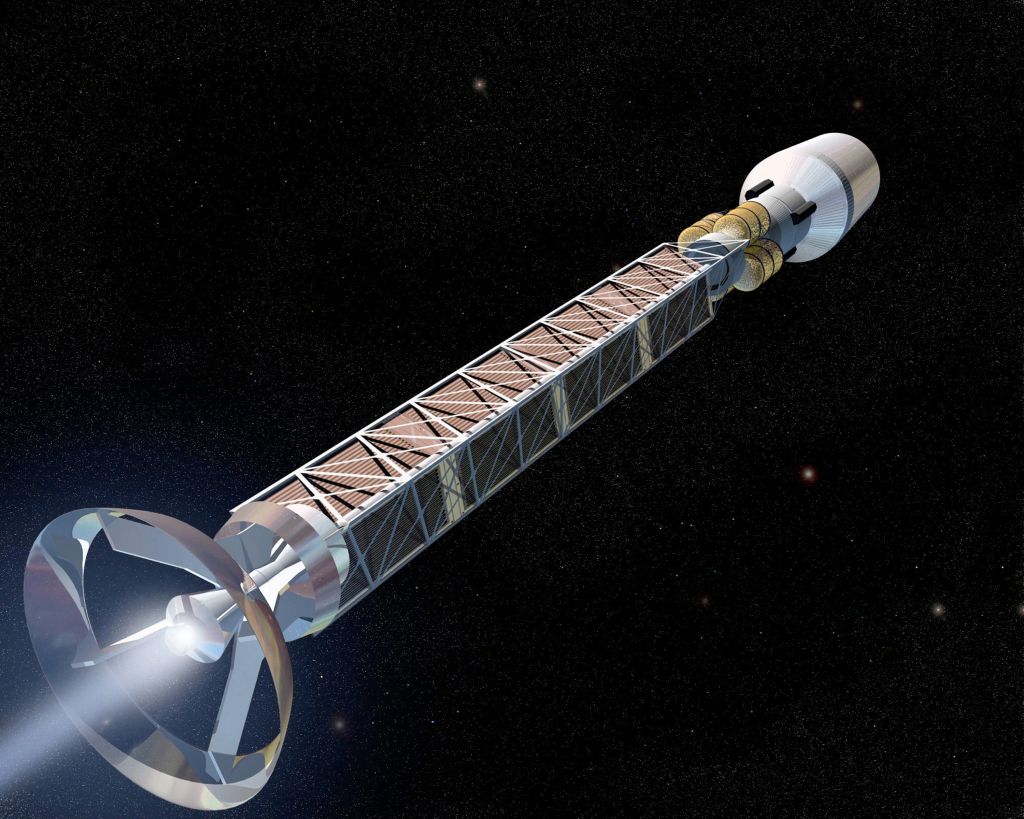 English: This is an artist's rendition of an antim...
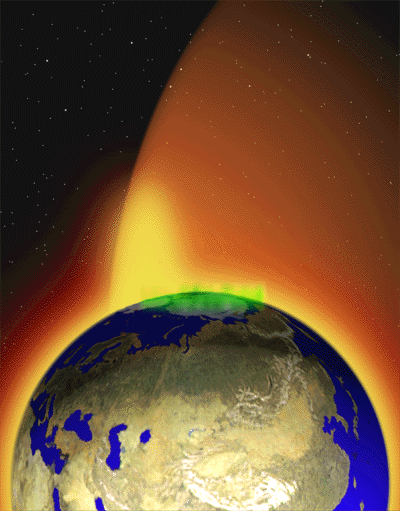 English: The Earth's plasma fountain, showing oxyg...
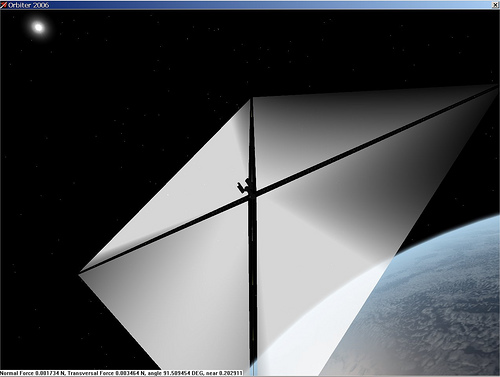 Solar Sail in Orbiter
To reach Mars in 1 year, as little as one millionth of a gram of matter and antimatter would be needed to supply the engine. Although this technology is still decades away, NASA officials are very optimistic for this type of propulsion. The problems facing scientists are how to create and store the antimatter. Presently we are able to create antimatter, but storing it is a major problem (although it is not impossible). This leads to a more realistic method of travel, fusion-powered space ships.
Fusion reactions also release a great amount of energy. Also, unlike antimatter, fusion occurs naturally and regularly. In the intense heat of the Sun, fusion creates nearly 85 percent of the energy released. Fusion works by combining two protons...
_________________________________________________
This sounds like a documentary that would be on BBC World. Well done.
5 out of 5 people found this comment useful.