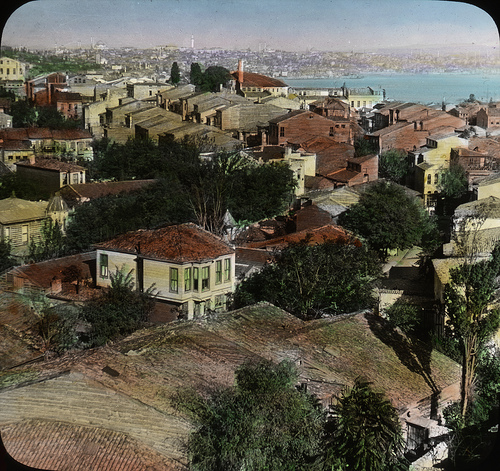
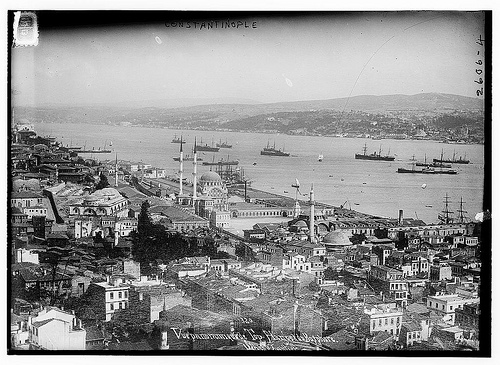
Constantinoples influence in the west
In effort to initiate our studies concerning the west and the world, we have begun to explore the roots of western culture in pre-modern history.
With this being the case, our class has been challenged to express which of the six key cities during the 1500's could have played a significant role in the evolution of the west.
By using the characteristics of the western world as the foundation for my case, I will illustrate how and why Constantinople influenced the evolution of the west most significantly.
One of the first characteristics of the west is a "developed system of belief." While in our time this refers to constitutional government and individual rights, the pre-modern equivalent took on the more recognizable form of religion.
While under the rule of emperor Constantine XI the Catholic religion became both the system of belief as well as the governing factor. Not only did this common faith help build a sense of community, but could also be used to set standards for acceptable behavior in society.
Although this system of belief changed after Constantinople was overthrown, the switch in focus from Christianity to Islam would become of great benefit to society, as it paved the way to the development of the most multi-cultural city in the pre-modern world.
The second characteristic of the west focuses on the economy, the trade, industry and technology.
Due to its location on the Bosporus Strait, which bridges the division from the Mediterranean into the black sea, Constantinople "became the great city linking Europe and Asia." This strategic location would permit the development of key ports that played a crucial role in Constantinople's trading industry, making it one of the "commercial centers of the world".
The city could trade in both Europe and Asia, and bring in wealth and...
More World History
essays:
To What Extent was 'Sovietisation' imposed on Eastern Europe after 1945? Discuss with reference to at least two countries in the region - two countries referenced are Poland + Czechoslovakia
... Czech government, as did the Polish, initially welcomed it . Stains perception that the Marshall plan was an imperialist plot to reduce soviet influence in the area has been outlined by Tampke, though some western historians ...
Differences in thinking betwen the USSR in the East and the US and UK in the West.
... enterprise. Government would have the minimum of intervention into the business, factories and land that were owned by individuals or groups of individual. Communist ...
Stalin's Involvement In The Cold War
... of history", a common trait in most fanatical world leaders. (Khrushchev's Indictment of Stalin, Online). These records of history shed light on Stalin's ways and thoughts of governing to ...
Analyse the role of Cuba in the development of the Cold War
... aware of the increasing power of the island under the Castro Government. The USA had to adopt the Monroe Doctrine once again; this doctrine states that the US has the right to intervene in Latin America to protect the Independence of ...
Was Russia ripe for revolution in the 19th and early 20th centuries?
... contentment and forced them to seek shelter under Marx's beliefs. The Czar and his government brought the cloudburst upon themselves, as their policies added more ...
The intellectual, social and religious effects of the Scientific Revolution on the West.
... government control of church lands in their territory; the pope lost the absolute authority he had over Europe. The Scientific Revolution had a great negative effect on religion ...
Conflict and Violence as the major theme illuminating the history of the world in the twentieth century.
... rightful place in the upper echelons of global power for his Imperial Germany; Tsar Nicholas II was at the start of his doomed sovereignty in Imperial Russia; Africa and Asia were predominantly owned and governed by a select group of Western ...
Do the Benefits Outweigh the Problems Brought by Retaining Territory Won in the Six-Day War?
... the history of the Jewish people. Most importantly, even in the Old City itself, is the capture of the Western Wall. The Western Wall is the single holiest place to the Jewish people and it is significant to ...