The Controversy Over the Dieppe Raid
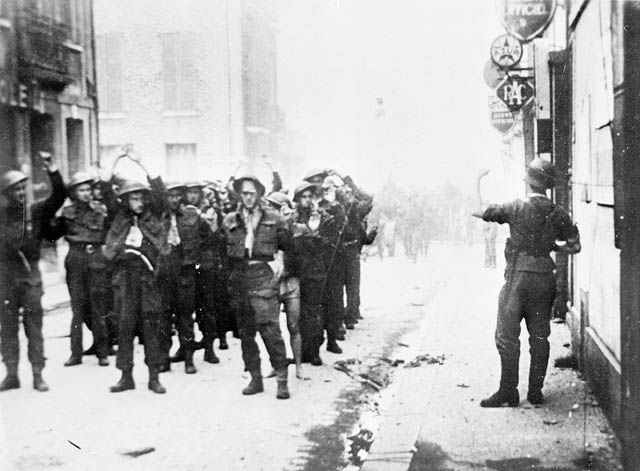
The raid on Dieppe in World War Two was a disaster and woefully resulted in the loss of many lives, but why? The planning of the raid was incomplete and lacked many important factors. The intelligence that the Allied Forces had gained to plan the raid on Dieppe was incorrect or incomplete. There were no lessons learned at Dieppe that were not already known or could have been learned without the raid. The Dieppe Raid was highly flawed and this was the fault of the planners of the raid.
The Dieppe raid was a failure because its planning lacked many important factors. Before the planning for the Dieppe Raid, an older operation had been intended to be carried out at Dieppe. This was codenamed Operation Rutter. Prior to executing operation Rutter though, it was shelved. Now in 1942, the Dieppe Raid had been proposed and was much different from its predecessor and not necessarily for the better. Unlike the initial plan, there was to be no heavy aerial bombardment of the area before the raid. This was because the Allies did not want their bombers to be distracted from their nightly raids on Dieppe and also because the British thought there would be too many civilian casualties. However, an aerial bombardment of the area should have been a necessary part of the raid. It had so many more benefits and even the cost would not have been that much but it was still not a part of the plan. This deficiency contributed to the failure of the Dieppe raid. The battleship support was also greatly reduced to only 8 destroyers which employed the Royal Navys smallest calibre guns. Could a vaster majority of naval units such as battleships and cruisers have changed the outcome of the raid? Some say that...
More Canadian History
essays:
A summary of Canada's Involvement in World War I. Covers all major corps, and includes a copy of "In Flanders Fields" and a timeline of Canadian Involvement in WWI.
... 1919 two that had been given to Britain were returned as "gifts of appreciation" for Canada's help in the war. In all 65,000 Canadians were killed in World War I. The Canadian Expeditionary Forces played ...
Three defining moments in Canadian history in the 20th century, and prove their significance to the maturation of Canada as a nation (I created this question).
... in World War Two. The role of women grew closer to enemy grounds (such as actual navy, army, and air force positions), and once again, the rest took the jobs of men. Canadians grew dependant on the ...
World War I: Canada's Role
... Second World War could have been avoided. If Europe were to avoid war altogether it certainly would have been much better for Canada. The Conscription Crises was probably the most harmful event that occurred on the ...
An essay on the on four defining moments in Canadain history; Includes: battle for Vimy Ridge, Battle of The Atlantic, Dieppe, and D-Day.
... most important defining moments in Canadian History. My third defining moment is remembered by many as a tragic and shameful disaster. This disaster took place in the second World War on August 19th 1942; The Dieppe Raid. Roughly ...
Did Canada play a signifcant role in World War 2
... train Allied soldiers and fought many significant battles such as the battle of Dieppe Atlantic and Normandy. As the Second World War raged ...
Defining Moments in the Canadian History.
... of World War Two to many people. Operation Overload took place June 6, 1944 in Normandy, France. The invasion was supposed to start June 5th, but got postponed due to weather. The Allies had learned from the disaster at Dieppe, that ...
Canada's Contribution to World War 2. What were the 3 most important things Canada contributed to the war? -Change of economy, women's effots and the BCATP (British Commonwealth Training Program).
... solider. Allied victory in World War II was in large part aided by Canadian involvement in the form of the BCATP, Economic Change and Women's Rights. The British Commonwealth Air Training Plan (better ...
Canada during the Great depression.
... 24 On September 1, 1939, Adolf Hitler gave orders to start World War Two. On September 10, 1939, Canada declared war and ... factors which contributed to the downfall of the Prairie provinces in the first few years of the Great Depression. In 1934, soil began to blow in mid June and destroy ...