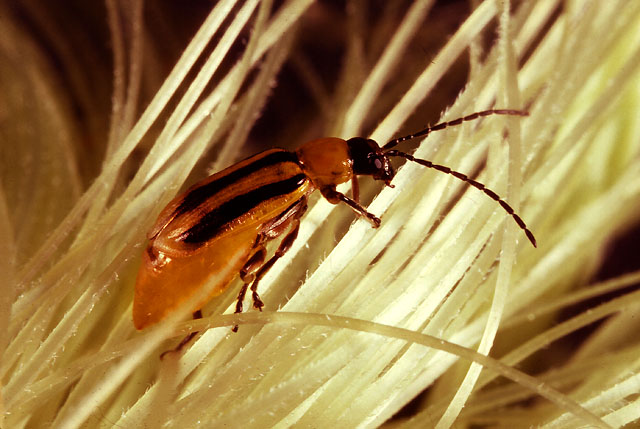
Corn Rootworm - Genetic Defects of Pesticides on Plants
Corn rootworms are tiny beetles that in there larval stage feed on root hairs, small roots and in adult stage feed on primary roots of corn. These insects are a major concern to the U.S. agricultural association as the "financial impact of corn rootworm [is] at $1 billion annually - $800 million in yield losses and $200 million in costs for insecticides" (colostate). In the recent years scientist at Monsanto have been able to come up with a solution: genetically modified corn with the rootworm resistant gene known as, YieldGard Rootworm corn. This issue was up in the air with the U.S. government and the scientific advisory panel for several years until recently in March 2003 the U.S. Environmental Protection Agency has authorized Monsanto for commercial use of this transgenic plant (Agent-feb). Of course, this created controversy and even more heat on the subject from several scientists and entomologists. The EPA is allowing 20% refuge for the insect, or the area that is planted to non-resistant corn.
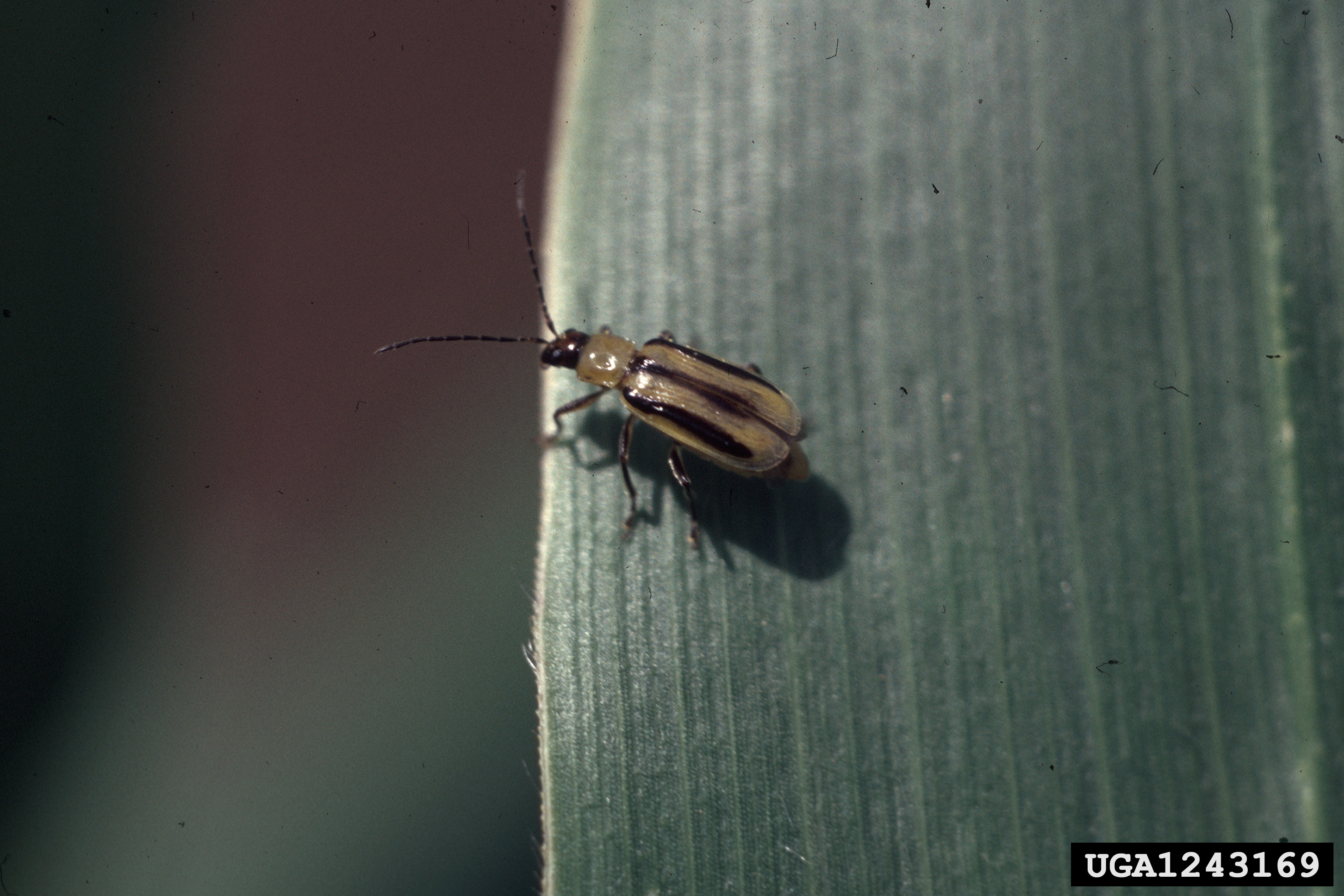
A protein from Bacillus thuringiensis (Bt) is used in the YieldGuard Rootworm corn. The Bt microbe specifically targets corn rootworm larvae, "allowing the corn plant to naturally protect its roots against damage" (Agent-feb). U.S. Department of Agriculture (USDA) estimates that control of this "billion-dollar bug" will end up saving close to $1 billion annually. In the past several practices took place to defeat this bug. Early planting, where fields have complete pollen shed and grow strong roots before the bug can even large enough to lay eggs, so the plants have a larger root system which makes them tolerant to the bug. Insecticide treatment was a huge practice, if the records from previous year [showed] that beetle counts for a field averaged more than ¾ beetle per plant then insecticides were considered" (colosate2).
More Biotechnology
essays:
The GMO Debate: Controversies Surrounding Recombinant Gene Technology and Attitudes of the British Public.
... StarLink corn, a plant modified with a gene encoding the Bt protein Cry9c. In 1998 the US Environmental Protection Agency restricted StarLink corn solely ...
The effects of caffeine on Salvia Morada
... from different areas and observed under microscope. DNA extraction procedure was modeled after the EDVOTEK laboratory handout, experiment I: Determining Plant Genetics using PCR. After the DNA was isolated and amplified, the samples where ran on a 1.5% agarose gel ...
Agricultural Genetic Engineering: Genetically Modified Foods, Arguments of both proponents and opponents and a mediated solution
... Environmental Protection Agency, or other federal regulators to prevent potentially harmful GM foods surpassed by industrial experimentation/inspection from being sold to the public. Stricter regulation may include rules that would make regulation/inspection of the products of agricultural ...
The Genetically Modified Food Debate
... either genetically modified or contain genetically modified ingredients, sparking issues surrounding morals or lack thereof. Modern techniques of producing GMF include taking copies from the cells of a plant or ...
Biotechnology. An international biosafety protocol created to establish and maintain control over the products designed with biotechnology.
... of Agriculture (USDA), the Food and Drug Administration (FDA), and the Environmental Protection Agency (EPA). These three agencies regulate product research and commercialization of transgenic organisms depending upon their nature and intended use. The USDA regulates transgenic plants grown ...
Genetic Screening what are its uses, advantages, disadvantages and ethical issues
... in agriculture, medicine, food and genetics screening. Genetic ScreeningGenetic ... of-genetic-testing/*Olson Jeff, etcGenetic Screeninghttp://www.ndsu.nodak.edu/*Sagredo Boris the social impact of genetic screening ...
A lab report on the investigation of temperature on catalase activity.
INVESTIGATION INTO THE EFFECT OF TEMPERATURE ON CATALASE ACTIVITY AIM The aim of this experiment is to find out the effect of temperature on catalase or hydrogen peroxide. This will enable us to tell at what temperature hydrogen peroxide is most efficient. This (degradation) reaction will help us ...
Human Cloning: A technology that replaces Humanity
... Cloning is an exact genetic copy of a living thing. The genetic makeup of the clone is the same as the genetic makeup of the plant or animal that ... the cell what to do (DuPrau, 1999 p. 6). Genes determine characteristics such as hair color, eye color, and height. Whether a child has a nose like its ...