Soon after the Soviet takeover of Eastern Europe, China became Communist in 1949. The Americans had always regarded China as their outpost in the East. A massive Communist stronghold had appeared. Furthermore, spies informed Truman that Stalin was using Cominform to help Communists win power in other parts of the world. Many believed the Domino Effect, where Communism spread from one country to another like wildfire. When South Korea was invaded in 1950, many thought that only military action would do to stop the world from becoming Communist.
After the Second World War, and the split of Korea, the North became Communist and the South anti-Communist and undemocratic. In September 1950, with the start of the conflict, Communist advances pushed the South Koreans into the very South Eastern corner of the mainland.
At this point, Truman sent advisers to the area to asses the situation. He also put huge pressure on the U.N.
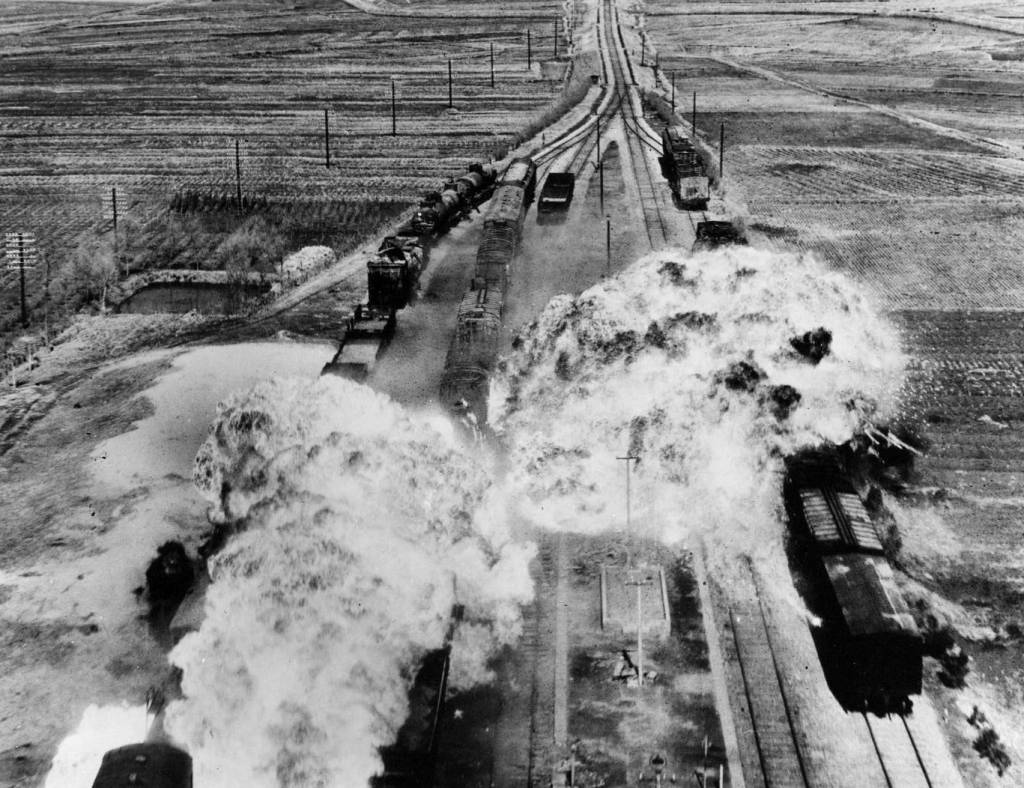 While trains were used to transport U.S. Soldiers ...
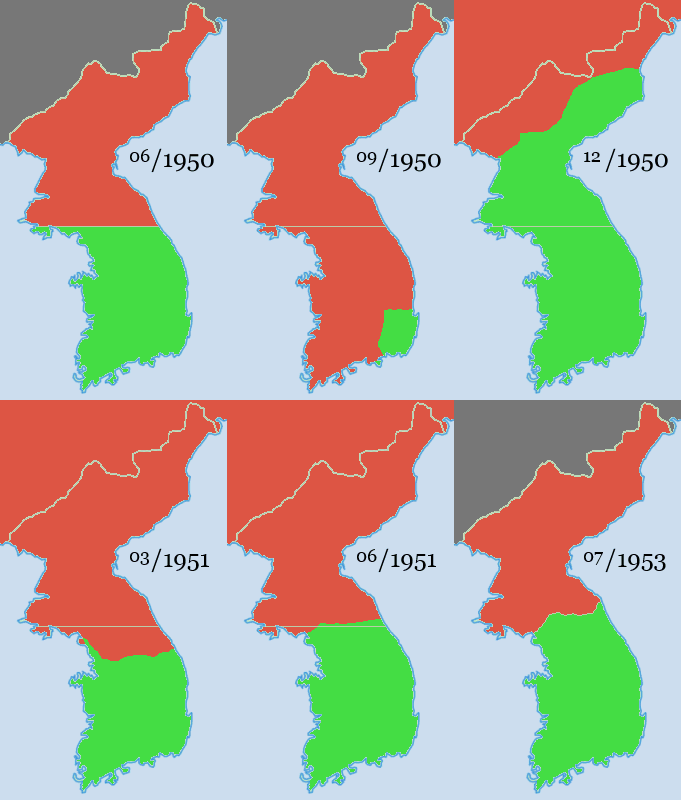 Territory often changed hands early in the war, un...
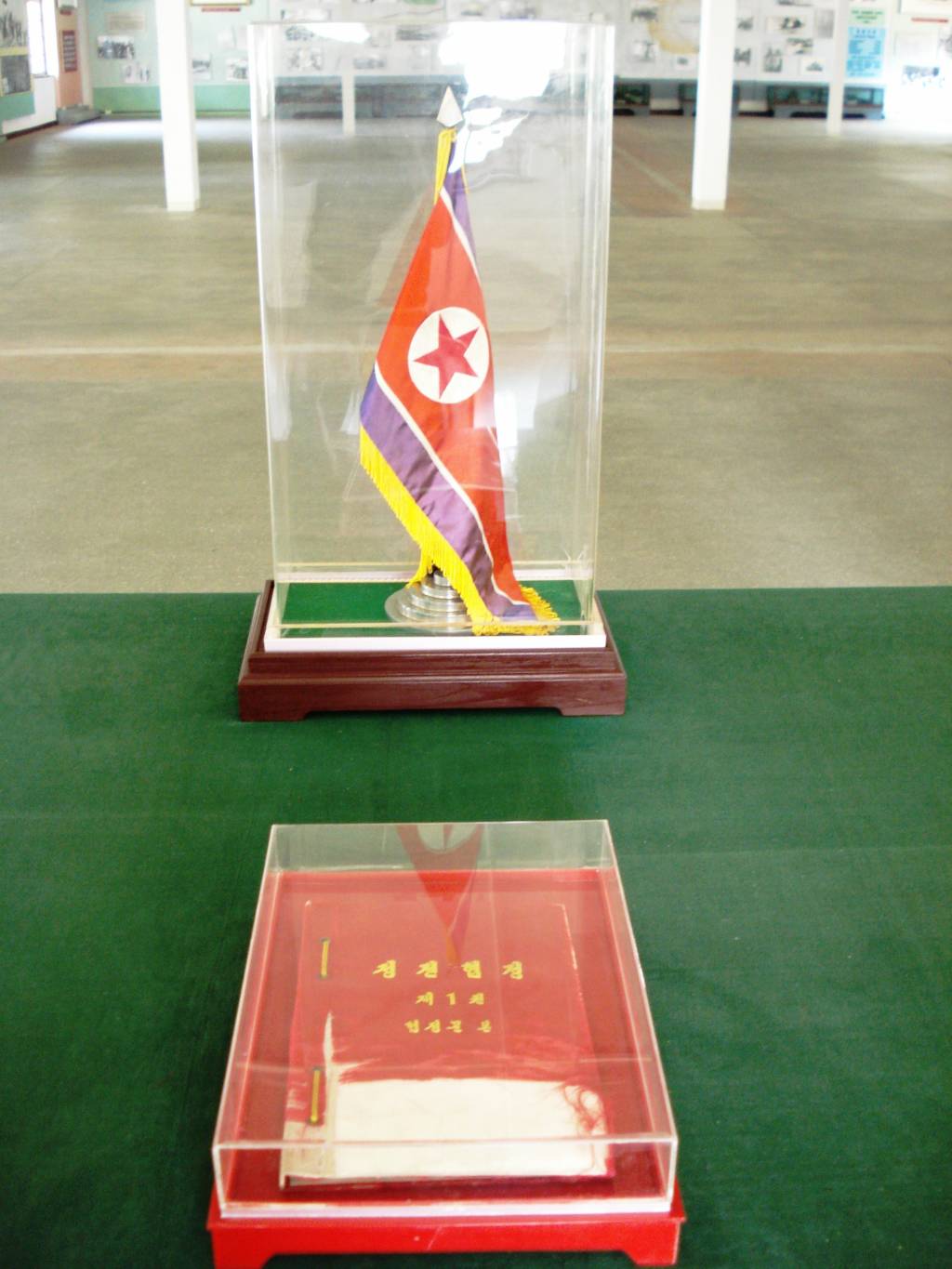 English: Armistice Agreement, DPR Korea
Security Council to condemn the actions of the North Koreans and to call on them to withdraw their troops
In the cold war atmosphere of 1950 superpower always denounced and opposed any action by the other. So usually at this time, Russia would have used the Veto system to block the call for action. However, the U.S.S.R was boycotting the U.N. at this time. Therefore, as the USA was the single biggest contributor to the U.N. budget it was in a powerful position to influence the U.N. decision. Therefore, the UN was committed to using member forces to drive North Korean troops out of South Korea
In September 1950, eighteen states provided troops with support of some kind to aid the South Koreans. However, over 90 percent of the force that was sent to Korea was American. Indeed the commander of the forces was an American:...
Interesting
I find this work quite interesting. It is written from an objective point of view, not presenting the communists as the "evil guys" - it is a proper, proffesional historical essay. Good work!
1 out of 1 people found this comment useful.