In the poem Upon the Burning of Our House , written by Anne Bradstreet, Bradstreet demonstrates many religious qualities, such as not loving her personal belongings.
Bradstreet trusts God completely. As shown in verses of her poem. In the quote "And to my God my heart did cry To strengthen me in my distress and not to leave me succor less." (lines 9-10) Even as her belongings perish in the flames, she seems to understand that God created everything and that he takes what he wants back. She seems not to care as if God will eventually make everything right.
Bradford seems to show some remorse for her lost possessions. Even though Bradford is a puritan. She starts to show some as demonstrated in lines "Here stood that trunk , and there that chest, there lay the store I counted best." ( lines 25-26) By saying this, it seems that she is saying that she loves God but she is depressed that he has taken away her possessions.
 7 Lucky Gods of japan
 Gods and sodas
 English: "The Tenth Muse," a collection of poems a...
Yet she only says this after she has tried to convince us that she doesn't care about her possessions. It seems as if Bradford only had one unreligious moment just caught up in the past.
In the last lines of the poem Bradford, she reverts back to her religious roots. Bradford expresses at all she really needs is God and that he will provide for her forever. This is best expressed in the quote "Yet by his gift is made thine own; There's wealth enough, I need no more." (Lines 50-51)
Bradstreet seems to miss the memories that occurred in her house. "Nor at thy Table eat a bitt. No pleasant tale shall 'ere be told, Nor things recounted done of old. No Candle 'ere shall shine in Thee, Nor bridegroom's voice ere heard shall bee."(30-34) This does not go against her puritan beliefs yet, it is showing remorse for her house which could be related to a material object.
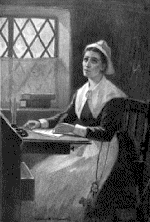
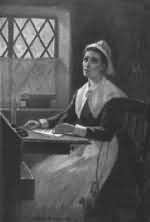 one of the more common paintings of anne bradstree...
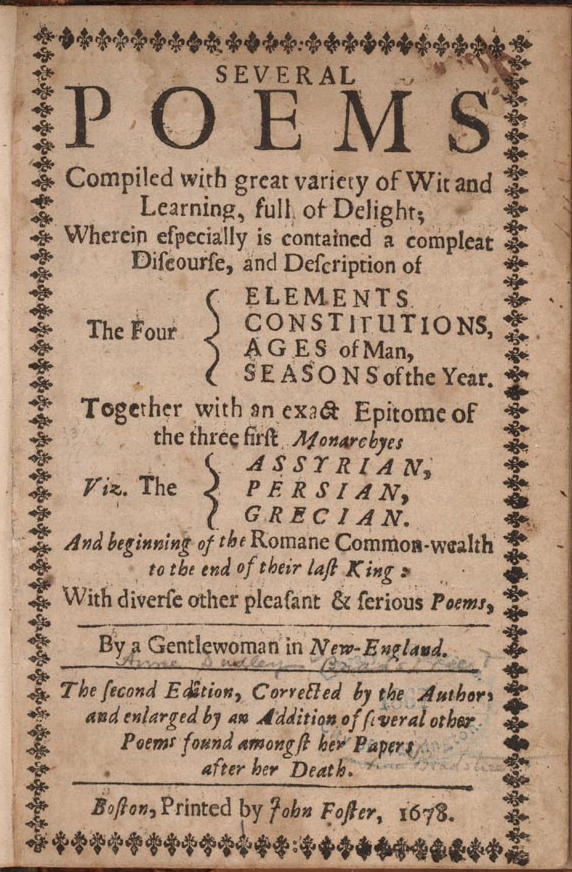 Second edition title page of Anne Bradstreet's poe...
 Bradstreet