Critical Analysis of “The Awakening”
University of Phoenix
The Awakening by Kate Chopin demonstrates life dilemmas of women during the late nineteenth century. Period of time in the history that has many similarities to the position of women is society these days. While in our culture we have taken big steps toward changing the stereotypes, there is still a large groupe of people that believe a woman's place is in the home, taking care of her children and pleasing her husband. These beliefs are at the core of inequality both then and now. The main character lives through inequality having options available to her, but she always had to consider what those choices and speaking about them openly will do to her socially.
The novel "The Awakening" focuses on Edna Pontellier, the twenty-eight year-old women struggling with the constraints that society has placed on her. The novel shows Edna's gender construction by the society that she lives in, based on Chopin's portrayal of her in the novel trying to obtain independence and control over her life in a society where she is expected to have none. Women like this are looked upon badly in a society that expects a woman to be a good mother and wife, nothing more or less. When she breaks these rules her husband thinks that she might have a mental illness, but Chopin in the novel points out that what he doesn't realize is that "Edna was becoming herself and daily casting aside that fictitious self which we assume like a garment with which to appear before the world".
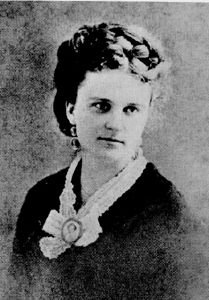
Edna is not striving towards the equality of genders, but rather with her own sexuality, and the problems that she faces in society because of that sexuality (Walker 1979). Sexuality is natural because it deals with feelings that we cannot control.
More Authors
essays:
Critical Analysis on Sonnet 12, "Shakespeare's Sonnets", by William Shakespeare
... can be associated with an old person in a coffin : "white and bristly beard". All these images denoting Nature have actually been used as examples to illustrate Shakespeare's views on time and the human being. In ...
Hamlet. Critical analysis of shakespeare's hamlet
... A Critical Analysis of Shakespeare's Hamlet 19 September, 1996 Hamlet. Is he an insane madman or a revengeful, scheming, genius? There are many conflicting ideas and theories on this subject, and hopefully this paper may be of ...
Is Henry V the "star of england" or a flawed human being. Analysis of a modern day and Shakespearean audience's reaction to the way Henry V is portrayed.
... only human beings. Yet he has done so quite successfully, by giving a 21st century audience clues to and subtleties within Henry's character which ... mock mothers from sons, mock castles down, and some are yet ungotten and unborn ...
A Critical Analysis on the Imagery in Act II of Shakespeare's Macbeth.
... not be ignorant in realizing that there are hints of human goodness in Macbeth. The murderous act of the Macbeth's is accompanied by guilt and remorse, which is another major theme portrayed by ... to life the characters, the scenery, and the atmosphere and as ...
Hamlet- Critical Analysis The tragic Elizabethan play Hamlet can be
... Hamlet- Critical Analysis The tragic Elizabethan play Hamlet can be considered one of William Shakespeare's most popular works. One of the possible reasons for this play's popularity is the way Shakespeare uses the character of ...
Macbeth, a Critical Analysis.
... Macbeth ~ Critical Analysis "Hail, king! For so thou art: behold where stands th' usurper's cursed head. The time is free." (Shakespeare 5.8.54 pg. 96) With these words, the reader sees Macbeth's life and all ...
How "Great Expectations" reflects the values and attitudes of its time.
... values and attitudes of nineteenth century England. The terms 'values' and 'attitude' are somewhat linked, and are ...
A Matter of Perception: Treasure Island Is Good or Bad
... must be understood in relation to the horizon of literary and moral expectations shared by Haggard, Stevenson, and their many middle-classed readers. The romance movement distrusted scientism and deliberately idealized life" (Nineteenth-Century Literature Criticism, Vol ...