Overview and Analysis of the Crusades
The Crusades were military expeditions planned and carried out by western European Christians.
The crusades started around 1095. The purpose of these crusades was to overtake and gain control
of the Holy Land from the Muslims. The Holy Land was Jerusalem and the Christians believed that
gaining control of it was their fate. The pope would gather the people together and incite them. The
origin of the crusades was a result of the expanding Turks in the middle east. These Turkish forces
invaded Byzantium, a Christian empire. The crusaders were a militia, sent out to recover what they
thought was theirs.
The first crusade was essentially started by Pope Urban II. On November 27, 1095, he gathered his
followers outside the French city of Clermont-Ferrand. He preached to these people and told them
that action needed to be taken. In response, the people cheered and planned their attack.
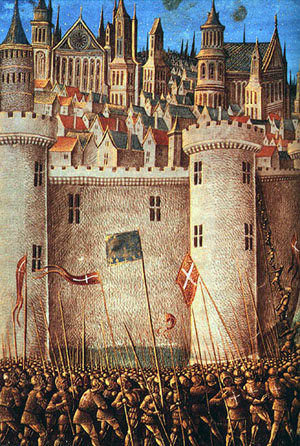 English: Medieval miniature painting of the Siege ...
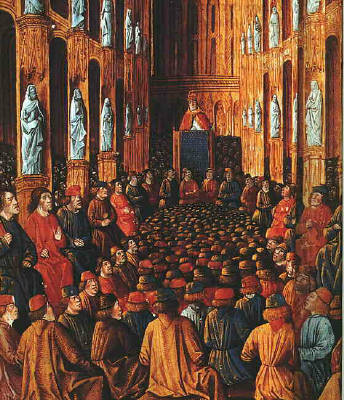 Pope Urban II at the Council of Clermont of 1095, ...
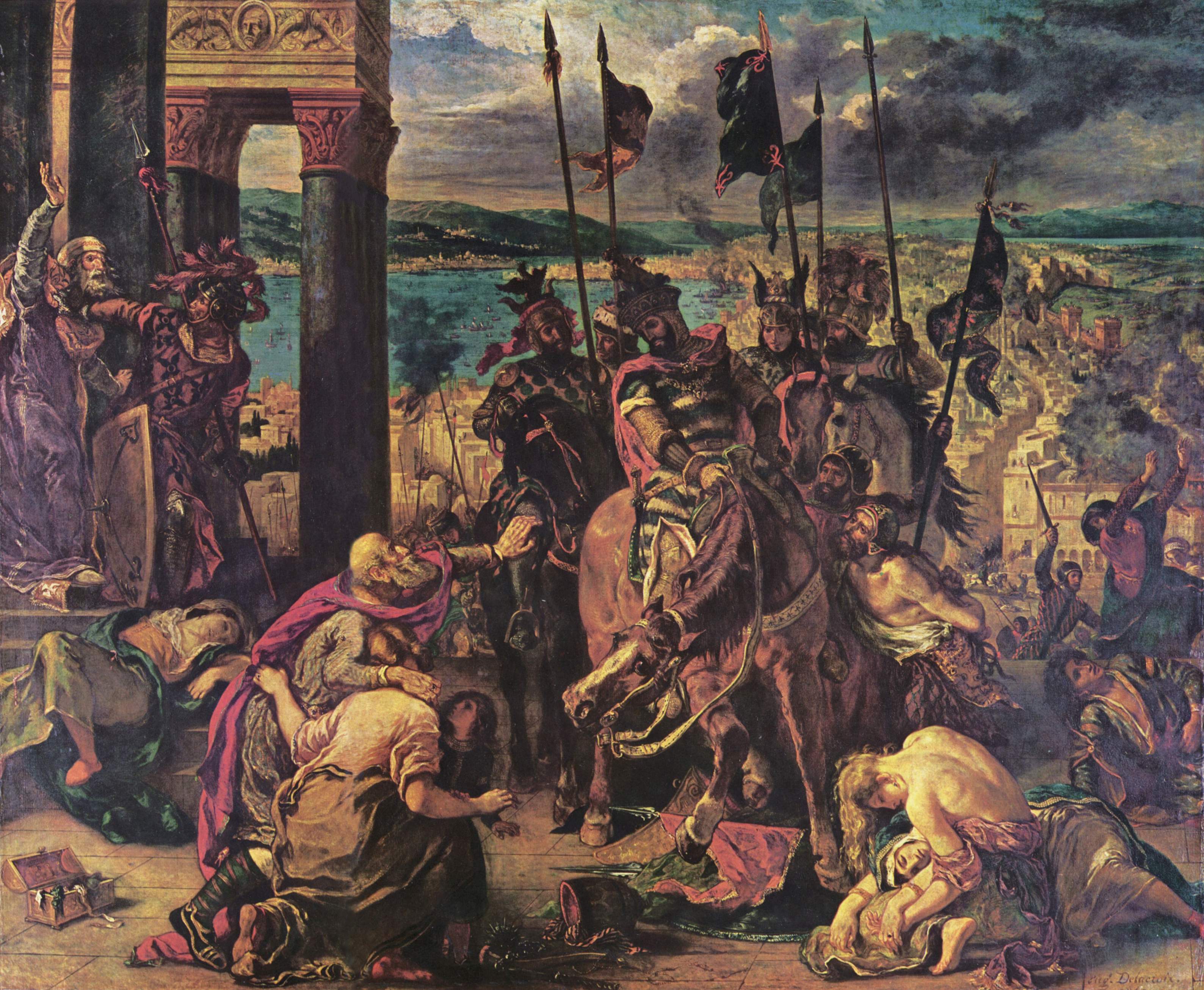 The Entry of the Crusaders into Constantinople
Urban II
brought together all of the bishops and urged them to talk to their friends and fellow villagers and to
encourage them to participate in the crusades. Small groups started to form and each group would
be self- directing. All the groups planned their own ways to the Constantinople, where they would
meet and regroup. They would attack the Turkish forces in Constantinople and hope to regain
control of the city.
The large Christian armies talked to Alexius I Comnenus, the Byzantium emperor, and agreed to
return any of his old land that was recaptured. The armies were skeptical of this demand but agreed
anyway. The first attack by the crusaders was on Anatolian, the Turkish capital. Meanwhile the
Byzantians were also trying to recapture Anatolian, and later that year, the city surrendered to the
Byzantians instead of the crusaders. The Byzantians were using...