D.W. Winnicott's theory of stability
D.W. Winnicott synthesized pediatrics and psychiatry to create his own way of treating disturbed children. "He did not hesitate to mix standard analytic method with other procedures that met the needs of specially primitive patients. In a very unanalytical way, he sometimes intervened directly into the patients daily life. He aimed to provide more stability and security for those who functioned especially precariously or who exhibited the special needs of people with primitively organized personalities" (Monte p325). Winnicott seemed to become more personally invested in his patients lives than most doctors normally become. It seems that he believed the stability he provided would make a difference in the treatment outcome of his patients.
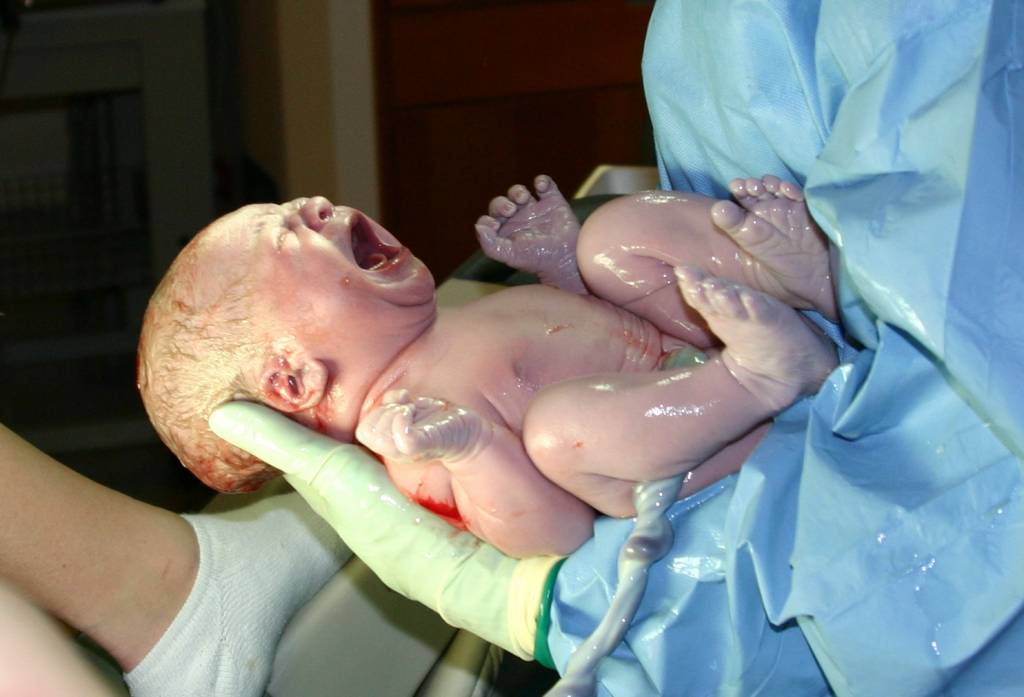
The theory Winnicott eventually developed began in early infancy. "A mothers job is to protect the baby from impingements, which are anything internally or externally based that impair normal development in the child" (Monte, p.338). These impairments
could have been anything from the mother not responding to the baby's smile, to not helping the infant connect outside reality to the baby's inside fantasy world.
One of his theories is that of the True and False self. He formed this theory from two findings. The first was his study of adult schizophrenic and borderline patients. He found that some adults spent their lifetimes feeling not real and searching for their "true selves." The second was his study of children brought in by their parents for depression or anger. The child was cheery and excited in the visits, which puzzled Winnicott at first. Eventually he came to the conclusion that the child was "putting on a show" to create the desired environment, or at least what the child thought was the desired environment.
Many of these children used this false self to ward off their mothers depression and hatred.
More Psychological Theories & Authors
essays:
The Montessori Method
... that children are not like adults and do not learn as adults do. Public schools are not able to concern themselves with the whole person in the way that Montessori schools are. Teachers must be specially trained ...
Jeffrey Dahmer:Bilogically Determined Killer
... Denno, D.W. 1990. Biology and Violence : From Birth to Adulthood, Cambridge University Press, Cambridge. Mednick, S.A. and Moffitt, T.E. 1988. Biological Contributions to Crime Causation, Matinus Nijhoff Publishers. Boston. Robins, L. 1966. Deviant Children Grown ...
Active Listening Skills
... for special needs. The game is being used to teach children with ... and the words?Barriers to Effective CommunicationsAnother thing the effective person does is to listen intentionally. They also develop an awareness of and attempt to control the myriad barriers ...
Portrait of an Adult Mid-Life
... AdultPsychosocial Development. Psychiatry (40), 99-112Liebert, M., & Spiegler, D. (1994). Personality: Strategies ... their personality. It is difference and uniqueness of personality that creates such special bonds ...
The three main theorie of Sigmund Freud and his contribution to society.
... the development of a person, and that a disruption in any of them could have a negative outcome later in life. Dr. Sigmund Freud was arguably the most influential man in the fields of psychiatry and ...
Erikson's Theory of Psychosocial Development. (Focus in this essay is on Erikson's first three stages of Growth.)
... development in Vienna where Anna Freud had pioneered study in this area. In the U. S., he also completed a number of specialized ...
How useful is psychoanalysis when viewed from feminist perspectives? Identify and discuss the main criticisms that have been made of the work of Freud, as well as the main strengths.
... the work of Jacques Lacan, an interpreter of Freud's analytic method which provides a linguistic view of Freud. The influence of ...
David McClelland
... York • 1933: Graduates from Jacksonville, Illinois, High School • 1933-1934: Special student in languages at Macmurray College in Jacksonville, Illinois • 1938 ... Science Development • 1951: o Publishes Personality, with J.W. Atkinson ...